Advanced concepts in Frontend Dev, page 7

Web Audio API: A Modular Synth for Your Browser
The Web Audio API treats sound as a modular graph. You connect sources (files, oscillators) to effects (filters) and a destination (speakers) for precise, low-latency control. It's ideal for games and music apps.

Angular TransferState: Avoid Double Data Fetching in SSR
TransferState is a key-value cache that bridges your Angular SSR server and the browser, preventing the client from re-fetching data the server already got. Use it to pass resolved API data from the server render to the client, avoiding wasted network calls.
WebGL Textures: From Image File to GPU Pixels
WebGL textures are images uploaded to the GPU for fast access when "painting" 3D models. They're used to apply detailed surfaces like brick patterns. The footgun: images must be CORS-approved, and non-power-of-two dimensions break mipmapping in WebGL1.
Next.js Instrumentation: Code That Runs on Server Startup
Next.js's instrumentation.ts file runs code once when your server process starts, before any requests. It's ideal for setting up global logging, monitoring like OpenTelemetry, or database connections.
RTCPeerConnection: Direct Browser-to-Browser Links
Think of an RTCPeerConnection as a direct phone line between two browsers. It's the core of WebRTC, enabling peer-to-peer video and data streams. The footgun: it doesn't find peers; you must use a separate signaling server to broker the initial handshake.
Media Source Extensions: The Engine for Web Streaming
MSE lets you build streaming video players in JavaScript by feeding media chunks to a <video> element, instead of a single file URL. It's the foundation for adaptive streaming like DASH/HLS.

The RFC Process: Formalizing Technical Decisions
An RFC (Request for Comments) is a formal document for proposing a major technical change, creating a public record of the decision. It's used for big shifts like adding a new design system component or changing a core API.

SvelteKit Server-Only Modules: Keep Your Secrets Secret
SvelteKit's server-only modules are a firewall for your code, preventing sensitive data like API keys from ever being bundled for the browser. Use them for database clients or secret logic.
Web Workers: Offload Heavy Tasks from the UI Thread
Web Workers run JavaScript on a background thread, preventing heavy tasks from freezing your UI. Use them for complex calculations or data processing that shouldn't block rendering.
ISR: Static Speed for Dynamic Content
Incremental Static Regeneration (ISR) gives users a fast, static page while regenerating it in the background. It's ideal for e-commerce catalogs or blogs that update periodically.
Password Hashing and Salting: Store Credentials Securely
Never store plaintext passwords. Instead, use a slow, one-way hash combined with a unique salt for each user, making it computationally expensive to reverse. This is essential for any app with user logins.
Speed Up Builds with TypeScript Project References
Treat your codebase like a set of independent packages. Project References let you split a large project into smaller, interconnected pieces, dramatically speeding up builds by only recompiling what's changed.
Dockerizing Next.js with Multi-Stage Builds
Use a multi-stage Dockerfile to create lean, production-ready Next.js images. This separates build-time dependencies from the runtime environment, shrinking image size.
View Transitions API: Animate Between DOM States
The View Transitions API lets the browser handle complex animations between page states. It simplifies transitions in Single-Page Apps and, for the first time, enables them for Multi-Page Apps. The main footgun is forgetting it's a progressive enhancement.
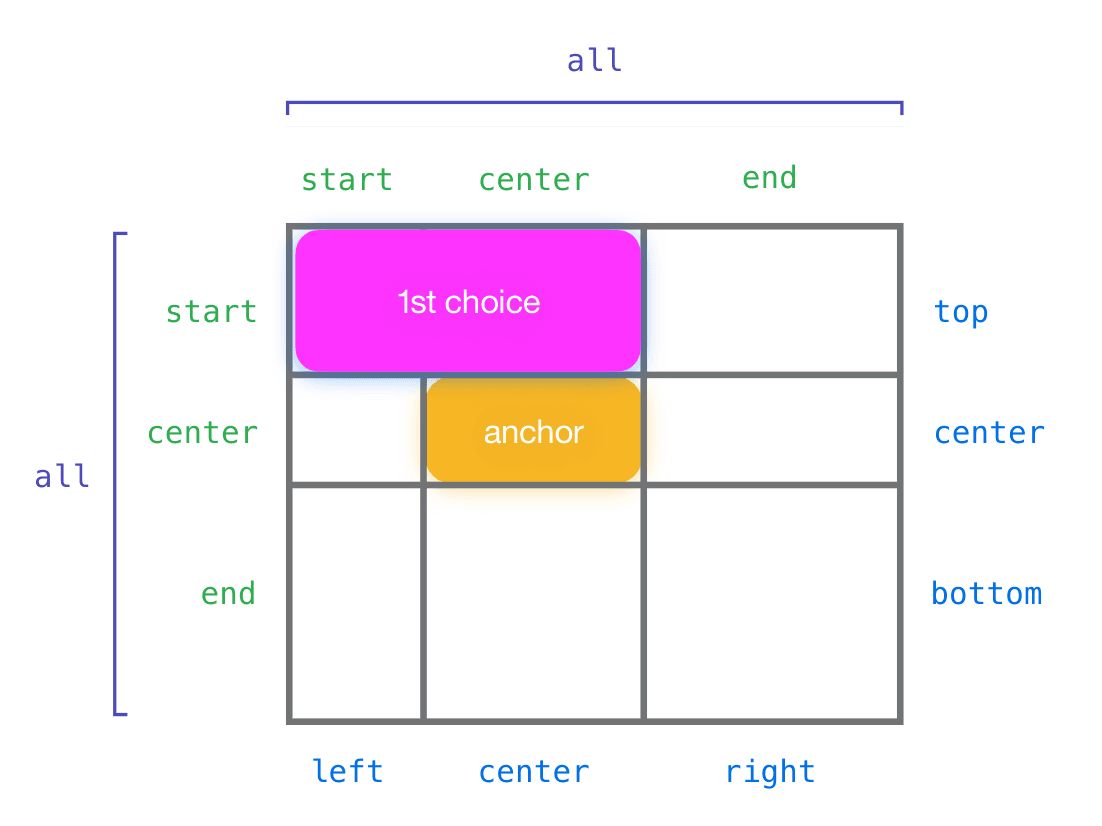
CSS Anchor Positioning: Beyond the Containing Block
CSS Anchor Positioning lets you tether an element to any other element, not just its parent. Use it for popovers or tooltips that automatically reposition to stay in view. The footgun is forgetting to explicitly name your anchor with anchor-name.
CSS Houdini: Extending the CSS Engine
CSS Houdini gives developers low-level access to the browser's rendering engine, letting you write your own CSS features. Use it to polyfill new CSS or define type-safe custom properties with @property, preventing invalid values from being silently ignored.
React Fiber: Making UI Rendering Interruptible
React Fiber treats rendering like a cooperative scheduler. It breaks UI updates into small, pausable chunks, preventing long, blocking tasks. This lets high-priority work like user input interrupt heavy rendering, keeping animations and gestures smooth.

React's Two-Step Update: Render and Commit
React updates the screen in two phases. The "render" phase is React calling your components to calculate the UI. The "commit" phase is when it actually updates the DOM. The footgun is thinking rendering always changes the screen; it's just the prep work.

React's Current & Work-in-Progress Trees
React uses a double-buffering technique for non-blocking updates. The current tree is what's on screen; the workInProgress tree is built in the background on state changes. The footgun is confusing this low-level mechanism with the 'virtual DOM'.
React State Updates: The Queue and the Updater Function
React batches state updates from one event, like a waiter taking a full order before heading to the kitchen. This prevents multiple re-renders. The footgun: setCount(count + 1) called three times only increments once, as count is fixed for that render.
We are hiring for this. Every open role lists the topics its interview covers, so you can prepare for the real thing rather than guessing.
See open roles