Easy concepts in Frontend Dev, page 4

Angular Component Styles: Scoped by Default
Angular styles are scoped to their component by default, preventing one component's styles from accidentally breaking another. This lets you build reusable UI pieces without style conflicts. The footgun is using ::ng-deep, which breaks this isolation.
Callback Hell: Navigating JavaScript's Async Pyramid
Callback Hell is the 'pyramid of doom' structure from nesting async functions. It happens when chaining I/O tasks like API calls, where each step depends on the last. The footgun is writing async code as if it runs sequentially, creating unreadable nests.

React.memo: Skip Unnecessary Component Renders
React.memo tells a component to skip re-rendering if its props are the same as last time. Use it to prevent costly renders when a parent updates. The footgun is passing new objects or functions as props, which breaks the default shallow comparison.
Angular Template-Driven Forms: Logic in the HTML
Angular Template-Driven Forms put form logic directly in your HTML template. Using two-way data binding with [(ngModel)], they're great for simple scenarios like login or contact forms.

The Promise Object: A Placeholder for Future Values
A Promise is an IOU for a value from an async operation, like a network request. It's a placeholder that will eventually hold a result or an error. Use it for fetching data or reading files. The footgun: always add a .catch() to handle failures.
React.lazy: Load Components On Demand
React.lazy tells your app: "Don't download this component's code until it's needed." It's a core tool for code splitting. Use it for below-the-fold content or modals to speed up initial load. The footgun: forgetting <Suspense> will crash your app.
React Suspense: Manage Loading States Declaratively
React Suspense lets you declare a loading UI instead of manually toggling isLoading state. You wrap a component that fetches data and provide a fallback, letting React handle the switch. The footgun is that re-fetching can jarringly show the fallback again.
Component v-model: Two-Way Binding with defineModel
v-model on a component creates a two-way binding, letting a parent and child share and update data. The defineModel() macro is the modern way to enable this for custom form inputs. The footgun is that a default value can de-sync parent/child state.
Angular's Built-in Form Validators
Angular's built-in validators are pre-made rules for your forms. Use them to easily check for required fields, min/max length, and valid email formats. The footgun is confusing required for text inputs with requiredTrue, which is only for checkboxes.
OOCSS: Reusable Styles for Maintainable CSS
Treat CSS styles like building blocks. Object-Oriented CSS (OOCSS) separates an element's visual 'skin' (colors, borders) from its 'structure' (width, height). This lets you create reusable classes, reducing duplication for faster, maintainable stylesheets.
CSS Custom Properties: Variables for Your Stylesheet
CSS Custom Properties are variables for your stylesheet. Define a value like --primary-color once on :root and reuse it with var(), making global theme changes easy. The main footgun: they only work for property values, not names or selectors.
Utility-First CSS: Style Directly in Your Markup
Utility-first CSS styles elements with many small, single-purpose classes directly in your HTML. It's used for rapid prototyping and component-based systems. The footgun is creating verbose, repetitive markup by not extracting common patterns into components.
Fetch API: Making Basic Network Requests
The Fetch API is like ordering from a catalog: you give it a URL and get a promise of delivery. It's used to load data from APIs without a page reload. The footgun: the promise resolves even on HTTP errors (like 404); you must check.
Configuring Fetch Requests with `RequestInit`
RequestInit is the options object that customizes a fetch call beyond a simple GET. Use it to specify the HTTP method, send a request body, set headers, and control caching. A common footgun is sending a JSON body without setting the Content-Type header.
Fetch API Errors: Why a 404 is a 'Success'
A fetch() call only fails on network errors, not on HTTP errors like 404. You must check the response.ok property to see if the request was successful. The footgun is assuming a catch block will handle a 404; it won't.
Single Source of Truth: Centralized App State
A Single Source of Truth consolidates all application state into one central object, or 'store.' This makes state predictable and easier to debug, especially in libraries like Redux, by creating one place to look for data.
Redux: Actions are Events, Reducers are Event Handlers
Redux Actions are events describing *what* happened (e.g., 'task added'), while Reducers are functions that specify *how* state changes in response. This pattern is central to managing global state. The biggest footgun is mutating state directly in a reducer.
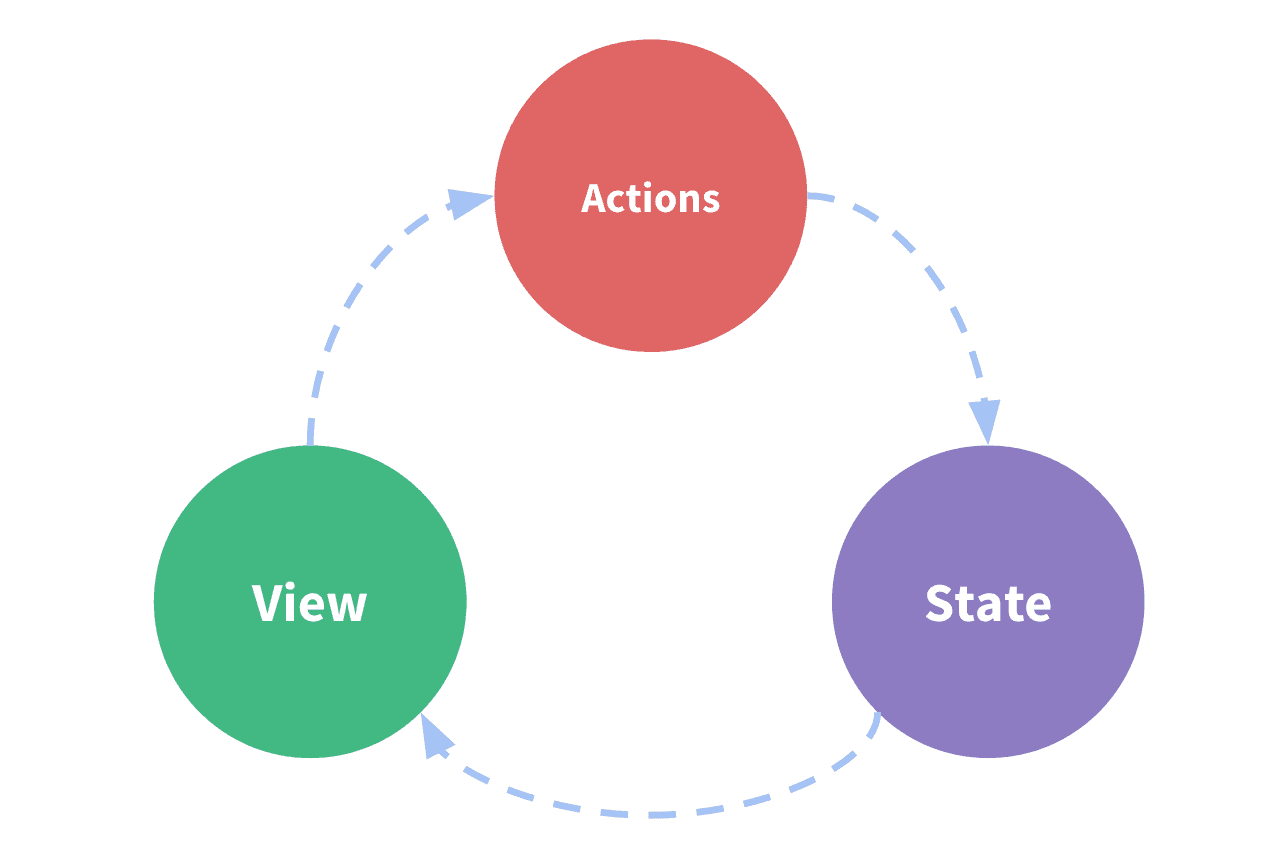
Vuex: A Central Store for Your App's State
Vuex acts as a global warehouse for your app's shared data, letting any component access state without complex prop-drilling. It's for large apps where components need to sync up. The footgun: For new projects, use Pinia, Vue's new official state library.
Using Angular Services for Simple State Management
An Angular service acts like a central data store. Components subscribe to it for data, rather than owning state, keeping data consistent across views. It's ideal for sharing user info or cart contents.
Angular HttpClient: Your App's API Connector
Angular's HttpClient turns network requests into RxJS Observables. Use it to fetch data or submit forms. The footgun: a request is never sent until you subscribe to the Observable it returns, a common mistake for beginners.
We are hiring for this. Every open role lists the topics its interview covers, so you can prepare for the real thing rather than guessing.
See open roles