Intermediate concepts in Frontend Dev, page 7
Handling Asynchronous UI with Testing Library
Your test shouldn't race your UI. Use async helpers to wait for elements to appear, disappear, or change after an event. This is crucial for testing components that fetch data. The footgun is forgetting await on findBy or waitFor calls.
PostCSS: The 'Babel for CSS' Transformer
PostCSS is like Babel for CSS, transforming styles with JavaScript plugins. Use it to add vendor prefixes, enable future CSS features, or lint styles. The footgun: it's not a preprocessor like Sass, but a tool that enhances CSS, often used alongside it.
Navigation Guards: Vue's Route Bouncers
Think of navigation guards as bouncers for your app's routes. They intercept route changes to check permissions or fetch data before rendering a page. The old next() callback is a trap; accidentally calling it twice can break navigation.

Snapshot Testing: Lock In Your UI's Rendered Output
Snapshot testing catches unintended UI changes by comparing a component's rendered output to a saved 'golden' version. Use it to ensure UIs don't break during refactors. The biggest footgun is blindly updating snapshots, which can approve bugs as correct.
Stylelint: Your CSS Guardian for Rules, Not Just Formatting
Stylelint is a linter that guards your CSS logic and conventions, not just its formatting. Use it to catch errors like misspelled properties or enforce team rules. The footgun is confusing it with a formatter; Stylelint enforces rules, Prettier handles style.
File-Based Routing: Your Filesystem is Your API
File-based routing makes your directory structure the single source of truth for your app's URLs. Creating a file at routes/about/+page.svelte automatically creates the /about page, no central config needed.
Cypress for End-to-End Testing in Next.js
Cypress is a framework for end-to-end testing of Next.js applications. It's presented as a primary option in the official docs, alongside tools like Playwright and Vitest, for automating tests that simulate real user interactions in a browser.

Angular: Reading URL Query Parameters
Angular gives you two ways to read URL query params: a static snapshot for the initial value, or a queryParams Observable for live updates. Use it for values like ?search=term.

UI Patterns: Reusable Recipes for Interfaces
UI patterns are reusable recipes for common interface problems, like tabs or accordions. They create a shared language for building predictable, accessible components. The biggest footgun is creating a component that looks right but lacks accessible behaviors.
Server Components: Fetch Data Directly
Server Components let you fetch data directly using async/await, simplifying code by removing client-side useEffect hooks. Use this for initial page loads in Next.js to improve SEO and performance. The footgun: don't use client-side hooks or browser APIs.
Vue Composables: Reusable Stateful Logic
A Vue composable is a function for bundling reusable stateful logic, like tracking mouse position. Use it to share complex logic like API fetches across components. The footgun: each component gets a fresh, independent state, not a shared one.
Route Handlers: Your Next.js App's API Endpoints
Route Handlers are lightweight API endpoints built into your Next.js app. Use them to serve JSON or handle form posts. The footgun is confusing them with Server Components; Route Handlers return data, not rendered UI.
Angular Custom Attribute Directives
An Angular attribute directive changes the appearance or behavior of an existing DOM element without adding a new one, applied as a plain HTML attribute so reusable behavior like hover effects or validation can be attached declaratively across many templates.
TypeScript: Modify Properties with Mapped Type Modifiers
Mapped type modifiers let you add or remove readonly and ? from a type's properties. Use them to create a fully required type from an optional one, or a mutable version of a readonly object. The footgun: remember the - prefix to *remove* modifiers.
Next.js Loading UI: Instant Shells, Streamed Content
Next.js's loading.js shows an instant UI shell while streaming in server-rendered content. Use it for data-heavy pages to improve perceived performance. The footgun: a loading UI only wraps its own route segment and children, not parent layouts.
Style Dictionary: A Build Tool for Design Tokens
Think of Style Dictionary as a compiler for your design system. It takes abstract design tokens (like brand colors and fonts) and automatically generates platform-specific style files for web, iOS, and Android, ensuring consistency everywhere.

TypeScript's Optional Chaining (`?.`)
Optional chaining (?.) lets you safely access nested properties without crashing on null or undefined. Use it to replace verbose && checks when traversing deep objects. The footgun is that it only checks the value to its left, not the entire chain.
error.js: Graceful Error Boundaries in Next.js
The error.js file acts as a UI safety net, catching runtime errors in a Next.js route segment to prevent a full app crash. Use it to display a custom error message and a "try again" button.
Composite Design Tokens: Bundling Style Properties
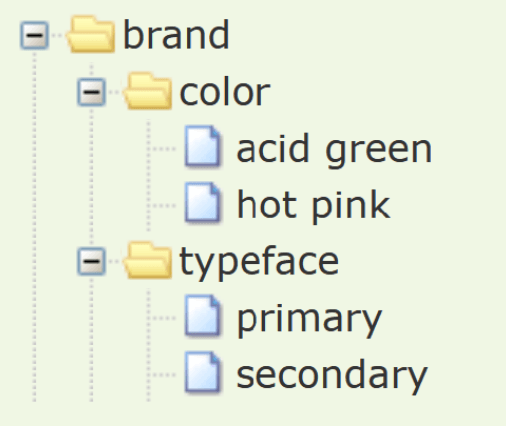
A composite design token bundles multiple style values into a single, semantic unit, like a "style kit" for shadows or typography. Use them to apply complex, multi-property styles like borders or text styles with one reference.
Angular HttpInterceptor: A Pipeline for API Requests
Think of an HttpInterceptor as a pipeline for every API call, letting you inspect or modify requests and responses globally. Use it to automatically add auth headers or show a loading spinner.
We are hiring for this. Every open role lists the topics its interview covers, so you can prepare for the real thing rather than guessing.
See open roles