Advanced everything in Frontend Dev, page 14

useTransition: Keep Your UI Responsive During State Changes
useTransition lets you update state without blocking the UI, keeping your app responsive. Use it for slow renders like filtering large lists, while the isPending flag shows a loading state.
useImperativeHandle: Expose a Custom Ref API
useImperativeHandle exposes a custom API via a ref, letting a parent call specific methods on a child. Instead of exposing an entire DOM node, you can provide a handle with methods like reset() or focus().
useLayoutEffect: Synchronous Effects Before Browser Paint
useLayoutEffect is useEffect's synchronous twin, running its code after DOM mutations but before the browser repaints. Use it to read DOM layout and re-render to prevent visual flickers, like positioning a tooltip. Its main footgun: it blocks rendering.
React's Stale Closure Problem in Hooks
A useEffect closure captures props and state from its render. If the effect doesn't re-run, its functions can operate on old, "stale" data. This surfaces in timers or socket listeners. The footgun is omitting dependencies, which causes these subtle bugs.
React's Rule: Favor Composition Over Inheritance
Instead of extending a base component, build complex UIs by wrapping and configuring smaller ones. Use this for generic containers like dialogs or for creating specialized versions of a component.

React Refs: Memory Without Re-renders
A React ref is like a secret pocket for your component to remember information without triggering re-renders. Use it to hold values not needed for rendering, like a timer ID. The footgun: changing a ref's value won't update the UI; use state for that.

CSS Houdini: Extending the CSS Engine
CSS Houdini gives developers low-level access to the browser's rendering engine, letting you write your own CSS features. Use it to polyfill new CSS or define type-safe custom properties with @property, preventing invalid values from being silently ignored.
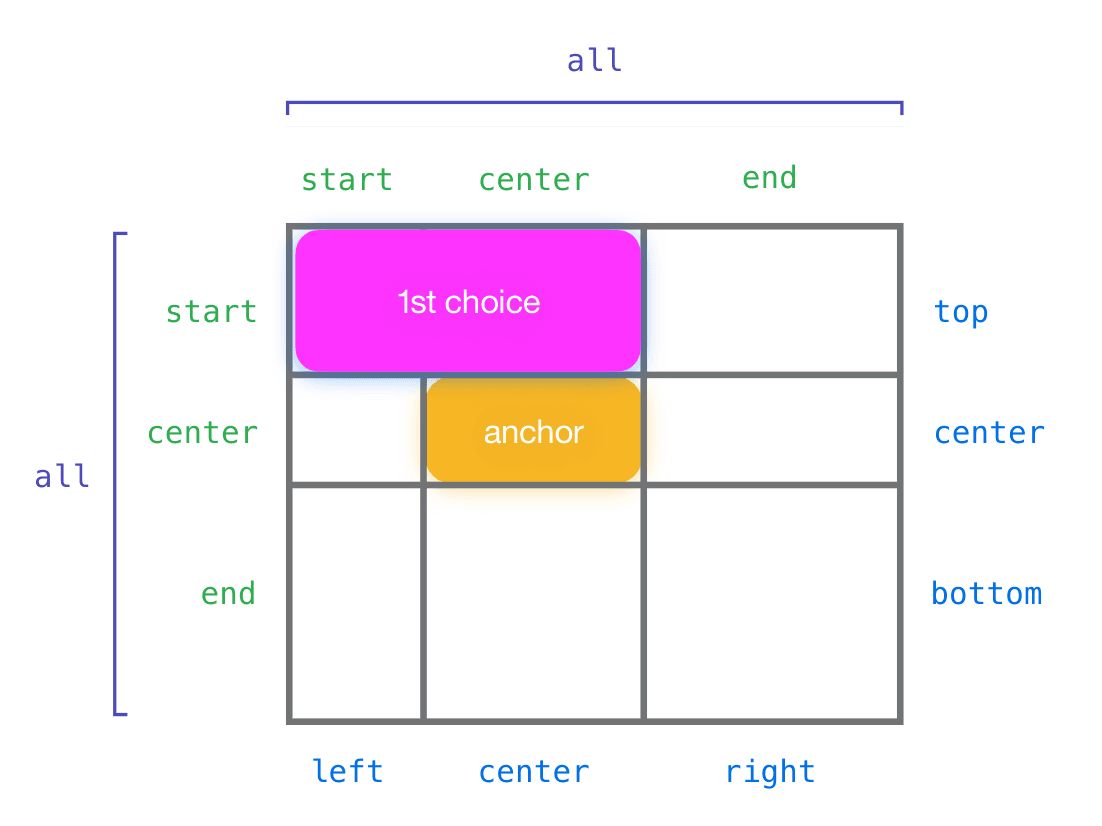
CSS Anchor Positioning: Beyond the Containing Block
CSS Anchor Positioning lets you tether an element to any other element, not just its parent. Use it for popovers or tooltips that automatically reposition to stay in view. The footgun is forgetting to explicitly name your anchor with anchor-name.
View Transitions API: Animate Between DOM States
The View Transitions API lets the browser handle complex animations between page states. It simplifies transitions in Single-Page Apps and, for the first time, enables them for Multi-Page Apps. The main footgun is forgetting it's a progressive enhancement.
Web Workers: Offload Heavy Tasks from the UI Thread
Web Workers run JavaScript on a background thread, preventing heavy tasks from freezing your UI. Use them for complex calculations or data processing that shouldn't block rendering.

The RFC Process: Formalizing Technical Decisions
An RFC (Request for Comments) is a formal document for proposing a major technical change, creating a public record of the decision. It's used for big shifts like adding a new design system component or changing a core API.
Semantic Release: Automate Versioning with Commit Messages
Semantic Release automates versioning by reading your commit messages. It decides if a change is a fix, feature, or breaking change and bumps the version for you. It's used in CI/CD to publish packages automatically.
The Accessibility Tree: The DOM for Assistive Tech
The accessibility tree is the DOM's sibling, built for assistive tech. Browsers derive it from your HTML, exposing each element's name, role (e.g., 'button'), and state (e.g., 'checked') to screen readers.
Focus Trapping: Guiding Keyboard Users, Not Caging Them
Focus trapping intentionally confines keyboard navigation to a component, like a modal. It's a feature, not a bug, when used to prevent users from interacting with the page behind an overlay.
ARIA Live Regions: Announcing Dynamic Content
ARIA live regions tell screen readers about content that changes without a page reload, like a notification banner. Use aria-live="polite" for most updates and assertive only for critical alerts.
WAI-ARIA Authoring Practices: The Cookbook for Accessible Components
Think of WAI-ARIA Authoring Practices as the official cookbook for accessible web components. It provides patterns for widgets like tabs or accordions, ensuring they work with assistive tech.
ElementInternals: Making Custom Elements Form-Friendly
ElementInternals lets your custom elements act like native form inputs, integrating with validation, submission, and labels. Use it for custom inputs in a design system. The footgun: forgetting to call setFormValue() means its state won't be submitted.

Constructable Stylesheets: Share Styles, Not Bloat
Create and share CSS in JavaScript without duplication. Constructable Stylesheets are ideal for theming multiple Shadow DOM components from a single source; updates to the sheet propagate to all consumers. A key footgun: @import rules are ignored.
Form-Associated Custom Elements: Your Own Inputs
Make your custom elements behave like native inputs within a <form>. This lets them carry a value, be validated, and submit with the form. Use it for custom widgets like tag inputs. The footgun: its state won't submit if you don't call setFormValue().
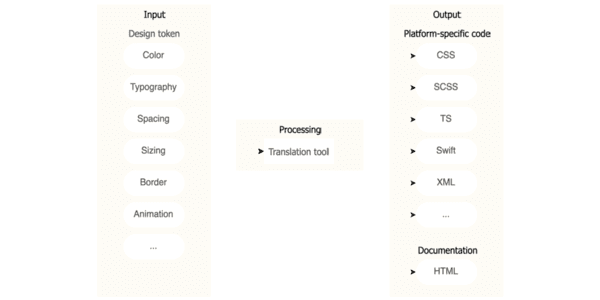
Design Tokens: Automating UI with a Build Pipeline
Think of design tokens as design decisions stored as data. A build pipeline consumes this data to auto-generate code for multiple platforms, ensuring consistency. The footgun is exposing all raw 'option' tokens instead of curated 'decision' tokens.
We are hiring for this. Every open role lists the topics its interview covers, so you can prepare for the real thing rather than guessing.
See open roles