Everything in Frontend Dev, page 58

Block Formatting Context: Taming Floats and Margins
A Block Formatting Context (BFC) is a mini-layout sandbox on your page, isolating its contents. Use it to contain child floats that would otherwise overflow their parent, or to stop adjacent elements from collapsing their margins.
CSS Stacking Contexts: The Z-Axis Explained
A CSS stacking context is like a self-contained group of layers. Elements inside only compete for z-index with siblings in that same group. They're created by properties like position with z-index, opacity, or transform.
CSS Pseudo-elements: Styling Parts of an Element
Pseudo-elements style parts of an element not in the DOM, like a paragraph's first line or selected text. Use ::before/::after for decorative content or ::selection to style user highlights.
CSS Margin Collapsing: The Largest Margin Wins
Instead of adding up, vertical margins on adjacent block elements 'collapse' into one, taking the size of the largest margin. This explains why two paragraphs with margin: 1rem don't have 2rem of space between them. The footgun is assuming it's a bug.
CSS Positioning: Taking Elements Out of Normal Flow
CSS position lets you override the default document flow. Think of it as telling an element to ignore its neighbors and listen to top/left coordinates instead. Use it for overlays, modals, and sticky headers.
CSS Pseudo-classes: Style Elements Based on State
CSS pseudo-classes style elements based on their state, not just their HTML structure. Use them for interactive states like :hover, form validation like :invalid, or structural position like :first-child.
CSS box-sizing: Predictable Element Sizing
The box-sizing property controls if padding and borders are added outside an element's width or carved out from inside. Using border-box makes layouts predictable, ensuring a width: 100px box is exactly 100px wide.
CSS 'display': How Elements Occupy Space
The CSS display property defines an element's layout role: does it demand its own line (block) or share space (inline)? It's essential for everything from text flow to complex layouts with flex and grid.
CSS Selectors: How to Target HTML for Styling
CSS selectors are like addresses for your HTML, telling the browser which elements to style. They're used to apply everything from colors to layouts. The main footgun is specificity: an overly specific selector can be difficult to override later.
CSS Inheritance: Styles Flow Downhill
CSS inheritance is like genetics for web elements: children inherit styles like color and font-family from their parents. This is why setting a font on <body> styles a whole page.
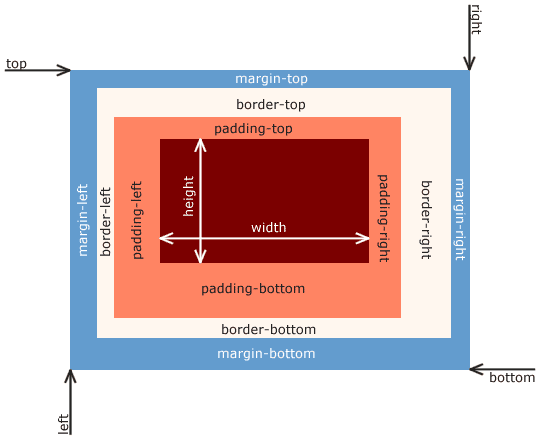
CSS Box Model: Every Element is a Box
Every HTML element is a box with layers: content, padding, border, and margin. This model dictates how elements take up space and align, forming the basis of all CSS layout. The footgun is the default sizing, which adds padding *outside* the set width.
CSS Specificity: The Browser's Tie-Breaking Rule
CSS Specificity is the browser's tie-breaking system for conflicting styles. Think of it as a score: an ID is worth more than any number of classes, and a class is worth more than any number of elements. The footgun: using !important to win.
CSS Cascade: How Browsers Resolve Style Conflicts
The CSS Cascade is a tie-breaking algorithm that decides which style rule applies when multiple rules target the same element. It resolves conflicts between browser defaults, user styles, and your CSS.

Server Components, explained without the jargon
React Server Components render on the server and send the client a description of the result, not JavaScript. That means no bundle cost for server rendered parts and direct database access, with client components handling only the interactive pieces.

React interview cheatsheet: hooks rules in 60 seconds
The rules of hooks exist because React identifies each hook by call order, not by name. Call hooks only at the top level of a component or custom hook, never inside a loop, condition, or nested function, or state attaches to the wrong hook.
We are hiring for this. Every open role lists the topics its interview covers, so you can prepare for the real thing rather than guessing.
See open roles