Everything in Frontend Dev, page 7
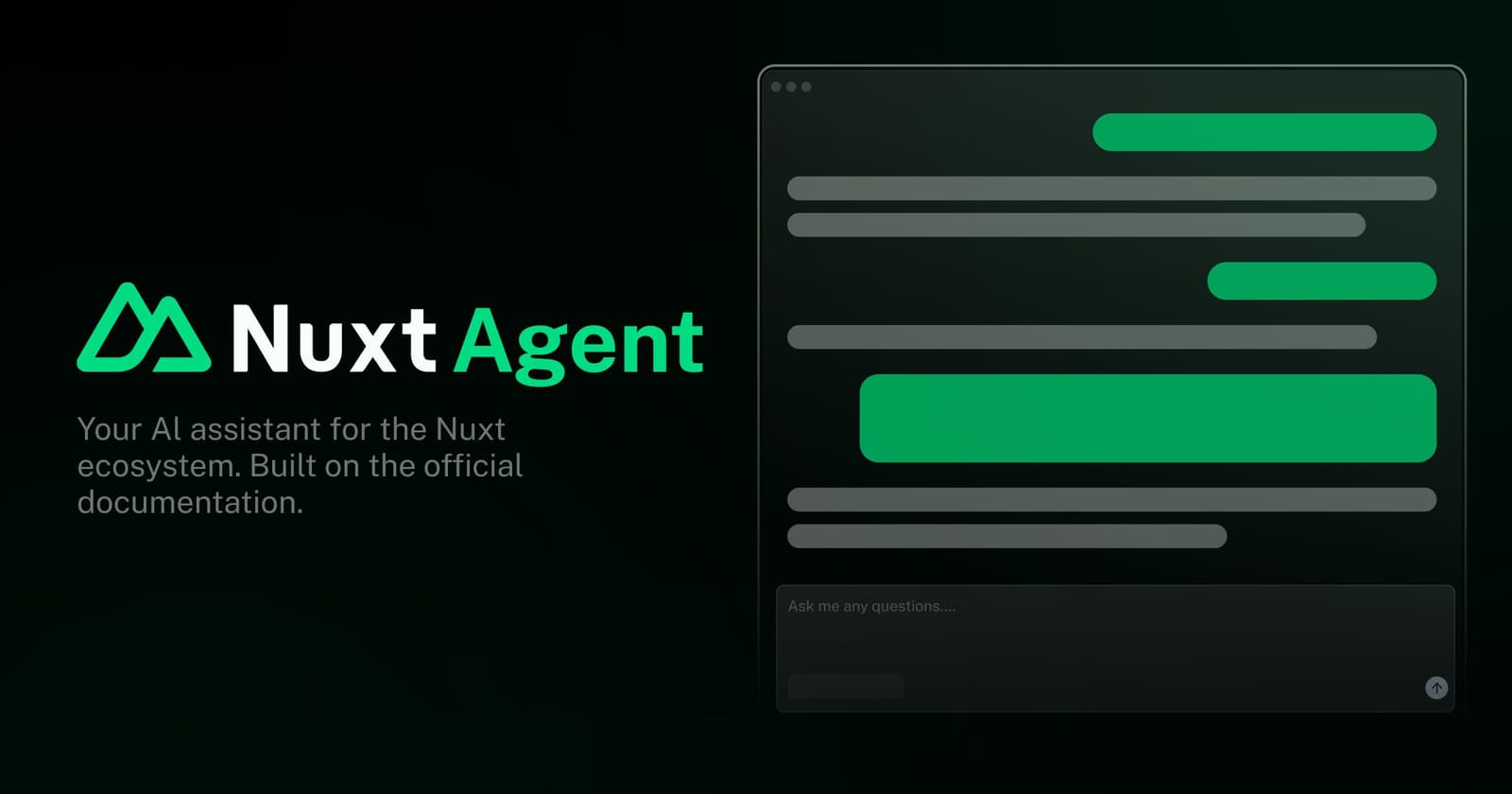
Nuxt Agent beta replaces docs chat with MCP assistant
Nuxt Agent beta replaces Kapa.ai with an MCP assistant rendering module cards and StackBlitz links as live UI. It grounds answers in docs and GitHub issues via the same MCP server Cursor uses. Try the ⌘I panel on nuxt.com to see if it cuts your.

Nuxt ships Nuxi AI agent with context-aware docs help
Nuxt's AI agent Nuxi grounds answers in docs, modules, and GitHub issues using your current page context. GitHub sign-in syncs chats across devices, while branching lets you fork conversations. Use it to cut doc-hunting time and find v4 patterns faster.
SvelteKit 2.56 overhauls remote functions, adds TypeScript 6.0
SvelteKit 2.56 overhauls remote functions with breaking changes to query refreshes, caching, and a new run() method, plus TypeScript 6.0 support. The Svelte CLI adds experimental community plugins. Audit your remote function calls before upgrading.
SvelteKit 2.61 breaks remote functions, adds live queries
SvelteKit 2.61 removes .run() from remote queries and rewrites enhance callbacks, forcing refactors. New query.live() adds async-iterable real-time streams. If you use remote functions, check three breaking changes before upgrading.

Angular v22 stabilizes Signal Forms, Aria, Asynchronous Reactivity APIs
Angular v22 promotes Signal Forms, Angular Aria, and Asynchronous Reactivity APIs from developer preview to production-ready status, giving teams stable primitives for reactive forms, accessibility, and async signals without experimental guardrails.
Angular v21 ships while AI models write outdated code
Angular v21 ships while standard AI models still write outdated code. Zoneless architecture and Signals now dominate performance roadmaps. Audit AI PRs for legacy patterns and verify zoneless readiness before Q3.
Angular 21.1 ships with Signal Forms debounce patterns
Angular 21.1 ships with minor fixes. Signal Forms tutorials now show debounced async validators to cut wasted backend API calls. Migration guides for the modern Control Flow syntax are available for apps still on legacy structural directives.
Vue 3.4 Cuts Build Times 44%, Stabilizes defineModel
Vue 3.4 cuts SFC compile times 44% and doubles parser speed while stabilizing defineModel for v-model. The refactored reactivity engine skips redundant computed triggers, reducing re-renders. Upgrade requires Volar 1.8.27+ and matching toolchain versions.
VitePress 1.0 replaces VuePress for docs
VitePress 1.0 replaces VuePress, powering docs for Vite, Pinia, and Vitest. It serves static HTML for SEO, then hydrates into a Vue 3 SPA with sub-100ms edits. Migrate legacy VuePress docs or choose it for new content sites.
Vue 3.5 cuts reactivity memory 56%, adds lazy hydration
Vue 3.5 drops reactivity memory 56% and large arrays up to 10x faster with no breaks. Stable reactive props destructure kills withDefaults boilerplate, while lazy hydration and useId() fix SSR pain points.
Describe a Nuxt server caching strategy for slow upstream APIs
Tests server-side caching architecture in Nuxt Nitro. A strong answer proposes a server middleware or route handler with Redis or LRU in-memory cache, sets TTL per endpoint, and handles cache invalidation.
Angular Universal server memory leak: causes and diagnosis
Incomplete platform destruction, global DOM polyfills, unclosed RxJS; use heap snapshots and --inspect.
How do you debug and fix flaky Cypress E2E tests?
This tests systematic debugging of async UI behavior. A strong answer isolates root causes via logs and screenshots, fixes races with explicit waits or intercepts, and stubs APIs not network timing.
What is the difference between ChangeDetectionStrategy.Default and ChangeDetectionStrategy.OnPush in Angular?
Default checks components on most async events; OnPush checks on input changes, DOM events, or async pipe emits.
How do Vue, Angular, and Svelte stores trigger component re-renders?
Tests deep knowledge of reactivity primitives. Contrast Vue's proxy subscriptions, Angular's RxJS push through async pipe or markForCheck, and Svelte's compiler-generated store invalidation. Red flag: claiming all three use virtual DOM diffing or polling.

Pass server state to client in Nuxt and name the composable
This tests Nuxt SSR state hydration. A strong answer names useState, explains server values serialize to JSON for client hydration, and warns against refs defined outside setup.
What is Angular Ivy's 'locality' and its benefits over View Engine?
Tests Ivy's per-file compilation model. Locality compiles decorators to static properties without global knowledge, except components need their NgModule scope, speeding builds and tree-shaking.

How does ngc work in Angular AOT and what artifacts improve performance?
This tests understanding of AOT build-phase compilation and output. Cover efficient JS output, inlined templates and styles cutting AJAX requests, and removal of compiler payload roughly half of Angular. Red flag: conflating AOT and JIT or calling it bundling.

How would you unit-test a Svelte date utility with Vitest?
This question tests isolating pure logic from Svelte and configuring Vitest. A good answer covers installing Vitest, co-locating a spec file, and asserting known inputs. A red flag is insisting you must mount a Svelte component to test a plain function.
How would you implement a memoized selector for expensive derived state?
It tests cache invalidation and pure functions for reactive derived state. A strong answer covers reference tracking on inputs, returning cached results when unchanged, and requiring immutable or stable arguments.
We are hiring for this. Every open role lists the topics its interview covers, so you can prepare for the real thing rather than guessing.
See open roles