Advanced interview questions in Growth & Experimentation

How would you architect long-term holdback experiment groups?
Tests longitudinal causal inference and engineering tradeoffs for multi-month isolation. A strong answer covers bucketing, delayed metrics, and cross-experiment guards. Red flag: daily re-randomization or ignoring survivorship bias in aging cohorts.
Architect an experimentation dashboard for culture
Searchable experiment repository, structured hypotheses, results regardless of outcome, and cross-team discovery.

Describe the architecture for multi-touch attribution with time-decay
Stitch IDs, stream events to warehouse, sessionize journeys, then apply decay weights in SQL.
How do you architect a global notification holdback group?
Tests persistent control-group isolation without breaking critical flows. Strong answers use deterministic sticky bucketing by user ID, separate marketing and transactional namespaces, and audit holdout bleed.
Design a near real-time user interaction tracking and analytics system
Tests decoupling ingestion from querying with justified tech choices. Outline: client → Kafka → Flink → ClickHouse → API; budget sub-30s latency and backpressure per stage. Red flag: one monolithic RDBMS or batch ETL handling both writes and reads.
How would you instrument events and query a 3-invite aha moment?
Tests taxonomy and stateful aggregation across sessions. Strong answers instrument Teammate Invited with timestamps, compute 7-day per-user counts via stream or SQL windowing, and materialize cohorts.
How would you use ML to optimize habit-loop notifications?
Tests blending behavioral psychology and ML to personalize cues without coercion. Good answers use contextual bandits with user-state features and reward habit formation over clicks.
Design a system that detects choice paralysis and dynamically simplifies the interface
Track hover entropy, scroll jitter, and time-to-click; use a contextual bandit to select simplification tiers.

How would you structure your growth team's experimentation portfolio?
3 asset classes (iterative 30-70%, tech investments, big bets 20-40%), use expected value per week, and evolve the mix.

WAU is flat despite positive A/B tests; why and how to diagnose
This tests distinguishing real impact from statistical artifacts. Strong answers cite false positives from low base rates, peeking, novelty, and local-global mismatches. Diagnose with long-term holdouts, audits, and causal bridges.
Build an opportunity-sizing model before building
Locate the affected funnel step, estimate addressable population times a bounded conversion lift times value per user, then sanity-check against a realistic ceiling.
When user-level A/B tests get contaminated
Network or marketplace spillover violates SUTVA, so randomize by cluster (geo, group, time) and analyze at that level.

What is the multiple comparisons problem and how to correct?
This tests your grasp of family-wise error inflation across many tests. A strong answer defines the problem, contrasts per-comparison and family-wise error, and names corrections like Bonferroni or FDR.

Design a programmatic SEO system for 1 million landing pages
Tests data infrastructure thinking, not content generation. Covers one-row-one-page schema, template rendering with edge caching, hierarchical routing, and crawl-budget controls via sitemaps. Red flag: AI bulk writing without structured data or caching.
Long-term onboarding holdback: technical and data integrity challenges
This tests the engineering cost of year-long holdbacks in growth. A strong answer covers feature-flag entropy, pipeline drift, survivorship bias, and counterfactual validity. Red flag: treating the holdback as static config that never rots.

Design a real-time personalized notification trigger system
Stream events to a delayed queue, expose a rule UI to non-technical users, and deliver idempotently.
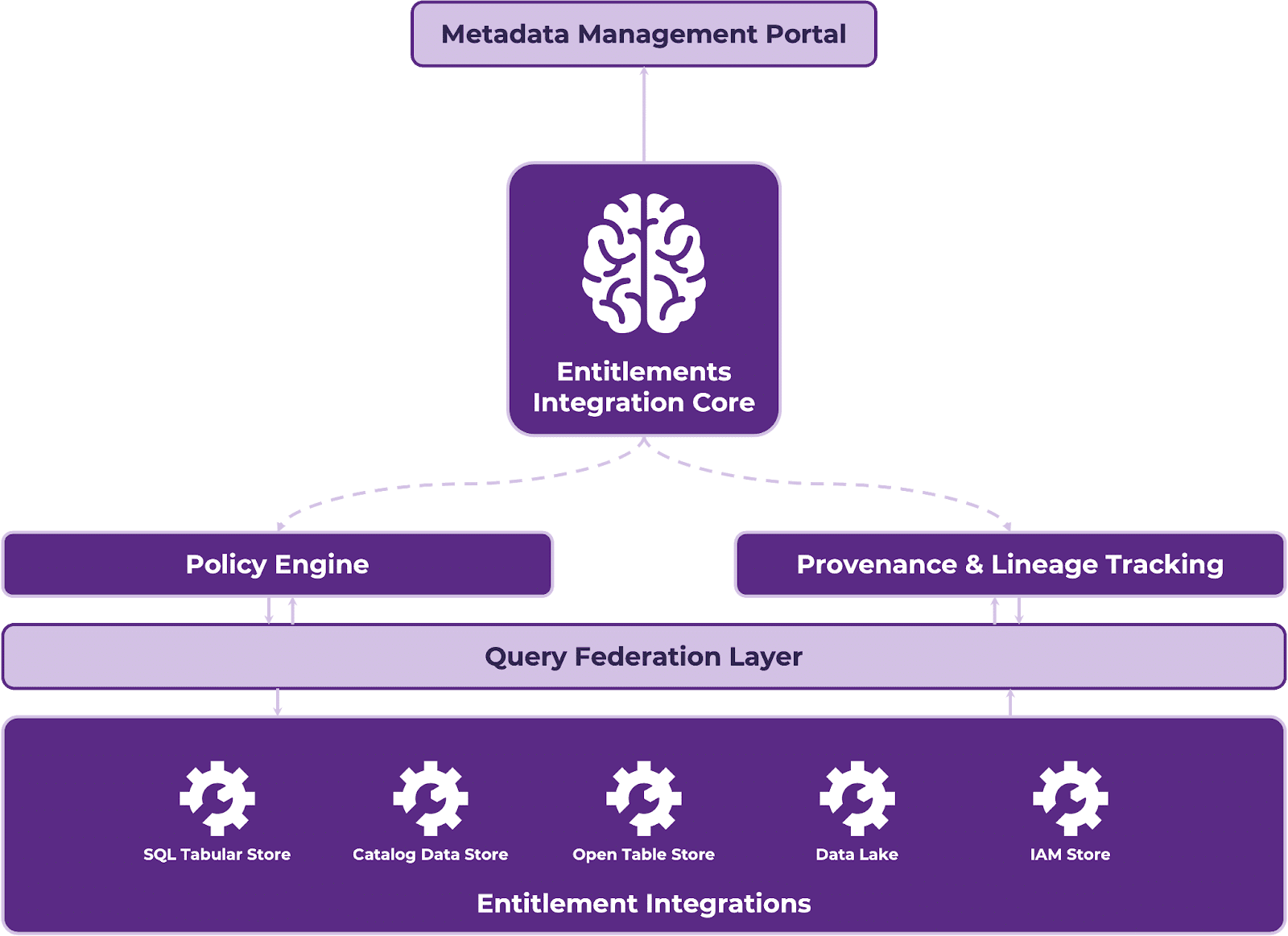
Design a highly available entitlements service with caching
This tests balancing read performance with consistency in access control. A strong answer proposes tiered caching with proactive invalidation, read-optimized hot paths, and event-sourced temporary grants.
How would you design international monetization with multi-currency and tax?
Localized pricing, jurisdictional tax, gateway routing, async reconciliation.

Design a multivariate experimentation platform with collision-free concurrent bucketing and cross-device consistency
Tests orthogonal layers and cross-session assignment persistence. Cover: deterministic hashing per layer, a user profile service for sticky bucketing, and stable ID resolution across devices. Red flag: random bucketing or local storage breaking consistency.

Architect real-time usage-based billing for a PLG company
This tests event-driven metering, idempotent aggregation, and pricing decoupling at scale. A strong answer outlines real-time ingestion, stream processing for micro-events, a rules-based pricing engine, and dashboards with reconciliation.
We are hiring for this. Every open role lists the topics its interview covers, so you can prepare for the real thing rather than guessing.
See open roles