Intermediate concepts in Mobile Dev, page 14
Dagger's Assisted Injection: Creating Objects with Runtime Data
Assisted Injection lets Dagger provide some dependencies while you supply the rest at runtime. It's for objects that need both graph-provided services and user-supplied data, like a specific ID. The footgun: you can't inject the object, only its factory.
Handling Network Errors in React Native
Network errors are normal state, not bugs to silence. In React Native, every fetch should expect flakiness and surface a retry path. The footgun is treating a timeout as permanent failure and wiping optimistic local state.
Swift Closures: Functions with a Memory
A closure is a function carrying luggage: it captures surrounding variables and remembers them later. Use them in SwiftUI actions, async completions, and array transforms. Beware a strong reference cycle from capturing self without a capture list.
RepaintBoundary: Isolate and Optimize Flutter Painting
RepaintBoundary acts like painter's tape for your UI, isolating a widget's paint job from its parent to prevent unnecessary repaints. Use it on complex, static widgets inside an animating view. The footgun is overuse: each boundary adds memory overhead.
CoroutineWorker: Background Tasks with Coroutines
CoroutineWorker simplifies background tasks by letting you use suspend functions inside a WorkManager job. It's for deferrable work, like syncing data, that needs to survive process death.
React Native Offline Sync Strategies
React Native offline sync writes to local storage first, then reconciles with the server later. It keeps forms and messages working offline. The footgun is non-idempotent mutations replayed, creating duplicates or overwriting fresh data.
Swift Properties: Accessors in Disguise
A Swift property runs code on every read or write. Use stored properties for state, computed properties for derived values, and observers for side effects. The footgun is heavy work in a computed getter, turning innocent dot syntax into a performance trap.
Find Jank with Flutter's CPU Flame Charts
A flame chart visualizes CPU usage, showing which function calls are slowest. Use it to diagnose jank in Flutter. The footgun is misreading the x-axis: it's for sorting calls alphabetically, not showing execution order.
Isolating Units for Tests with Mockito-Kotlin
Mockito-Kotlin creates fake objects (mocks) to stand in for real dependencies in your tests. This lets you test a class in isolation, for example, testing a ViewModel without making a real network call. The footgun is testing implementation, not behavior.
Reanimated Layout Animations: Auto-Morphing Views
Reanimated's layout prop auto-animates view bounds between layout passes. Use it when state changes make views shift, expand, or reorder so you avoid manual measurement code. It conflicts with gesture-driven transforms, causing jumps if mixed.
Protocol-Oriented Programming in Swift
Protocol-oriented programming swaps inheritance for composable capabilities via protocol extensions. Use it to share behavior across structs without forcing a superclass. The footgun is protocol bloat: indirection without reuse is bureaucracy.
Find Flutter Memory Leaks with DevTools
Think of the DevTools Memory view as an MRI for your app's RAM. It helps you find objects that aren't being garbage collected, diagnose bloat, and fix crashes.

Android Network Security Configuration
Define your app's network trust rules in a simple XML file instead of writing complex code. Use it to block cleartext (HTTP) traffic, trust self-signed certs in debug builds, or pin certificates.
AsyncStorage: React Native's Async Key-Value Store
AsyncStorage is React Native's bare-bones key-value closet: strings on disk, retrieved asynchronously. Use it for auth tokens, onboarding flags, or cached JSON that survives app restarts. It is plain text and unencrypted; never store passwords or PII here.
Swift Existential Types: The Polymorphism Box
An existential type is a boxed protocol: you see the interface, not the concrete type inside. Use it to store mixed concrete types behind one protocol, like [any Logger]. Prefer generics; existentials hide types and add dynamic dispatch overhead.
Doze and App Standby: Android's Battery Savers
Doze and App Standby are Android's battery-saving modes that restrict background work. Doze activates when a device is idle, while App Standby targets unused apps. The footgun is assuming background jobs run on time; they are deferred and batched.
React Native IAP: The Store Bridge
React Native IAP is a bridge, not a store. You ask Apple or Google to charge the user and listen for a receipt. Use it for subscriptions or feature unlocks. The footgun is forgetting to finish transactions natively, leaving users charged but stranded.
Build Custom Instruments with os_signpost
os_signpost turns code intervals into Instruments graphs by pairing begin-end markers with a visualization package. Use it to correlate app work like model hydration with system CPU and memory metrics. Unmatched begin-end calls break tracks and ruin the view.
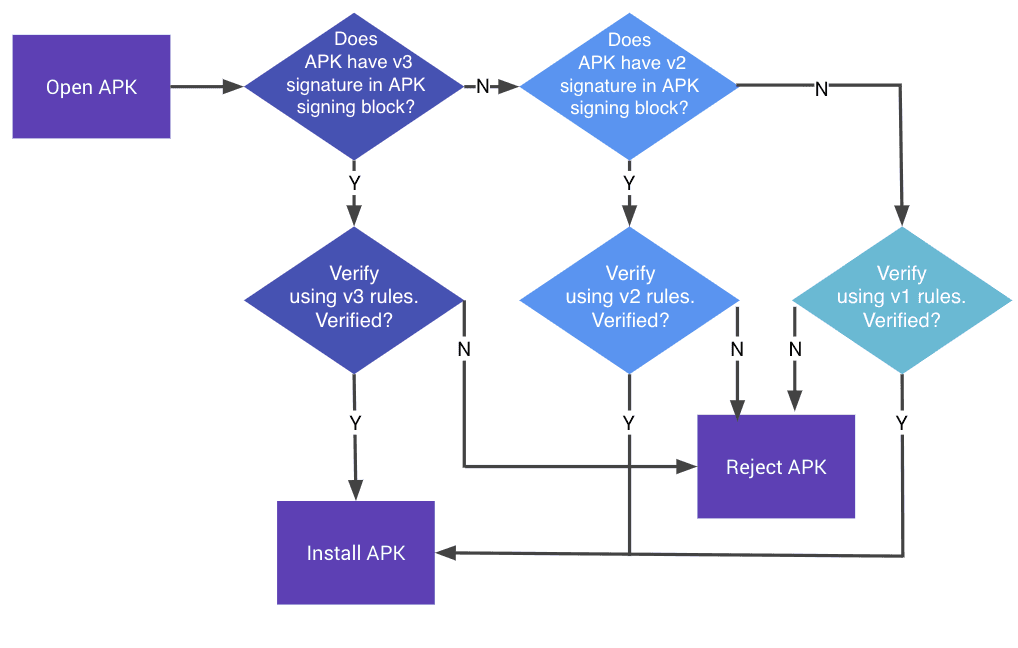
APK Signature Scheme: Verifying App Integrity
An APK signature is a tamper-evident seal, proving an app is from a specific developer and hasn't been altered. Android uses it to trust app updates and prevent malware. The footgun: losing your signing key means you can never update your app again.
React DevTools Profiler: Find Slow Renders
The Profiler is a stopwatch for your component tree. It records why each render happened and how long it took, so you can spot unnecessary re-renders in React Native. The footgun is chasing render counts instead of actual frame time.
We are hiring for this. Every open role lists the topics its interview covers, so you can prepare for the real thing rather than guessing.
See open roles