Easy everything in Mobile Dev, page 5
How do AnimationController and TickerProvider work together to drive animations?
Tests your grasp of Flutter's imperative animation engine. AnimationController stores value and direction; TickerProvider (via vsync) schedules frame callbacks; paired they emit 60–120 ticks per second.
Describe CustomPaint and CustomPainter and implement a circle
This tests Flutter's render delegation. Separate CustomPaint, the canvas widget, from CustomPainter, the drawing logic; cover canvas.drawCircle and shouldRepaint returning false. Red flags: calling setState in paint or ignoring shouldRepaint.
Implicit vs explicit animations: AnimatedContainer or AnimationController?
Knowledge of Flutter's implicit versus explicit animation paradigms. Implicit widgets auto-animate property changes on rebuild; explicit controllers manage playback manually. Red flag: saying explicit is always superior or that implicit animations cannot stop.
When to use SQLite over key-value storage?
Tests structured-vs-flat storage judgment. Good answers cite relational data, complex queries, or multi-table schemas, then list adding the dependency, getting a path, opening with onCreate, and keeping a singleton.
Purpose of factory fromJson constructor in Dart models
Factory fromJson centralizes deserialization, preprocesses Map values before instantiation, and keeps the primary constructor clean.
Explain FutureBuilder and how it manages async UI states
This tests declarative async UI state management. Obtain the Future before build, pass it to FutureBuilder, and branch on snapshot.connectionState and hasError to render loading, data, or error states.
Make a GET request with http and parse JSON in Dart
Practical Dart async networking with package:http and dart:convert. Import http, await get(Uri.parse(url)), verify statusCode is 200, then jsonDecode(response.body) as List<Map<String, dynamic>>. Skipping status checks or decoding without a cast.
Explain ephemeral vs app state and when to use setState
This tests state scoping judgment. Ephemeral state is local to one widget, like a page index or checkbox value, and setState fits perfectly. App state is shared, like a user profile or cart, and needs a state management solution.
Navigator.push vs Navigator.pushNamed in Flutter
Tests Flutter navigation patterns and scalability. A strong answer contrasts inline widget construction with centralized route tables, noting pushNamed centralizes routes but complicates type-safe data. Red flag: named routes are always better for large apps.
How do you pass data with Navigator.push and return data with Navigator.pop?
Tests imperative navigation and async result patterns. Strong answer: push via MaterialPageRoute with constructor args; await the Future from Navigator.push; pop with Navigator.pop(context, result). Red flag: using global state instead of the Future result.
Explain the validator property in TextFormField and what triggers error display
Tests Form validation lifecycle knowledge. Strong answer: validator returns String? error or null; formKey.currentState.validate() triggers all fields; returned string renders as inline error.
How do you retrieve and listen to TextField changes in Flutter?
Use TextEditingController, attach to TextField, listen with addListener, read controller.text, dispose in State.dispose.
Handle taps on a non-button Container: GestureDetector vs InkWell
This tests gesture propagation and Material feedback. Use GestureDetector for raw taps, drags, or scales; InkWell for Material ripples, which needs a Material ancestor. Red flag: InkWell without Material or ignoring GestureDetector drag support.
mainAxisAlignment vs crossAxisAlignment in Column, and textDirection in Row
Tests Flutter flex axis awareness. In a Column, mainAxisAlignment is vertical and crossAxisAlignment is horizontal. In a Row, textDirection governs the main axis, not crossAxisAlignment; verticalDirection governs the cross axis.
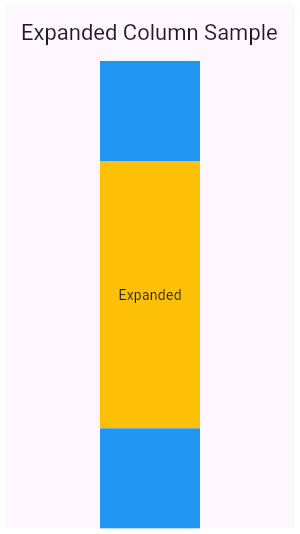
How do you split a Column 1/3 and 2/3 using Expanded?
Tests understanding of flex allocation in Flutter layouts. Strong answers wrap both containers in Expanded, assign flex values of 1 and 2, and note that Expanded forces children to fill the Column's main axis. Red flag: proposing fixed heights instead of flex.
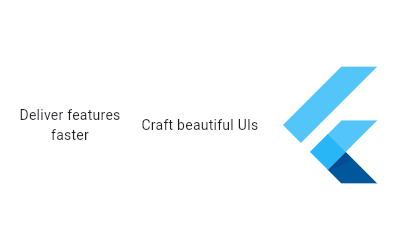
In a Row, how do you space children evenly across the width?
Set mainAxisAlignment to spaceEvenly; contrast with spaceBetween and spaceAround.
What is the build method's purpose and key constraints?
It returns a Widget tree, can run every frame, must avoid side effects, and uses BuildContext for inherited data.
Explain StatelessWidget vs StatefulWidget and when to choose each
This tests immutable UI versus persistent state. StatelessWidget rebuilds when config changes; StatefulWidget owns State surviving rebuilds. Use StatelessWidget for static UI and StatefulWidget for interactive elements.
Difference between Future<void> and void from an async function
Future<void> lets callers await and catch errors; void hides the Future, preventing await and leaving exceptions uncaught.
Define a Dart Future, return Future<String>, and handle errors with both patterns.
Tests Dart async primitives and error handling. A strong answer defines Future as a pending async result, writes a delayed Future<String>, consumes it with then/catchError, and mirrors with async/await try/catch.
We are hiring for this. Every open role lists the topics its interview covers, so you can prepare for the real thing rather than guessing.
See open roles