More in Mobile Dev — page 56
ValueNotifier: Notifies on Replacement, Not Mutation
ValueNotifier is a simple state holder that tells widgets to rebuild when its single value is replaced. It's great for immutable data like a boolean toggle or counter.
Provider: Pass Data Down Your Widget Tree
Think of Provider as a delivery service for your app's data, passing it down the widget tree without sending it through every widget's constructor. It's a lightweight way to manage state. The footgun: never use `.value` to create a new object.
PopScope: Guarding Your Flutter Routes
PopScope acts as a gatekeeper for back navigation in Flutter, letting you intercept and block attempts to leave a screen. Use it to show a confirmation dialog for unsaved changes. Its behavior differs on iOS; the swipe-back gesture won't trigger its callback.
PageRouteBuilder: Custom Routes Without the Boilerplate
PageRouteBuilder creates a custom page route on the fly, skipping the boilerplate of a full subclass. Just provide a `pageBuilder` for the screen's content and a `transitionsBuilder` for a unique animation.
Flutter Hero Animations: Guiding the User's Eye
A Hero animation makes a widget appear to fly from one screen to another, connecting two UIs. It's perfect for transitioning a thumbnail to a detail page, guiding the user's focus. The main footgun is using non-unique tags, which causes animations to fail.
Flutter's Router API: Declarative Navigation
The Router API treats navigation as state. You declare the page stack based on app state, giving you full control over URLs and the back button. This is vital for web/desktop apps but introduces significant boilerplate compared to simple push/pop navigation.
GoRouter: URL-Based Navigation for Flutter Apps
GoRouter treats your app's screens like web pages with URLs. This declarative approach simplifies deep linking and passing data via paths like `/users/123`. The footgun is forgetting its declarative nature and trying to manage state imperatively.
Flutter Named Routes: Navigate with Strings, Not Widgets
Think of named routes as URL paths for your app's screens. Instead of building a screen widget on the spot, you just tell Flutter "go to '/profile'". This is ideal for centralizing navigation in large apps and for enabling deep linking.
Imperative Navigation: Pushing and Popping Screens
Think of app screens as a stack of cards. You `push` a new screen onto the top to show it and `pop` it off to go back. It's ideal for linear flows like list-to-detail. The footgun: popping the last screen closes the app.
MaterialPageRoute: The Page in Your Navigator Stack
Think of Navigator as a stack of screens. MaterialPageRoute wraps your new screen widget, defining its platform-specific transition (slide on iOS, zoom on Android). You use it with `Navigator.push` to show a new screen.
RawKeyboardListener: Deprecated Hardware Key Events in Flutter
This is a deprecated Flutter widget for capturing raw hardware keyboard events, bypassing text input systems. It was for games or custom shortcuts, but the biggest mistake is using it now. Use KeyboardListener instead.
Build Custom Inputs with Flutter's FormField Widget
FormField is a state wrapper, not a UI widget, that turns any widget into a validatable form input. Use it for custom inputs like sliders or star ratings that must integrate with a Form. The footgun is forgetting to supply the UI via its `builder`.
Flutter's Gesture Arena: Who Wins the Touch Event?
The Gesture Arena is a contest where multiple gesture detectors compete for one touch event. This happens when a tappable button is inside a scrollable list. The biggest footgun is a gesture not firing because an unexpected detector won the competition.
Dismissible: The Swipe-to-Remove Widget in Flutter
A `Dismissible` widget lets you swipe away list items, like clearing notifications. Use it for to-do lists or email inboxes. The key footgun: you MUST provide a unique `Key` and remove the item from your data source in `onDismissed`, or it will reappear on…
FocusNode: Programmatically Managing Widget Focus
A FocusNode is your handle to a widget's focus state, letting you programmatically request focus or listen for changes. It's essential for forms, like moving focus from one TextField to the next.
Flutter's Form Widget: Grouping and Validating Input
A Flutter `Form` acts as a supervisor for multiple input fields, letting you validate and save them all at once. Use it for login screens or user profiles. The footgun is forgetting the `GlobalKey`, which makes it impossible to trigger validation.
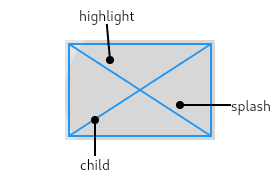
InkWell: Adding Material Splash Effects
InkWell adds a Material Design 'splash' effect to any widget on tap. Think of it as ink spreading inside the surface you touch. Use it to make non-interactive widgets like images respond to taps. The splash won't appear if an opaque widget is between it.
TextEditingController: Syncing UI and Code for Text Fields
A TextEditingController is the two-way link between your code and a text field's state. Use it to read user input, set initial text, or move the cursor. A common footgun is forgetting to call `dispose()` on the controller, which leads to memory leaks.
Flutter's TextField: Capturing User Input
Flutter's TextField is the standard widget for user text input. Use it for search bars or login forms, and manage its state with a TextEditingController for full control. The biggest footgun is forgetting to dispose its controller, causing memory leaks.
Flutter's Three Main Material Buttons
Flutter's Material buttons signal emphasis. Use ElevatedButton for primary actions (Save), OutlinedButton for secondary (Next), and TextButton for tertiary (Cancel). The footgun is choosing a button for its looks, not its place in the action hierarchy.