Everything in Node.js & Express, page 11
Joi: Declarative Schemas for Data Validation
Joi lets you describe your data's shape with a readable schema instead of writing manual validation logic. It's used to validate API request bodies or config files.

Custom Error Classes: Beyond Generic Errors
Create specific error types, like NotFoundError, instead of generic ones. This lets your code react differently to different failures, like sending a 404 for a missing user vs. a 500 for a database outage.
Error-First Callbacks: Node.js's Original Async Handler
The error-first callback is a Node.js convention: check for rain before unpacking the picnic. The first argument to any async callback is for an error. It's the standard for older core modules like fs.
JWT Storage: Cookies (CSRF Risk) vs. Local Storage (XSS Risk)
Storing JWTs means choosing your risk: Cross-Site Request Forgery (CSRF) with cookies, or Cross-Site Scripting (XSS) with local storage. While local storage is simpler, HttpOnly cookies are generally safer as they can't be read by client-side scripts.
CSRF Tokens: Preventing Unwanted State Changes on Your Behalf
CSRF protection prevents a malicious site from forcing a user's browser to submit unwanted requests to your app. It adds a unique token to forms that the server validates. The footgun is failing to protect all state-changing endpoints, not just POST forms.
Passport.js: The Generic OAuth2 Strategy
Passport's generic OAuth2 strategy is a template for social logins, not a plug-and-play solution. Use it to integrate a custom OAuth2 provider. The footgun is using it when a provider-specific strategy (like passport-github2) exists, which handles quirks for…
OAuth 2.0: Delegated Authorization, Not Authentication
Think of OAuth 2.0 as a valet key for your data. It lets a third-party app access specific resources on your behalf without you sharing your password. It's used for "Log in with Google" or letting an app access your photos.
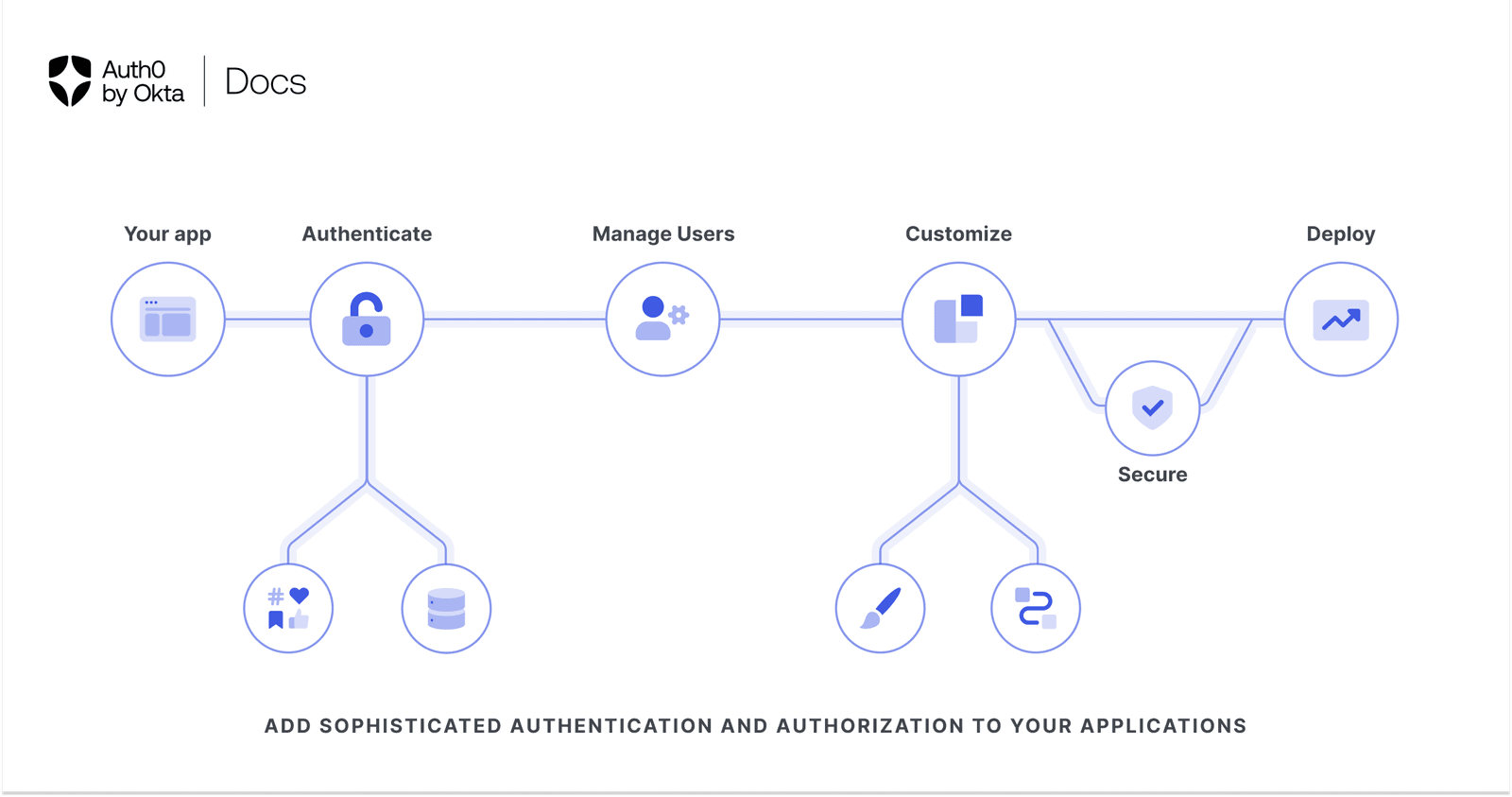
The Refresh Token Pattern: Stay Logged In Securely
A refresh token is like a key to a key-making machine; it mints new access tokens without re-prompting the user. This pattern keeps users logged in to web and mobile apps. The footgun: a leaked refresh token can grant an attacker indefinite access.
Passport.js: The Local Strategy for Username/Password Auth
Passport's Local Strategy is the bouncer for traditional username/password logins in Node.js. You provide the logic to verify credentials against your database, and Passport handles the session management.
Authentication vs. Authorization: Who You Are vs. What You Can Do
Authentication is proving your identity ('Who are you?'), like showing an ID. Authorization is checking your permissions ('What can you do?'), like using a key for a specific door. Systems use both on login. The footgun is treating them as the same concept.
Sequelize Scopes: Reusable Query Shortcuts
Sequelize scopes are named shortcuts for common query conditions, letting you define where or include clauses once and reuse them. Use them to keep code DRY, like an active scope. The footgun: a defaultScope is always on unless you call .unscoped().

Mongoose Population: Linking Documents Across Collections
Mongoose's populate() acts like a client-side JOIN, replacing document IDs with actual documents from other collections. It's ideal for linking related data, like a blog post's author.
Sequelize Transactions: All-or-Nothing Database Writes
A Sequelize transaction is a safety wrapper for database queries, ensuring they all succeed or none do. Use it for multi-step operations like creating a user and profile.
Sequelize Migrations: Version Control for Your Database
Think of Sequelize migrations as Git for your database schema. Each file is a commit describing how to apply (up) and revert (down) a change. Use them to evolve your schema reliably across environments. The footgun: never edit the DB directly.
Mongoose Validation: Your Schema's Built-in Guard
Mongoose validation is a guard at the application layer, ensuring data conforms to schema rules before hitting the database. Use it for required fields, lengths, and ranges. The unique option is for database indexes, not a Mongoose validation rule.
Mongoose Middleware (Hooks): Intercepting Database Operations
Mongoose middleware (hooks) lets you intercept database operations. Think of them as "before" or "after" scripts for actions like save or find. Use them to hash passwords before saving a user.
Sequelize Associations: Who Holds the Foreign Key?
Think of Sequelize associations as rules for foreign keys. A.belongsTo(B) means A holds the bId foreign key. A.hasOne(B) or A.hasMany(B) means B holds the aId key. The footgun is mixing these up, which breaks your database schema and queries.

Connecting to MongoDB with the Native Node.js Driver
The MongoDB driver is a translator between your Node.js app and database. You create a MongoClient, point it at your database URL, and then you can execute commands. The footgun is not closing the connection, which leads to resource leaks in your application.
HATEOAS: Let Your API Tell You What's Next
HATEOAS makes an API self-discoverable, like a website where you click links instead of guessing URLs. The server's response includes links for the next possible actions, decoupling the client from hardcoded endpoints.
API Rate Limiting: Protecting Your Express Endpoints
Rate limiting acts as a bouncer for your API, preventing any single user from overwhelming it. It's crucial for public APIs and sensitive endpoints like password resets to block abuse. The default in-memory store won't work across multiple server instances.
We are hiring for this. Every open role lists the topics its interview covers, so you can prepare for the real thing rather than guessing.
See open roles