Advanced everything in Product Management, page 4
Long-term onboarding holdback: technical and data integrity challenges
This tests the engineering cost of year-long holdbacks in growth. A strong answer covers feature-flag entropy, pipeline drift, survivorship bias, and counterfactual validity. Red flag: treating the holdback as static config that never rots.

Design a programmatic SEO system for 1 million landing pages
Tests data infrastructure thinking, not content generation. Covers one-row-one-page schema, template rendering with edge caching, hierarchical routing, and crawl-budget controls via sitemaps. Red flag: AI bulk writing without structured data or caching.

What is the multiple comparisons problem and how to correct?
This tests your grasp of family-wise error inflation across many tests. A strong answer defines the problem, contrasts per-comparison and family-wise error, and names corrections like Bonferroni or FDR.

WAU is flat despite positive A/B tests; why and how to diagnose
This tests distinguishing real impact from statistical artifacts. Strong answers cite false positives from low base rates, peeking, novelty, and local-global mismatches. Diagnose with long-term holdouts, audits, and causal bridges.

How would you structure your growth team's experimentation portfolio?
3 asset classes (iterative 30-70%, tech investments, big bets 20-40%), use expected value per week, and evolve the mix.
Design a system that detects choice paralysis and dynamically simplifies the interface
Track hover entropy, scroll jitter, and time-to-click; use a contextual bandit to select simplification tiers.
How would you use ML to optimize habit-loop notifications?
Tests blending behavioral psychology and ML to personalize cues without coercion. Good answers use contextual bandits with user-state features and reward habit formation over clicks.
How would you instrument events and query a 3-invite aha moment?
Tests taxonomy and stateful aggregation across sessions. Strong answers instrument Teammate Invited with timestamps, compute 7-day per-user counts via stream or SQL windowing, and materialize cohorts.
Design a near real-time user interaction tracking and analytics system
Tests decoupling ingestion from querying with justified tech choices. Outline: client → Kafka → Flink → ClickHouse → API; budget sub-30s latency and backpressure per stage. Red flag: one monolithic RDBMS or batch ETL handling both writes and reads.
How do you architect a global notification holdback group?
Tests persistent control-group isolation without breaking critical flows. Strong answers use deterministic sticky bucketing by user ID, separate marketing and transactional namespaces, and audit holdout bleed.

Describe the architecture for multi-touch attribution with time-decay
Stitch IDs, stream events to warehouse, sessionize journeys, then apply decay weights in SQL.
How would you architect long-term holdback experiment groups?
Tests longitudinal causal inference and engineering tradeoffs for multi-month isolation. A strong answer covers bucketing, delayed metrics, and cross-experiment guards. Red flag: daily re-randomization or ignoring survivorship bias in aging cohorts.
Design column-level data lineage from source to dashboard
Propose AST extractors for Spark and dbt, a graph DB for column edges, and an API for impact analysis.

How do you root-cause a 20% revenue drop with no pipeline failures?
Reconcile against raw events, slice by dimension for silent gaps, audit schema drift.
Design an A/B test separating novelty from true long-term impact
Tests distinguishing novelty from stable effects. Strong answer: staggered rollout with difference-in-differences comparing early and late adopters over weeks. Red flag: extending the A/B test without modeling time-interaction or control maturation.
Design a real-time mobile analytics pipeline
Tests decoupling high-volume ingestion from low-latency querying. Strong designs use an event broker, a stream processor for windowed aggregates, and an OLAP database for sub-second dashboards.
Design a near real-time pipeline to monitor orders per minute
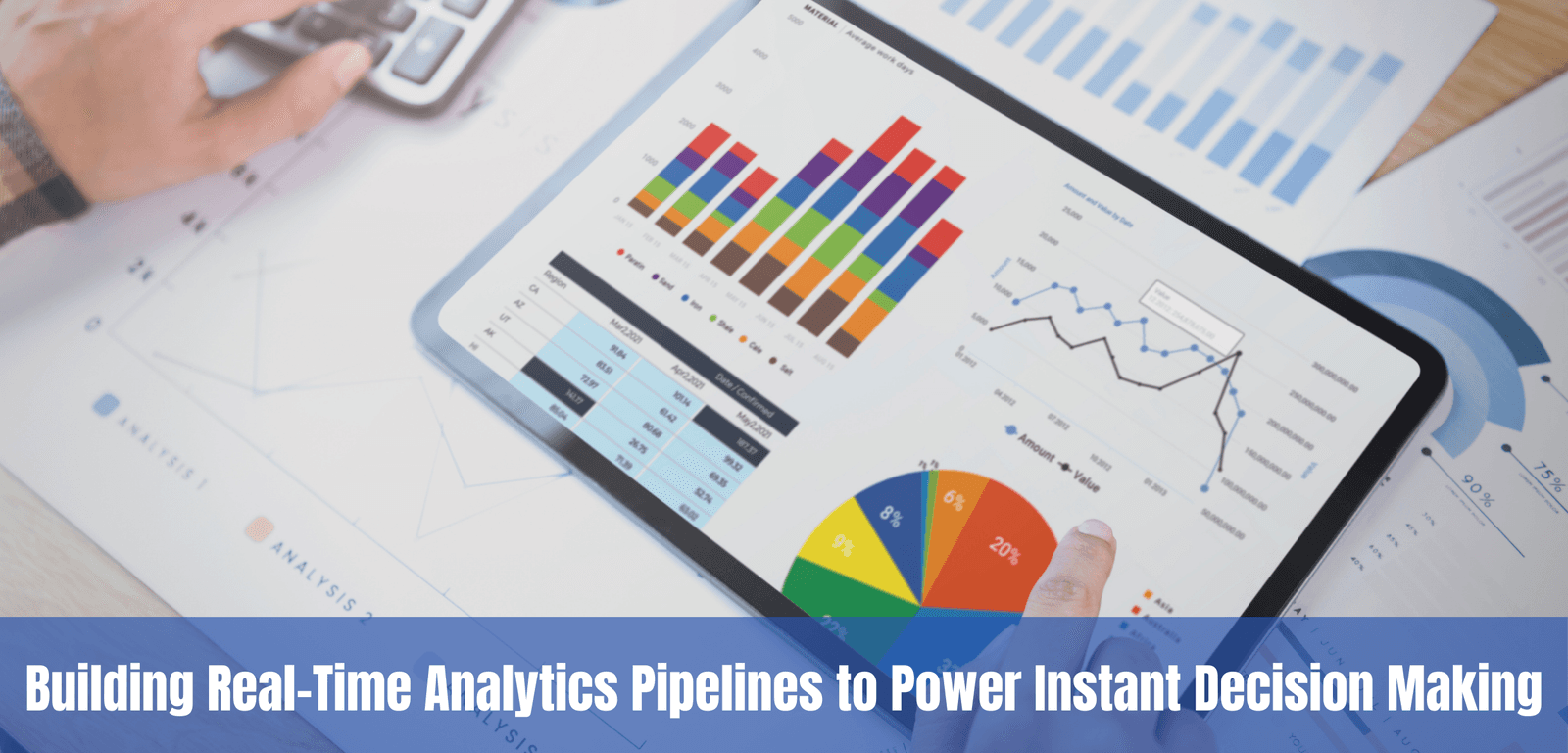
Tests stream architecture and batch trade-offs. Outline: Kafka or Kinesis ingestion, Flink with tumbling windows, Druid or Pinot storage, Grafana alerts. Contrast batch on latency, exactly-once semantics, and cost. Red flag: calling cron SQL real-time.
How do you optimize a data warehouse for billions of rows?
Tests physical design in columnar warehouses at scale. Strong answers cover partition and cluster pruning, materialized views or rollups to reduce joins, caching and search indexes for hot paths, and reserved slots or autoscaling.

Design an experiment and logging to link API latency to engagement
Causal inference and data integration. Randomly inject latency for a treatment group with a control at baseline, then join server trace IDs to client events via a shared request ID. Never confuse correlation with causation or miss join issues.
Design a system to detect sudden add-to-cart drops in real time
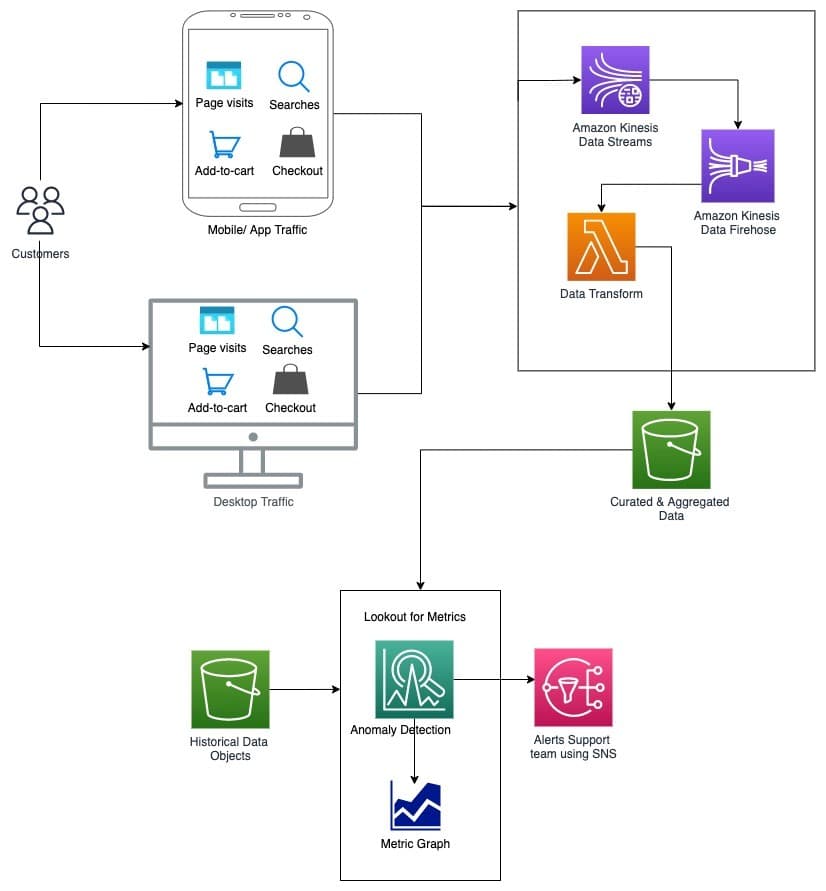
This tests streaming pipeline design and seasonality-aware anomaly detection. Outline Kafka or Kinesis ingestion, windowed aggregations, and ML baselines tuned to hourly and weekly trends. Red flag: static thresholds that ignore daily patterns.
We are hiring for this. Every open role lists the topics its interview covers, so you can prepare for the real thing rather than guessing.
See open roles