Easy everything in Product Management, page 6
What is the Sprint Retrospective output and what happens next?
Output is a concrete improvement plan enacted in the next Sprint, not parked.
Explain the difference between code complete and Done. What artifact defines this?
Tests whether you know Done means a usable Increment, not just written code. Strong answer: code complete is a dev milestone; Done means the Increment meets quality standards. Red flag: saying testing happens after Done or that Done is optional.
Daily Scrum ticket updates: what primary purpose is missing?
This tests whether you know the Daily Scrum inspects Sprint Goal progress and adapts the plan rather than reporting status. A strong answer identifies the missing purpose as team inspection and adaptation against the Sprint Goal.
What is the Sprint Goal and how does it guide planning?
Goal-driven Sprints vs ticket batches. The Sprint Goal is the agreed objective guiding selection of ordered backlog items to build a valuable Increment and enable inspection. Red flag: calling it optional or pulling the top N items without negotiation.
What are the key components of a well-written user story?
Tests your ability to turn vague needs into actionable, testable work. A strong answer covers who, what, and why; defines acceptance criteria as specific, testable scenarios; and references INVEST.
Daily Scrum runs over 15 minutes; what facilitation techniques realign it?
This tests if you view the Daily Scrum as an inspection and adaptation event. A strong answer proposes a parking lot, coaches self-management of the timebox, and keeps talk focused on adapting the plan. A red flag is asking the Scrum Master to extend the.
How do you handle a mid-Sprint urgent feature request?
Send the stakeholder to the Product Owner; do not add directly to the Sprint Backlog; protect the current plan.
Describe the Daily Scrum's purpose, audience, and intended outcome.
Say it's a Sprint event for Developers to inspect progress toward agreed goals and adapt their plan.
Three accountabilities in a Scrum Team and their primary focuses
Tests recall of the three Scrum accountabilities. Outline: Product Owner orders the backlog; Developers create an Increment each Sprint; Scrum Master fosters an environment for empiricism. Red flag: Using roles or treating the Scrum Master as a task master.
How would you apply Agile simplicity when implementing a new feature?
Validate the smallest user-problem slice; defer gold-plating and custom abstractions; prefer existing tools.
Primary goal of a retrospective and its tie to continuous improvement
State the goal is improving quality, tie it to Scrum's empirical pillars, and demand adaptations.
How does 'Individuals and interactions' shape team structure and communication?
Say teams should be cross-functional and favor direct communication like pairing and standups over mandated tool workflows.
Instrumenting a New User Interaction in a Mobile App
Tests your understanding of the end-to-end analytics pipeline. A good answer defines the event, instruments it on the client with an SDK, verifies it in a debug view, and confirms its arrival in the data warehouse after the ETL process.
How would you build a weekly active user dashboard?
This tests translating a business need into a technical spec. First, clarify the definition of "active." Then, identify the event data needed (user_id, timestamp). Finally, outline the ETL and BI tool steps. A red flag is not clarifying the metric first.

Track an 'Export to CSV' button's usage
This tests modeling a feature's full lifecycle (intent, success, failure) in analytics. Propose one custom event like export_interaction with a status parameter ('success', 'failure') fired on completion, not just on click.

Describe tracking a user event from frontend to BI tool
Tests your grasp of the modern data stack. A great answer outlines the five stages: frontend emission, ingestion, loading into a warehouse, transformation, and BI visualization. A red flag is describing only the frontend code and ignoring the data pipeline.
How would you capture UTM parameters for attribution?
This tests your grasp of the data lifecycle from capture to persistence. A good answer covers client-side parsing, cookie storage, and linking anonymous data to a user record upon sign-up. A red flag is forgetting to persist the data server-side.
Describe the client-side event for an 'Add to Cart' button
Tests your knowledge of standard analytics schemas (like GA4) and designing payloads for business analysis. A great answer names the 'add_to_cart' event, details the 'items' array with product data, and mentions user/session context.

How would you measure a sales forecast model's accuracy?
Tests if you can link statistical metrics to business outcomes. Define MAE (average error) and RMSE (penalizes large errors). Choose RMSE when large misses are costly (e.g., stock-outs), MAE otherwise. A red flag is reciting formulas without business context.
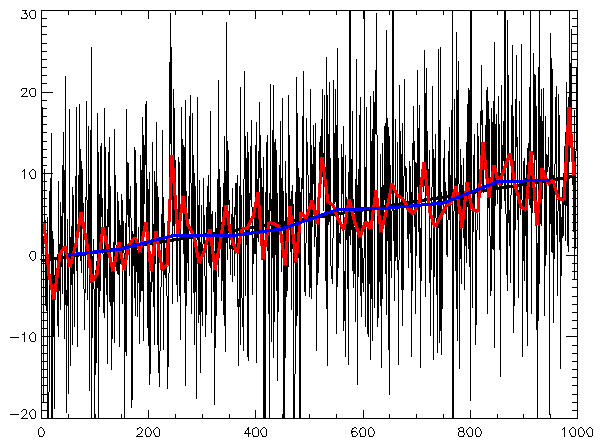
How would you analyze a time series of user sign-ups?
This tests your structured approach to decomposing time series data. A strong answer identifies trend (long-term growth), seasonality (weekly/yearly patterns), and irregular components like spikes or dips.
We are hiring for this. Every open role lists the topics its interview covers, so you can prepare for the real thing rather than guessing.
See open roles