Intermediate everything in Product Management, page 15
What is SAFe's Architectural Runway and how do engineers maintain it?
Tests balancing emergent design with intentional architecture at scale. Runway is existing code and infrastructure for near-term features; engineers contribute via enablers, refactoring, standards, and spikes.

How would you probabilistically forecast 40 stories using throughput data?
Tests probabilistic forecasting literacy using historical throughput. Good answers gather 8–12 periods of throughput, run Monte Carlo resampling, and present percentile delivery curves (e.g., 50th/85th/95th).
From an engineer's perspective, when does Cycle Time begin and end?
Tests if you set Cycle Time boundaries to expose wait states past coding. Strong answer: starts at In Progress, ends at Done or production, includes review/test, excludes backlog queues, and distinguishes from Lead Time. Red flag: starting at ticket creation.
Explain Little's Law and its practical application in Kanban
This tests your grasp of the WIP-throughput-lead time relationship in stable flow systems. State Lead Time = WIP / Throughput and show lowering WIP cuts lead time if throughput is flat. Beware claiming more WIP raises throughput without increasing lead time.
What is the primary purpose of a WIP limit in Kanban?
Tests whether you see Kanban as a flow system, not just a board. A great answer says WIP limits constrain multitasking to reduce cycle time and improve throughput by prioritizing finishing over starting. Red flag: saying limits are for tracking progress.

How do you spike a story to de-risk it and define deliverables?
Whether you see spikes as time-boxed research, not feature work. Propose a fixed duration, define the specific question, deliver a decision record or prototype, and revise the story estimate. Never treat a spike as production code or skip the time box.
What is the primary difference between Sprint Review and Sprint Retrospective?
Tests separation of product feedback from process improvement. Review: stakeholders inspect the Increment and adapt the backlog. Retrospective: Scrum Team only inspects its process and plans improvements. Red flag: calling either a status report or demo.
Why do teams use story points instead of hours or days?
Define against a baseline; explain they absorb uncertainty so velocity stabilizes for planning.
Explain backlog refinement: purpose, participants, and outcomes
Tests if you treat refinement as team-wide prep, not a solo PO task. Strong answers cite the full team and stakeholders, with outcomes being ready stories and estimates. Red flag: saying only the PO and Scrum Master attend or that it replaces sprint planning.
Two senior developers clash on implementation, derailing sprint planning. Your role?
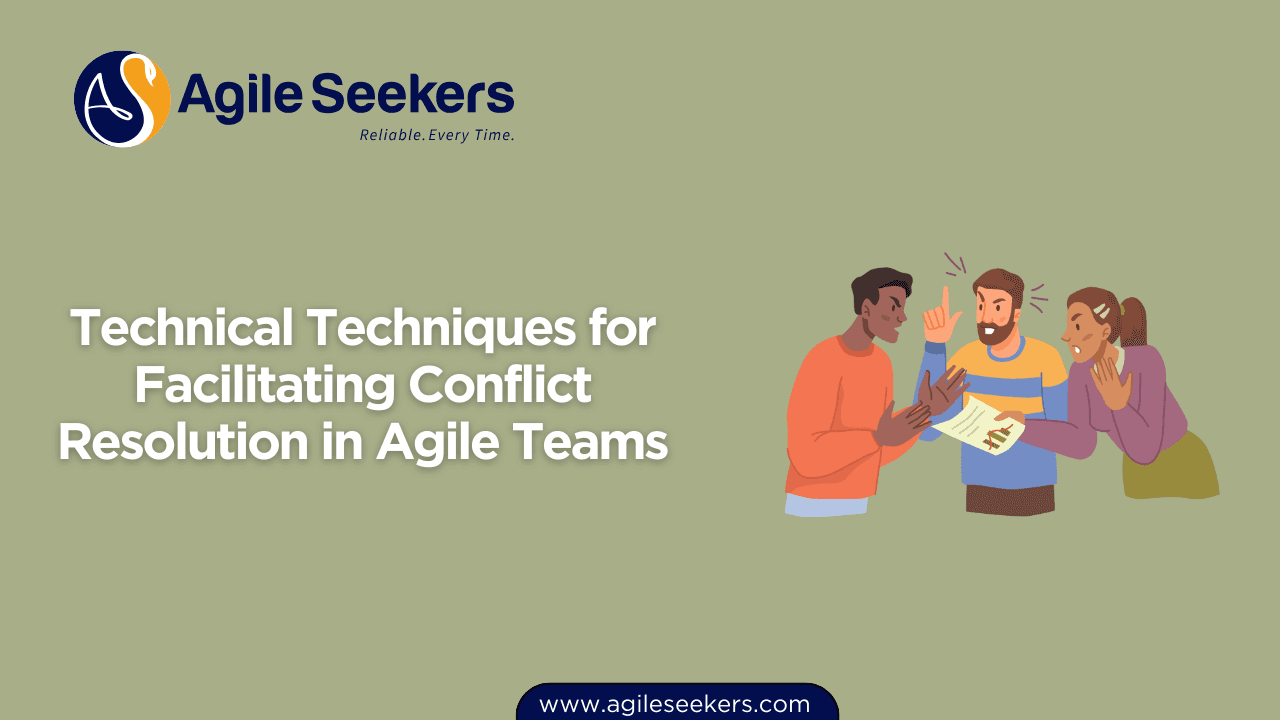
Park or timebox the debate, reframe positions into shared interests with structured dialogue, and drive to a decision or spike.
Why is velocity as a primary KPI destructive, and what's better?
This tests if you see velocity as a planning gauge, not a performance metric. A strong answer notes points are subjective, cites Goldratt on gaming, and proposes team-driven improvement instead. A red flag is claiming velocity works if averaged over time.

Compare SAFe and LeSS from an engineer's view
Tests whether you see scaling frameworks as workflow design choices. Answers contrast SAFe's PI planning and RTE-managed dependencies with LeSS's single Sprint planning and team-driven resolution. Red flag: calling them interchangeable without citing autonomy.

How would you estimate a cross-cutting initiative in PI Planning?
Tests decomposition of cross-cutting work into team enablers with visible dependencies. Good answer: teams estimate own slices in normalized points, map dependencies on the ART board, and reserve IP buffer.
What does a widening CFD Code Review band indicate?
Tests CFD literacy: a widening Code Review band shows WIP accumulation and a bottleneck. Great answers cite WIP limits, swarming, and policy fixes before hiring. Red flag: mistaking inventory growth for increased throughput.

How would you implement Classes of Service in Kanban?
Tests whether you segment work by risk and cost of delay. A strong answer defines explicit policies, visualizes classes with color or lanes, and reserves WIP capacity per class. Red flag: using classes as simple priorities without capacity rules.
How would you measure a launched feature's success and impact?
This tests if you link code to business outcomes via agile metrics. A strong answer covers value, quality, satisfaction; names metrics like velocity or cycle time; and uses reports to track progress. Red flag: defining success purely by uptime or bug counts.
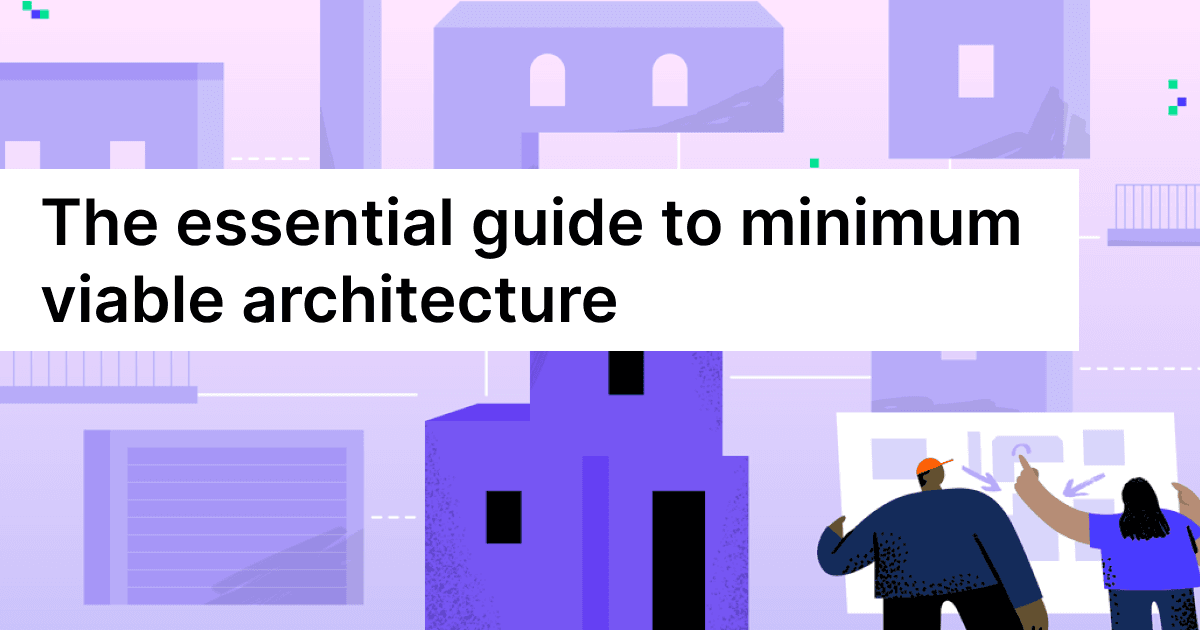
How do you differentiate an MVP from a throwaway prototype architecturally?
Distinguish by user commitment; define bounded contexts with stable interfaces; favor reversible decisions and day-one observability.
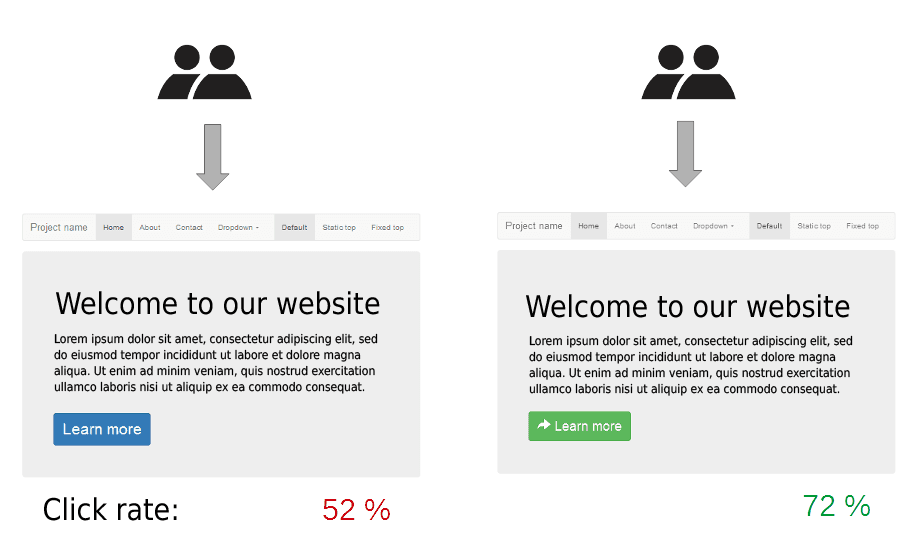
How would you implement an A/B test for a redesigned dashboard?
Tests experiment rigor: randomize stable user buckets, pick one primary metric and guardrails like latency, pre-calculate sample size and runtime with a minimum detectable effect, and validate via backend logging.

What is the Strangler Fig pattern and its use in legacy modernization?
Tests incremental modernization over big-bang rewrites. A strong answer covers the botanical metaphor, building new components alongside legacy, routing traffic, extracting seams, and four activities. Red flag: a long rewrite delivering no value until launch.
How would you introduce Test-Driven Development to a test-after team?
Tests change management and influence without authority. A strong answer maps TDD to team pain points, pilots it on one story type with measurable outcomes like defect rate. Red flag: mandating TDD team-wide immediately or dismissing existing tests.
We are hiring for this. Every open role lists the topics its interview covers, so you can prepare for the real thing rather than guessing.
See open roles