Intermediate everything in Product Management, page 5
Design an analytics event schema
Consistent object-action naming, snake_case, typed properties with units, and shared context like user, session, timestamp.
Client-side vs server-side event tracking
Client captures UI intent but loses data to ad blockers and tampering; server is trustworthy for transactions but blind to UI interactions.
Experiment design under network effects
Cluster-level randomization, graph or geo clustering to contain spillover, and analysis at the cluster unit.
Design a centralized experimentation service
A config/assignment API, deterministic SDK-side bucketing, and a separate exposure-logging pipeline.
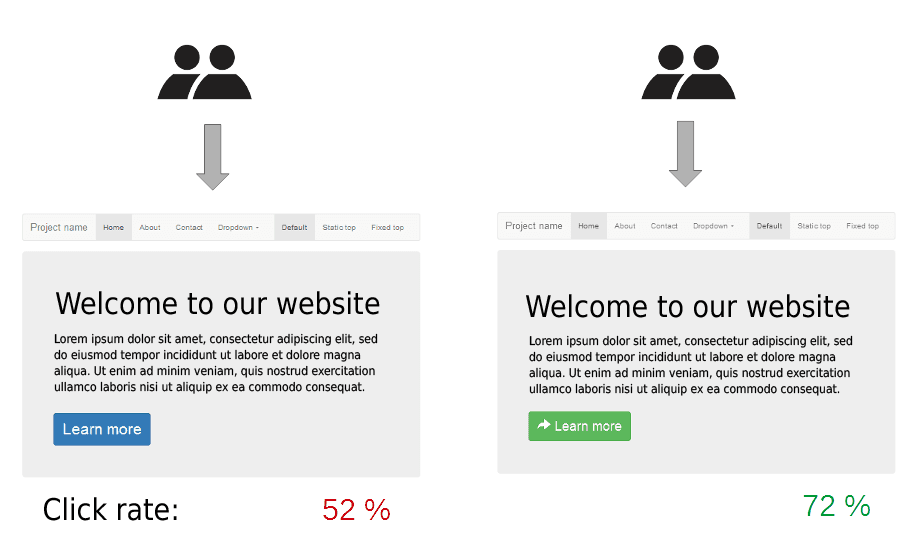
Set up a client-side button color A/B test
Stable hashing of a persistent ID into buckets, conditional rendering of the variant, exposure plus click event logging.
Attribute a mobile install to a desktop ad
Deterministic matching via a shared login is accurate but needs auth on both ends; probabilistic fingerprinting scales without login but is noisy and privacy-fraught.
Handle interaction effects on a shared page
Combined variants may produce effects neither has alone; use mutual exclusion for likely interactions, orthogonal designs with interaction monitoring otherwise.
Why repeatedly extending a test inflates false positives
Repeatedly checking and extending until significance is p-hacking via optional stopping, which inflates the false-positive rate; fix with fixed sample sizes or sequential…
Architect a configurable, goal-based onboarding flow
Capture the goal, let the backend return a server-driven flow definition mapping goal to steps and content, render generic components on the client.
Increase experiment velocity for non-engineers
Server-driven config, feature flags, and a self-serve UI let non-engineers ship copy or layout variants instantly; add guardrails and metric checks.
Prevent conflicting experiments with layers
Group conflicting experiments into one layer so a user's per-layer bucket maps to at most one of them; orthogonal layers can overlap.
Design a contamination-safe pricing experiment
User-level price tests leak via fairness perception, so use geo holdouts or time-based cohorts where everyone in a unit sees one price.
Run concurrent experiments without interference
Independent non-interacting tests can share traffic through orthogonal layers; interacting ones need mutual exclusion in a shared layer.
Design a referral feature's lifecycle and races
A referral entity with explicit states, a unique constraint on the invited user, and atomic transactions plus idempotency to prevent double credits.
Communicate forecast uncertainty with prediction intervals
A point estimate hides risk; produce a prediction interval via model error, simulation, or scenarios, and state assumptions.
Combine qualitative and quantitative data for hypotheses
Quant reveals what and where, qual reveals why, then triangulate into a falsifiable hypothesis with a metric.
Explain RICE scoring and its Confidence factor
Score equals Reach times Impact times Confidence divided by Effort; Confidence discounts uncertain estimates; ground it in evidence tiers.
Resurrection Campaign
A resurrection campaign is a targeted effort to win back dormant or churned users by re-engaging them with relevant value, often via email or push. It matters because reactivating known users is usually cheaper than acquiring new ones.
Stationarity in time series and why ARIMA needs it
Constant mean/variance/autocovariance; ARIMA's coefficients assume them; test with the ADF test and ACF plots; achieve it via differencing or log transforms.
Describe the architecture of a generic A/B testing framework
Hash-based user bucketing, config service, pre-registered metrics, and confidence intervals on dashboards.
We are hiring for this. Every open role lists the topics its interview covers, so you can prepare for the real thing rather than guessing.
See open roles