Concepts in Python & FastAPI, page 4
SQLAlchemy Declarative: Python Classes as Database Tables
SQLAlchemy's Declarative Mapping lets you define database tables as Python classes. You write a class with typed attributes, and SQLAlchemy generates the SQL. It's the standard way to use the ORM, turning database rows into Python objects.
SQLAlchemy 2.0: Async Without Blocking the Event Loop
SQLAlchemy 2.0 wraps its synchronous core with an async API, letting you await database calls without blocking your app's event loop. Use it in frameworks like FastAPI.
Alembic: Version Control for Your Database Schema
Alembic is like Git for your database schema, providing versioned, reversible changes. Use it with SQLAlchemy to evolve your database structure alongside your code. The footgun is that autogeneration can miss changes; always review generated scripts.

Motor: Don't Block Your Python App on MongoDB
Motor is the async bridge for Python apps to talk to MongoDB without blocking. Use it in FastAPI or other async frameworks to keep your server responsive during database queries.
Beanie: Python Objects as MongoDB Documents
Beanie maps Pydantic models to MongoDB documents, letting you interact with the database using Python objects instead of raw queries. Use it in async apps like FastAPI for rapid, type-safe CRUD.
SQLAlchemy: Control When Your Relationships Load
SQLAlchemy's default lazy loading is convenient but can cause an N+1 query storm. Use eager loading (joinedload, selectinload) for collections you'll access to prevent many database round trips.

Password Hashing with Python's Passlib
Passlib turns plaintext passwords into secure, salted hashes that are safe to store. Use it in any Python app with user accounts to handle logins. The footgun: never compare hashes directly; always use the .verify() method to prevent timing attacks.
JWT: Signed JSON Claim Tokens
A JWT is a signed JSON envelope: it carries claim assertions in JSON, optionally encrypted, and proves who wrote it using either a private secret or a public/private key. Do not treat the payload as hidden unless encryption is actually enabled.
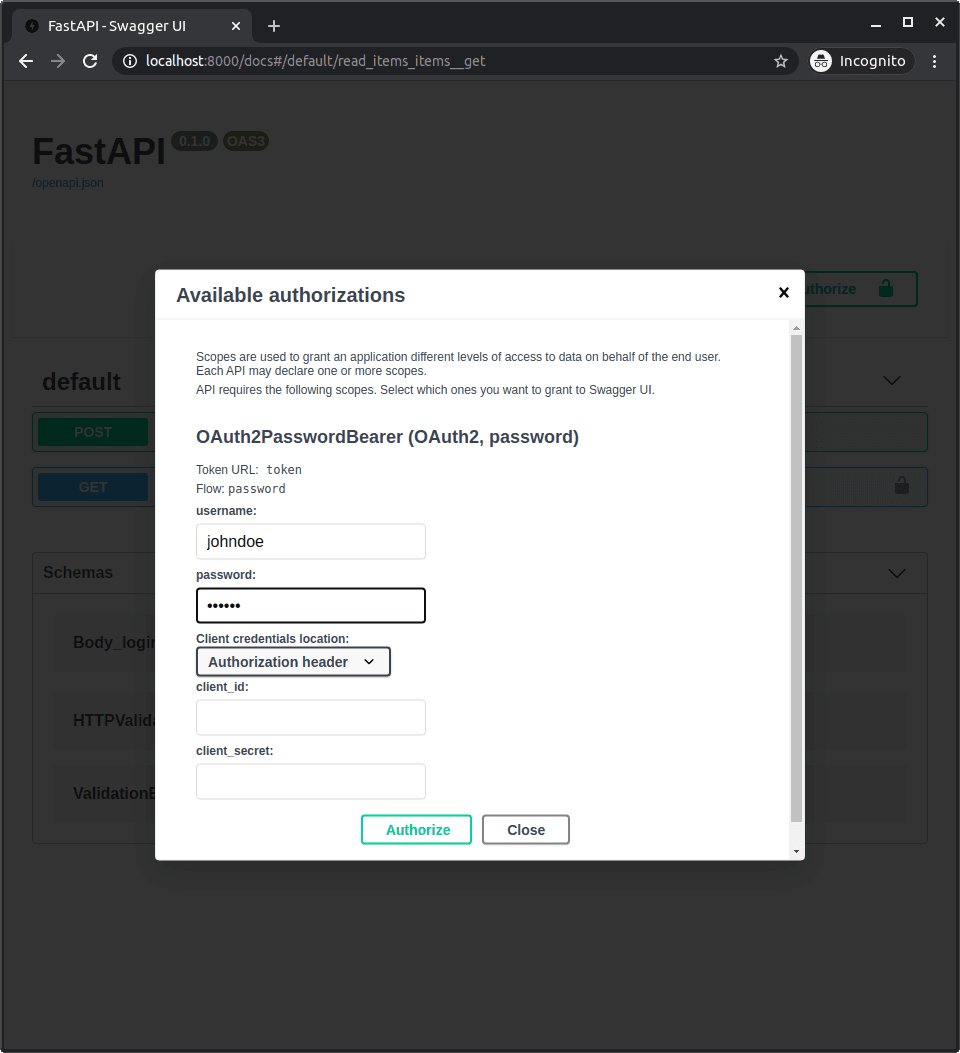
OAuth2 Password Flow: Trading Credentials for a Token
The OAuth2 Password Flow trades a user's credentials for a temporary access token. It's used in trusted first-party apps, like a mobile app logging into its own backend, to avoid sending a password with every API call.
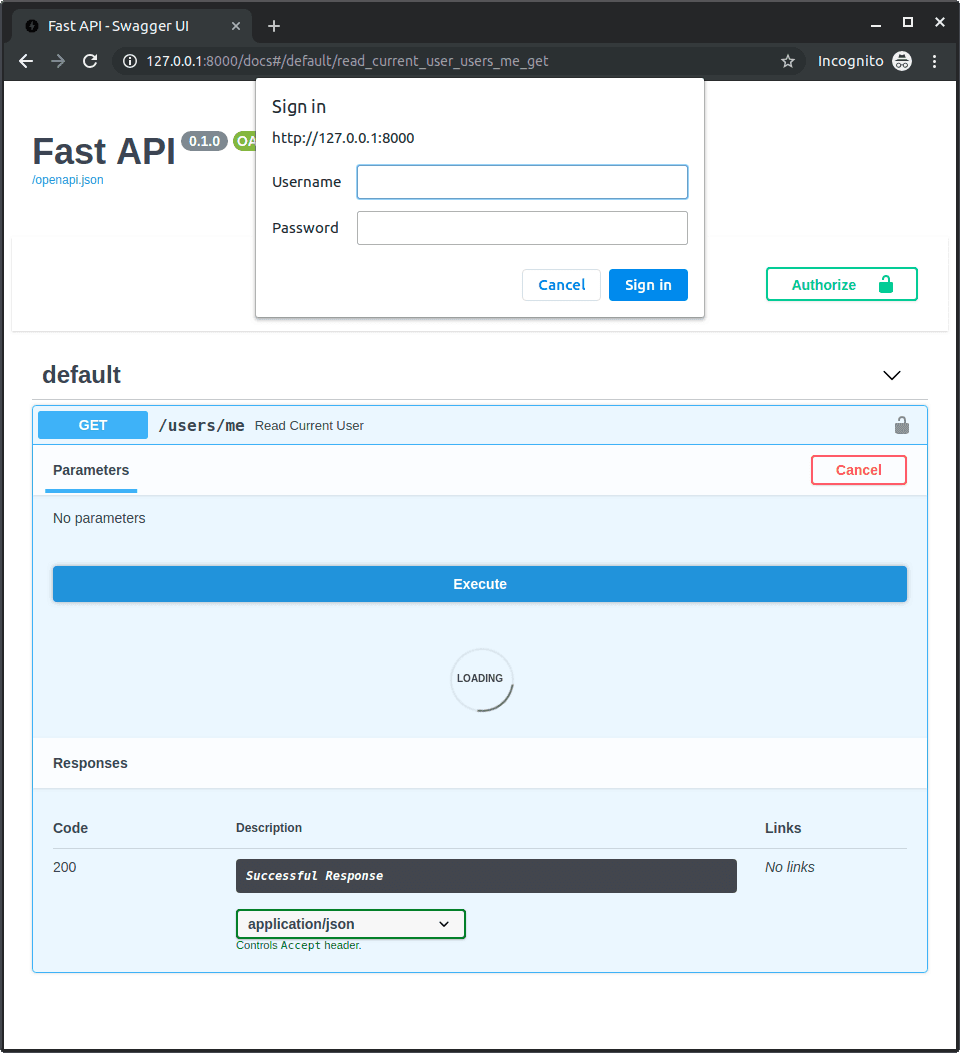
HTTP Basic Auth: Simple but Insecure Access Control
HTTP Basic Auth is a simple gatekeeper for your API, prompting users for a username and password directly in the browser. It's useful for internal tools, but never use it over unencrypted HTTP as credentials are sent in a trivially decodable format.
API Keys: Simple Server-to-Server Authentication
An API key is a simple secret token a client sends to prove its identity, often in a request header. It's ideal for machine-to-machine communication where a user login flow is unnecessary. Footgun: Never send keys in URL query parameters.
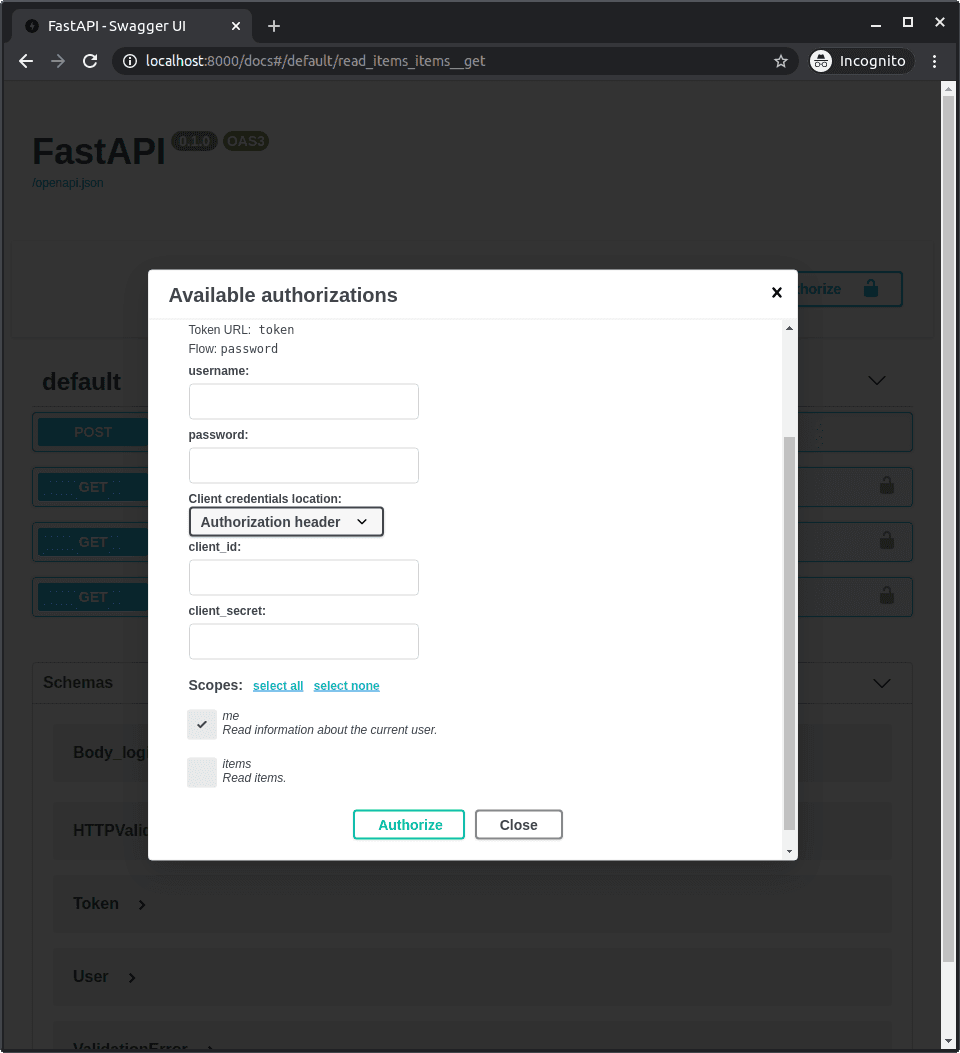
FastAPI: Fine-Grained Permissions with OAuth2 Scopes
Think of OAuth2 scopes as permissions on a keycard. A token gets you in the building, but scopes like items:read or items:write define which rooms you can enter. Use them in FastAPI to grant granular access.
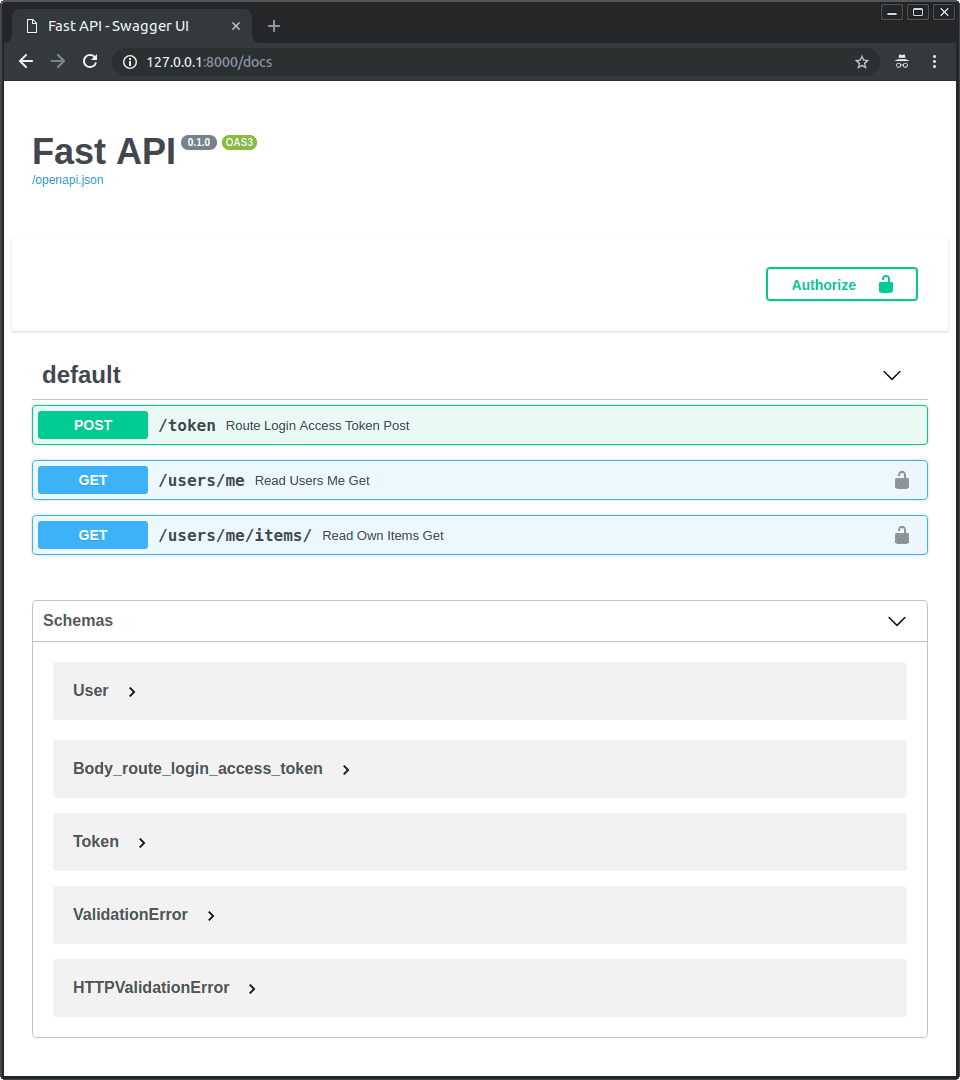
FastAPI RBAC: Using OAuth2 Scopes for Permissions
Treat OAuth2 scopes as a list of permissions. Instead of checking a user's role, you check if their token has the required scope (e.g., items:write) for an endpoint. FastAPI's Security dependency automates this check.
Refresh Tokens: Persistent Sessions Without Re-Authentication
A refresh token is a long-lived credential used to get a new, short-lived access token without re-authenticating. It's how apps keep you logged in for weeks. The footgun is storing it insecurely, letting attackers mint access tokens forever.
OpenID Connect (OIDC): Authentication as a Service
OIDC lets you delegate user login to a trusted third party, like "Sign in with Google." Your app gets a verifiable token saying who the user is, without handling their password. It's used for SSO in web apps.
CSRF: Double Submit Cookies for Stateless Backends
Double Submit Cookies stop CSRF by requiring a secret in two places: a cookie and a request header. The server just checks if they match. It's useful for stateless APIs where storing server-side tokens is impractical.
CORSMiddleware: Unblocking Your Frontend from Your Backend
CORS is a browser security rule, not a server bug. Use FastAPI's CORSMiddleware to tell browsers which frontends (e.g., localhost:3000) are allowed to fetch data from your API (e.g., localhost:8000).
FastAPI Background Tasks: Don't Make the Client Wait
FastAPI background tasks let you run slow operations, like sending an email, *after* returning a response. This keeps your API fast. The main footgun: these are fire-and-forget; a server crash means the task is lost without a real message queue.
Custom FastAPI Middleware: The BaseHTTPMiddleware Helper
FastAPI's BaseHTTPMiddleware lets you wrap endpoints to run code before and after they execute. Use it to add custom headers or log request times. The footgun: reading request.body() in the middleware will break the endpoint, as the body can only be read…
Celery: Offloading Work from Your FastAPI App
Celery lets your web app offload slow tasks to a separate process, keeping your API responsive. Use it for tasks that can't finish in a single HTTP request, like sending bulk emails or processing images.
We are hiring for this. Every open role lists the topics its interview covers, so you can prepare for the real thing rather than guessing.
See open roles