Advanced interview questions in Vue, Angular & Svelte
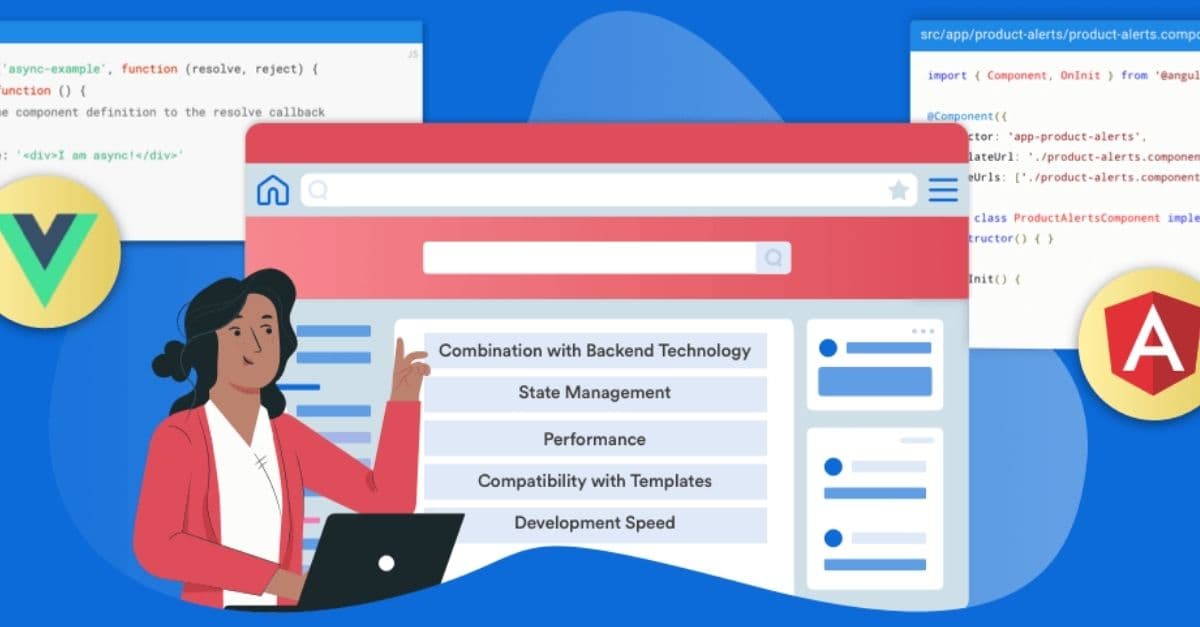
How would Angular vs Vue philosophies influence your large-scale architecture choice?
Tests mapping philosophy to team scale. Contrast Angular's opinionated batteries-included tooling and two-way binding with Vue's progressive incremental adoption and Composition API; pick Angular for standards or Vue for flexibility.
Svelte compiler downsides vs Vue and Angular runtime
Tests compile-time versus runtime trade-offs in large apps. Strong answers address dynamic component limits, plugin friction, build scalability, and migration cost. Red flag: claiming Svelte has no runtime or that dynamic components are impossible.

How would you implement lazy loading for an Angular feature module?
This tests route-level code splitting and CLI workflows. A great answer hits: ng generate module, loadChildren in the route config, and excluding the feature from AppModule. A red flag is suggesting manual chunking instead of router-driven lazy loading.

How do you configure Vite Library Mode for ESM and UMD outputs?
Tests Vite Library Mode multi-format packaging. Strong answer: build.lib entry, formats es and umd, fileName function, and rollupOptions.output.globals for Vue. Red flag: multiple configs or omitting UMD global name.
Prerendering vs SSR in SvelteKit: trade-offs?
Prerender generates static HTML at build, SSR renders on each request, prerender wins on speed but requires static data.
Implement a scoped slot pattern in a reusable DataList
It tests delegating rendering while keeping data ownership in the child. A strong answer covers a DataList that fetches internally and exposes rows via slot props, plus Angular TemplateRef via let-item. Red flag: parent loops or slots inheriting child scope.
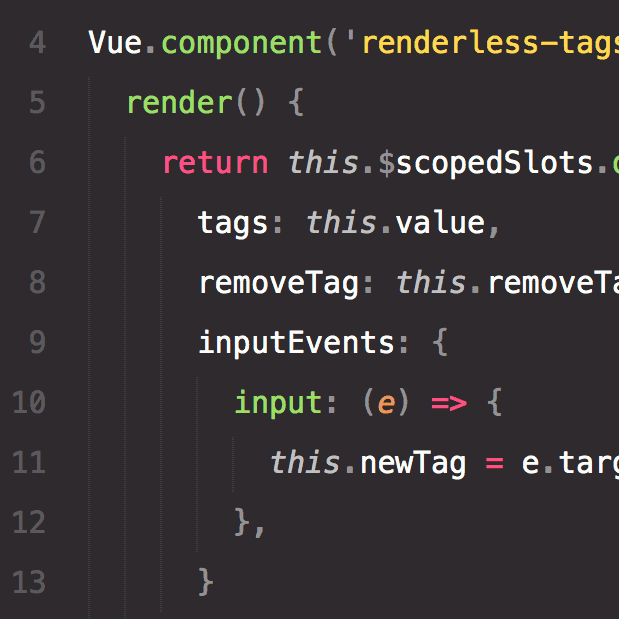
Architect a headless Toggle with scoped slots
This tests decoupling logic from markup via scoped slots. A strong answer exposes on and toggle through a single default scoped slot, renders no DOM, and cites UI flexibility. A red flag is using config props or CSS classes to control layout.
How do Vue and Angular detect nested object mutations?
Tests deep reactivity vs reference-based detection. Vue 3 Proxies catch nested mutations; Angular Default checks on zone ticks and OnPush misses same-reference changes. Fix via immutability, deep watchers, or ngDoCheck.
How does Angular OnPush change detection affect rendering?
This tests change detection tree knowledge. OnPush skips checks unless inputs change by reference, events fire, or async pipes mark for check. Mutated objects or manual subscriptions without markForCheck cause silent misses.
In Vue 3, what problem does Teleport solve?
This tests DOM hierarchy and CSS stacking context. A strong answer covers how Teleport moves markup to a target like body to escape ancestor transforms and z-index ceilings trapping fixed modals. Red flag: claiming it is only for cleaner HTML.
How would you create a custom *appDelay structural directive?
This tests Angular rendering internals. A strong answer covers: TemplateRef as the embedded template, ViewContainerRef as insertion anchor, and a setter that creates the embedded view after a delay. Mention OnDestroy cleanup.
Compiler vs runtime reactivity: Svelte, Vue, Angular?
Svelte compiles away reactivity (smaller bundles, zero-cost), Vue/Angular use runtime Proxies/zone.js (flexible but heavier).
Implement auto-cleanup reactive logic in Vue's Composition API and Svelte
Vue pairs onMounted with onUnmounted or watchEffect cleanup; Svelte uses $store auto-subscription or onDestroy.

Shadow DOM vs build-time scoping for third-party widgets
Shadow DOM gives true isolation but blocks global theming and complicates SSR; build-time scoping keeps theming and SSR simple but needs tooling.
How does Vue's v-bind() CSS function work in style blocks?
Tests Vue SFC CSS transforms and browser primitives. Strong answer: Vue compiles v-bind() to scoped CSS custom properties, letting reactive values work with pseudo-selectors and media queries.
How do you bypass Svelte's scoped styles to target global elements?
Tests Svelte style encapsulation escape hatches. Strong answer: :global() syntax for elements and classes, plus risks like leaky side effects and specificity wars. Red flag: external stylesheets or inline styles as the primary solution.
Implement an async Angular validator with HTTP and PENDING feedback
Tests Angular async validator lifecycle and HTTP race conditions. A strong candidate returns an Observable from AsyncValidatorFn, lets Angular set PENDING automatically, debounces input, and binds control.pending in the template.
How do you structure components and state for a dynamic Vue form?
This tests your design of normalized reactive state for dynamic Vue forms. A great answer uses a flat item array with stable keys, row components or scoped slots, and schema-driven validation. Red flags include mutating by index or using array indices as keys.
How would you architect a multi-step Svelte wizard with Stores?
Tests state isolation and validation orchestration across wizard steps. A solid answer uses a centralized store with step slices, derived validity stores, and pre-navigation guards. Red flag: unrelated per-step stores or validation only on final submit.

Differentiate client state from server state and their tools
This tests whether you recognize server state as async, remote, and cacheable versus local synchronous client state. A strong answer contrasts ownership and lifecycles, mapping Pinia to UI state and Vue Query to fetched data.
We are hiring for this. Every open role lists the topics its interview covers, so you can prepare for the real thing rather than guessing.
See open roles