All bites
The whole library, newest first. Filter by what you are here for, or pick a topic if you already know.
4247 bites
Page 165

Word Embeddings: Turning Words into Math
Word embeddings turn words into vectors, where distance equals a difference in meaning. They power features like search relevance and text classification by letting algorithms 'understand' context.
Convolutional Neural Networks: Finding Patterns with Filters
A CNN learns to spot features by sliding optimized filters over data like images, audio, or text. It's the go-to for computer vision, but a common mistake is thinking it's the only modern tool, as transformers sometimes replace it.

Transfer Learning: Don't Train Models from Scratch
Transfer learning means not training a model from zero. You start with a model pre-trained on a large, general dataset, then fine-tune it for your specific task. This is common in image recognition, using a general model to learn a niche classification.
Recurrent Neural Networks: Networks with Memory
An RNN is a neural network with a memory loop, processing sequential data by feeding its own output back in as input. It's used for text generation or time-series analysis where context is key.
Generative Adversarial Network (GAN)
A GAN trains two networks in competition: a generator that fabricates fake samples and a discriminator that judges real versus fake. Their adversarial game pushes the generator toward realistic outputs, enabling image synthesis and data generation without…
Topic Modeling: Finding Themes in Unstructured Text
Topic modeling automatically finds themes in text by grouping words that often appear together. It's used to analyze customer feedback or organize large document sets.
Named Entity Recognition: Finding the 'Who, What, Where' in Text
Named Entity Recognition (NER) is a smart highlighter for text, automatically finding and tagging nouns like people, places, and organizations. It powers search and extracts structured data from news or support tickets.
Q-Learning: Teaching an Agent by Trial and Error
Q-Learning teaches an agent the 'quality' of an action in a given state through trial and error, like training a pet with treats. It's used in robotics for navigation or in games where an AI learns optimal moves.
Markov Decision Process: A Map for Sequential Decisions
A Markov Decision Process models sequential choices with uncertain outcomes. Think of it as a game with states, actions, and rewards, but where your next move is probabilistic.
Transformer Architecture
The Transformer replaces recurrence with self-attention, letting every token directly attend to every other token in parallel. This enables long-range context and fast training on GPUs, making it the backbone of modern large language models and much of…
Large Language Models (LLMs)
An LLM is a massive neural network trained on vast text datasets to perform language tasks. It powers modern chatbots by generating, summarizing, and translating text. The key footgun: biased or inaccurate training data makes its output unreliable.
Policy Gradient: Teach an Agent What to Do, Not What's Valuable
Policy gradient methods directly learn what action to take, rather than learning the value of states. They excel in continuous action spaces like robotics or when the best policy is random.
Hadoop: Processing Big Data on Cheap Hardware
Hadoop processes massive datasets by distributing work across many cheap computers, assuming some will fail. It's used for large-scale batch processing, not real-time queries. The footgun is treating it like a database instead of a batch processing framework.
HDFS: Store Big Data on Cheap, Unreliable Hardware
HDFS stores huge files across many cheap computers by assuming they will fail. It achieves reliability by replicating data, not by using expensive hardware. Use it for batch processing, but avoid it for low-latency access or many small files.
YARN: Hadoop's Cluster Operating System
YARN acts as the operating system for a Hadoop cluster, separating resource management from job processing. This allows multiple engines like Spark or MapReduce to run on the same hardware.
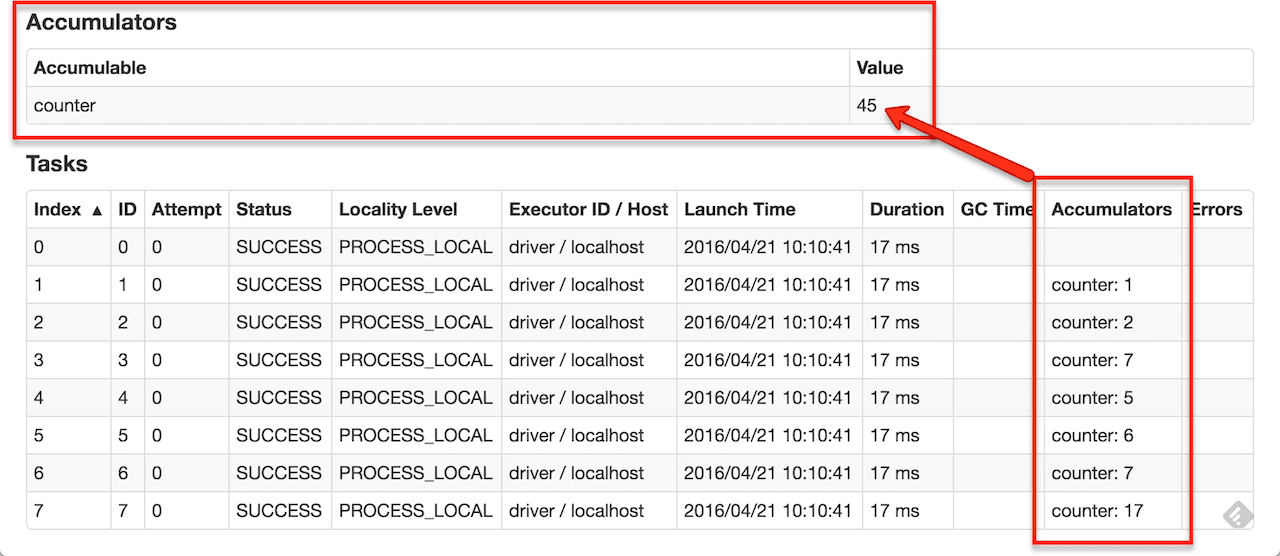
Spark RDDs: Immutable, Distributed Data Collections
An RDD is Spark's core abstraction: an immutable, partitioned collection of items processed in parallel. It's the go-to for low-level, unstructured data tasks. The main footgun is using RDDs when higher-level DataFrames offer better performance.
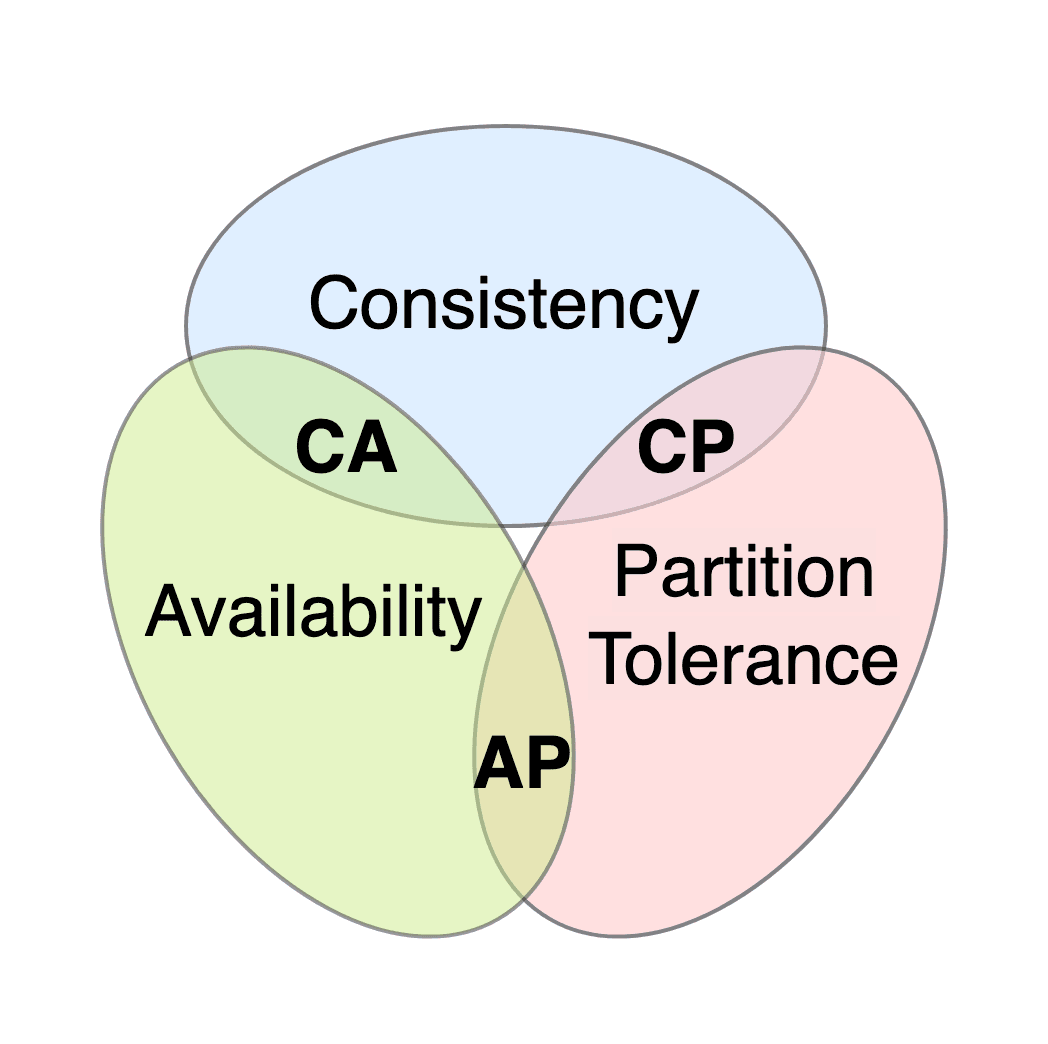
CAP Theorem: Pick Two of Three Guarantees
The CAP Theorem states a distributed system can only have two of three guarantees: Consistency, Availability, or Partition Tolerance. When the network fails (a partition), you must choose: stop responding to ensure data is consistent (CP) or keep responding…
Apache Hive: SQL on Hadoop
Apache Hive translates SQL-like queries into Hadoop MapReduce jobs, letting you analyze huge datasets with familiar syntax. Don't mistake it for a real-time database; its power is in high-throughput batch processing, not low-latency queries.
Columnar Storage: Read Less Data, Analyze Faster
Columnar formats like Parquet store data by column, not by row. This makes analytical queries that select a few columns from a wide table incredibly fast by minimizing disk I/O. It's a poor fit for transactional workloads that need entire rows at once.
Apache ZooKeeper: A Coordinator for Distributed Systems
Think of ZooKeeper as a reliable key-value store for metadata. It provides distributed systems with essentials like configuration management, leader election, and service discovery, ensuring all nodes agree on the system's state.