All bites
The whole library, newest first. Filter by what you are here for, or pick a topic if you already know.
4247 bites
Page 45
HyDE: Find Documents by Embedding a Fake Answer
Instead of embedding a short query, HyDE uses an LLM to generate a full, hypothetical answer document. This vector, representing an ideal answer, is then used to find similar real documents, improving zero-shot retrieval. The generated document is fictional.

Graph RAG: Answering Questions with Connected Facts
Graph RAG answers complex questions by exploring a map of connected facts (a knowledge graph) instead of just searching flat text. Use it for queries needing synthesis, like finding drugs for a disease made by companies in a specific country.
LLM Agents: Giving Models Tools and a Plan
An LLM Agent gives a model tools and a plan to solve complex problems. Instead of just answering a question, it breaks it down, uses APIs or code interpreters, and remembers past steps. The footgun is thinking RAG is an agent; agents need planning and.
Task Decomposition: Teaching LLMs to Plan
Task decomposition for an LLM agent is like writing a recipe: break a big goal into a checklist of small, executable steps. It's vital for complex requests like planning a trip, but a bad initial plan can cause cascading failures that doom the entire process.
Multi-Agent Systems: A Team of AIs, Not a Monolith
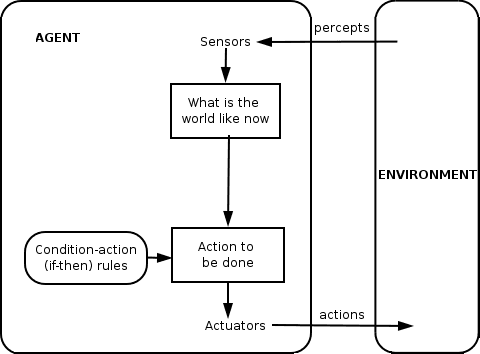
Instead of one giant AI, a Multi-Agent System is a team of specialized AIs that collaborate on a complex problem. This appears in LLM-powered coding assistants and complex simulations.

Hierarchical AI Agents: The Org Chart for AI
Think of a corporate org chart for AI. A top-level agent breaks a big goal into smaller tasks and delegates them to specialized, lower-level agents. This is used for complex problems like automating software development. The main risk is coordination overhead.
Generative Inpainting: Filling in the Blanks with AI
Generative inpainting is like Photoshop's 'Content-Aware Fill' on steroids. It uses AI to reconstruct missing or unwanted parts of an image, perfect for removing objects or repairing old photos.

Text-to-Image Synthesis: From Prompt to Picture
Text-to-image models translate words into pixels by learning statistical links between text and images. They power creative tools like DALL-E but don't truly understand prompts, leading to errors in logic like counting or spatial arrangement.
Mode Collapse: When Your AI Gets Stuck in a Rut
Mode collapse is when a generative AI finds a “cheat” and produces the same few outputs over and over. This is a classic failure in GANs where the generator stops learning the full data distribution.
Fréchet Inception Distance (FID): Grading AI Art
FID grades AI-generated images by comparing their statistical "vibe" to real ones. It uses a pre-trained network (InceptionV3) to see if a batch of generated images has similar feature distributions to a real dataset. A lower score is better.
Latent Diffusion Models (LDM)
Latent diffusion models denoise in a compressed latent space instead of raw pixels. A pretrained autoencoder shrinks the image first and expands it back after, cutting compute enough to make text to image generation practical on consumer hardware.
Multimodal Models: Beyond Just Text
A multimodal model understands the world by connecting different data types, like images and text, instead of just one. It's how AI generates images from descriptions or answers questions about a photo. The footgun is assuming more data types always helps.
Speech-to-Text (ASR): Turning Spoken Words into Data
Speech-to-Text (ASR) is a digital stenographer, turning spoken language into machine-readable text. It's the engine behind voice assistants, automated call routing, and video captioning.
Joint Embedding Space: A Rosetta Stone for AI
A joint embedding space acts like a Rosetta Stone, mapping different data types—like images and text—to a shared coordinate system where similar concepts are close together. This powers text-to-image models and cross-modal search.
Multimodal Fusion: Combining Senses for AI
Multimodal fusion lets an AI combine data types like text, images, and audio into one understanding, much like a human brain. It's key for visual question answering or analyzing video sentiment.
Large Multimodal Models (LMMs): Beyond Text
An LMM is like a large language model that can also see and hear. It processes and connects information from multiple sources—like text, images, and audio—to perform tasks like describing a picture or answering questions about a video.
Audio Spectrograms: Turning Sound into Images for AI
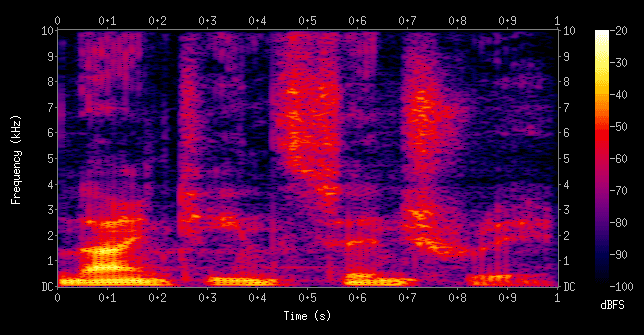
A spectrogram turns sound into an image, plotting frequency against time, with color showing intensity. This lets vision-based AI models "see" audio for tasks like speech recognition or music generation. The footgun is mistaking it for a simple waveform.
Text-to-Speech (TTS): Turning Text into Spoken Audio
Text-to-Speech (TTS) systems are digital voice actors, converting written language into artificial human speech. They are the core of any system that needs to speak text aloud.
BLIP: Bootstrapping Better Vision-Language Models
BLIP is a pre-training framework that masters both image understanding and generation by creating its own training data. It uses a captioner and filter to generate clean image-text pairs from noisy web data.
Flamingo: Few-Shot Learning for Vision-Language Models
Flamingo is a vision-language model that learns new visual tasks from a few examples, like a child seeing a picture book before the zoo. It can tackle multiple tasks without needing massive, task-specific datasets.