All bites
The whole library, newest first. Filter by what you are here for, or pick a topic if you already know.
4330 bites
Page 154
How do you define churn for a subscription service?
This tests operationalizing a business metric into a data definition. A strong answer separates voluntary from passive churn, picks a moment, and aligns to the billing cycle. Red flag: counting all cancellations as churn while ignoring grace periods.
How would you recommend launching a checkout flow with mixed A/B metrics?
This tests multi-metric trade-offs. A strong answer tags conversion as success and AOV as a guardrail, estimates net revenue impact, and frames decision as a risk-managed business choice. A red flag is demanding all metrics win or ignoring business context.

How do you frame high-value customer identification as classification versus regression?
Tests mapping a business goal to a defensible target. Outline: define value and action, then contrast regression predicting spend versus classification predicting tiers. Red flag: picking models before fixing the label or the campaign action.
Does forcing profile completion cause retention?
Name the confounder (engaged users self-select into completing profiles), warn that forcing it may not transfer the effect, and propose a randomized experiment.
Framing ad-load tradeoffs: revenue versus retention
Define revenue plus guardrail engagement metrics, run a long-enough experiment to see retention effects, and weigh short-term lift against lifetime-value erosion.

How would you build and validate a proxy target for employee burnout?
Combine survey scales with behavioral signals such as off-hours logins and PTO drops; validate via convergent and predictive validity against attrition.
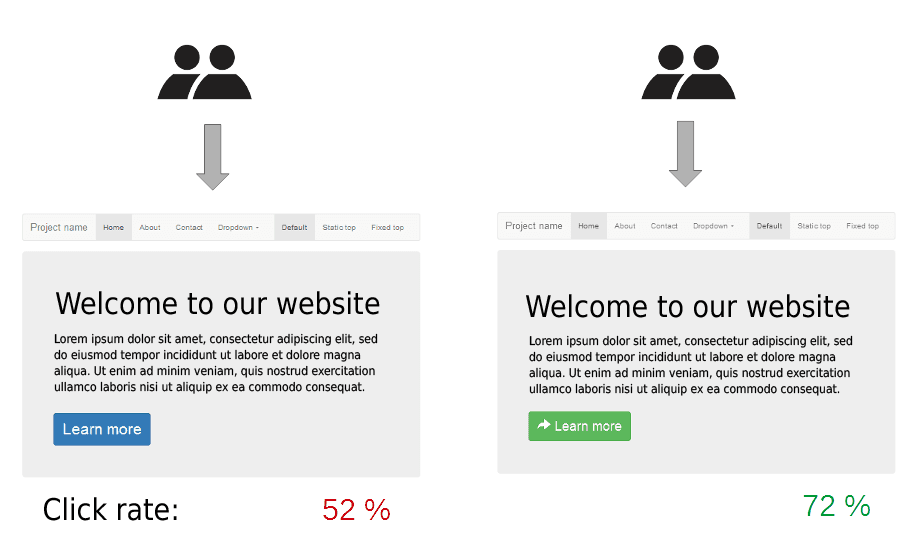
What are your null and alternative hypotheses for this A/B test?
This tests translating a directional business question into statistical hypotheses. A strong answer states H0 as no difference in registration rate and H1 as green outperforming blue. A red flag is framing H0 as "blue is better" or using a two-tailed test.
What is a p-value? Interpret p = 0.03 at alpha = 0.05.
Tests frequentist testing and p-value misinterpretations. Define p-value as the probability of data this extreme under the null; since 0.03 < 0.05, reject the null at 5%. Never say it is the probability the null is false or the result is due to chance.
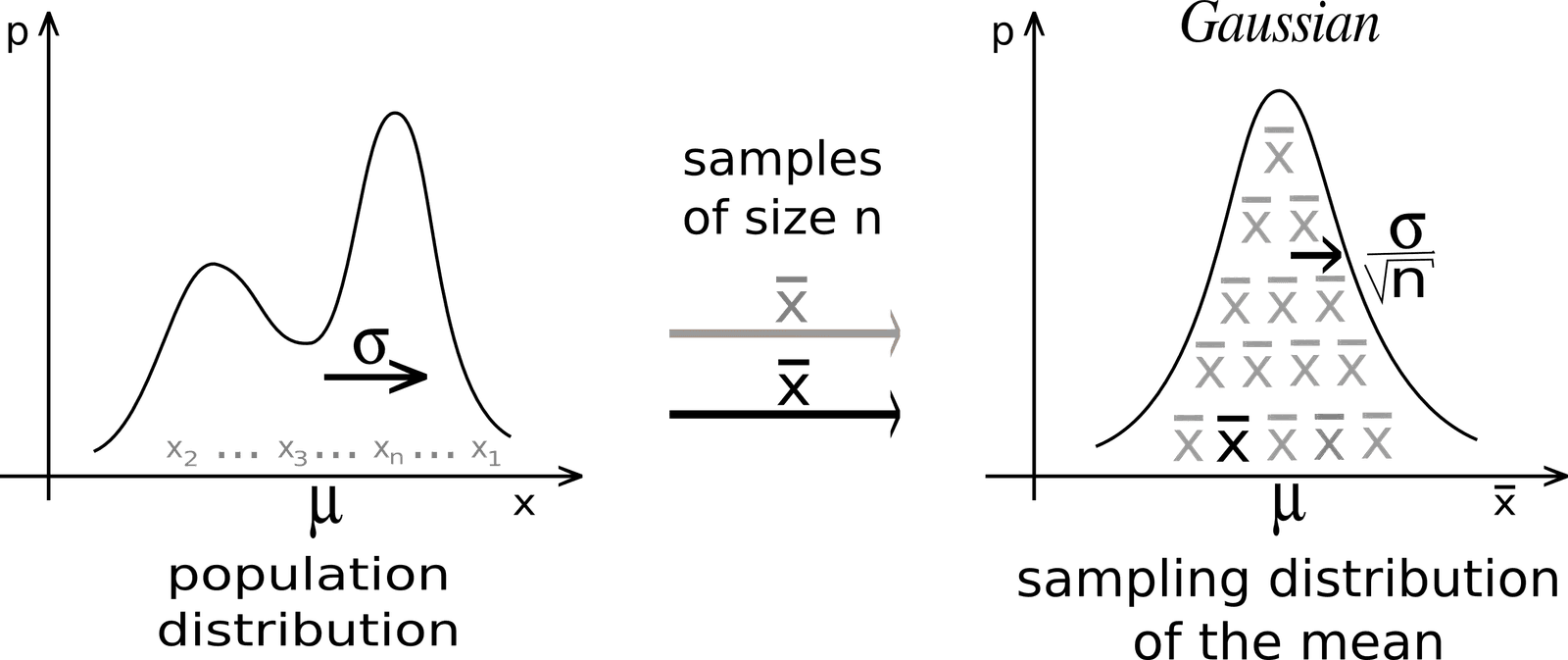
Explain the Central Limit Theorem and its importance for hypothesis testing
This tests whether you know why sample means from skewed populations tend toward normal as size grows, enabling tests. A strong answer covers mean convergence to normal and standard error. Red flag: claiming the CLT works for small samples or single points.

Describe the bias-variance tradeoff and how model complexity affects bias and variance
More complexity cuts bias but boosts variance via overfitting; test error forms a U.

Why is 99% accuracy misleading with 1% disease prevalence?
Tests class imbalance intuition. A strong answer notes that an all-negative classifier hits 99% accuracy, then names precision, recall, F1, and AUC-PR to expose false negatives and false positives. Red flag: claiming accuracy is fine after rebalancing.
How gradient descent and the learning rate work
Gradient descent steps downhill along the negative gradient to minimize cost; the learning rate sets step size; too high diverges or oscillates, too low converges painfully slowly.
Eigenvalues, eigenvectors, and their role in PCA
An eigenvector keeps direction under a matrix, its eigenvalue scales it; PCA finds eigenvectors of the covariance matrix as principal axes.
How do you determine sample size for a conversion lift experiment?
Tests fluency with statistical experiment design. A strong answer frames N as a function of alpha, power, baseline rate, and MDE, noting that shrinking the MDE or raising power inflates N. Red flag: picking N from traffic instead of risk tolerance.
MLE versus MAP estimation and the role of priors
MLE maximizes likelihood alone; MAP maximizes likelihood times a prior, acting as regularization that shrinks toward prior beliefs; with abundant data they converge.
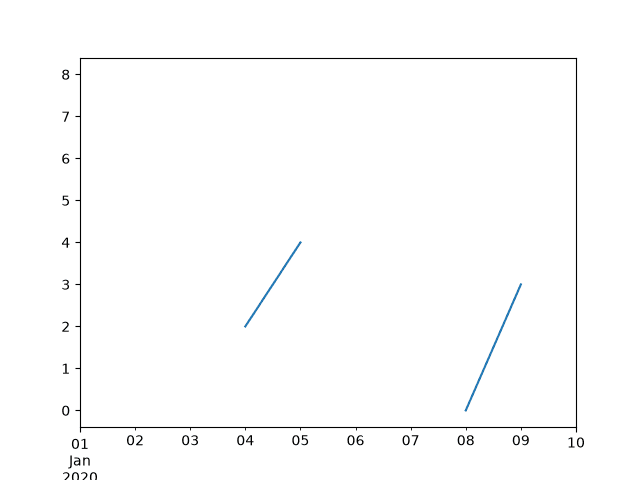
Describe strategies for handling missing values in pandas DataFrames
Tests practical judgment on cleaning trade-offs. Good answers contrast dropna when data is abundant against fillna imputation to preserve rows, noting bias risk. Red flag: prescribing one fix without asking why values are missing or what the model needs.
Pandas loc versus iloc indexing
Loc selects by label and is inclusive of both endpoints; iloc selects by integer position and is exclusive of the stop; passing a string label to iloc fails.
Most efficient way to convert list of dicts to pandas DataFrame
Tests knowledge of vectorized DataFrame construction versus slow row-wise assembly. Answer: pass the list directly to pd.DataFrame(data); C-backed and handles missing keys as NaN. Red flag: recommending loops with pd.concat or iterative DataFrame building.
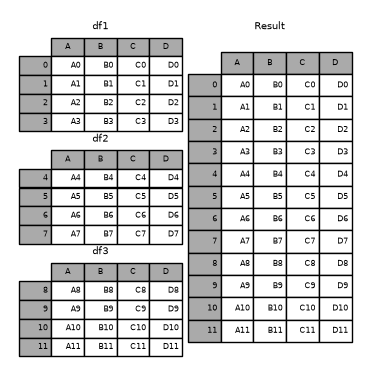
How would you combine customer and transaction DataFrames and describe join types?
This tests relational merging and join semantics in pandas. Answer: use pd.merge on customer_id, then groupby sum; describe inner, left, right, and outer joins by key preservation. Red flag: proposing concat without keys or conflating inner and left joins.
What is vectorization in NumPy and pandas?
Tests if you know why NumPy operations beat Python loops via contiguous memory and C-level SIMD. A strong answer defines vectorization as array-wide operations without explicit loops, contrasts a ufunc to a for-loop, and cites interpreter overhead removal.