All bites
The whole library, newest first. Filter by what you are here for, or pick a topic if you already know.
8664 bites
Page 44

The Strategy Kernel
The strategy kernel, from Richard Rumelt, is the minimal structure of a real strategy: a diagnosis of the actual obstacle, a guiding policy for addressing it, and coherent action that carries it out, separating genuine strategy from a list of goals.

How would you estimate user base for a new feature before coding?
Sizing an opportunity with proxy data before coding. A strong answer defines the behavioral profile, then triangulates internal segments, competitor analogs, and market data to bound the estimate with stated assumptions.

Porter's Five Forces: Is This Industry Worth Entering?
Porter's Five Forces is a framework for analyzing an industry's profit potential. It assesses the competitive environment to determine if a market is attractive or if its structure will drive all profits down to a baseline, like in pure competition.
Technical principles for building a learning-focused MVP
Validate the riskiest assumption first, use off-the-shelf and manual where possible, instrument for learning, defer scalability and polish.
Go-to-Market (GTM): Your Plan to Enter a Market
A Go-to-Market (GTM) strategy is the complete plan for connecting a product with customers to achieve a competitive advantage. It defines the target market, pricing, and distribution channels. The footgun is treating GTM as just a marketing or sales plan.

How do you analyze a major technology trend for product impact?
This tests strategic discernment. A strong answer frames a time-boxed analysis across feasibility, user-value, cost, and risk, separating hype from capability. Red flag: jumping to build or dismiss without structured criteria or user evidence.
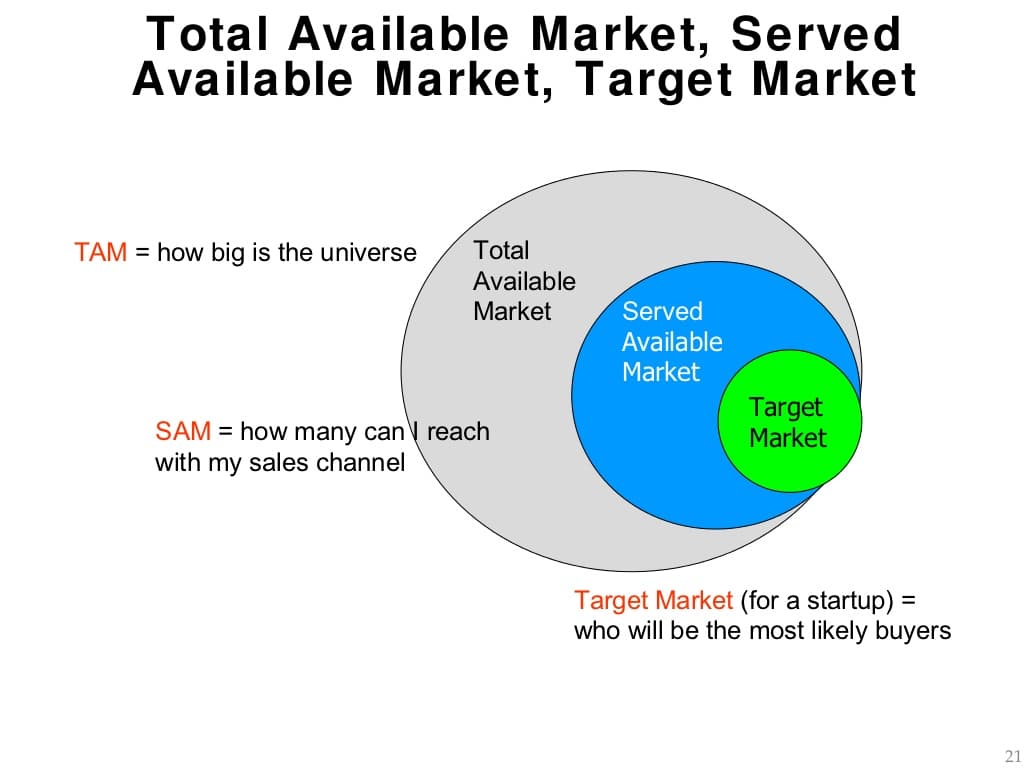
TAM, SAM, SOM: Sizing Your Market Opportunity
TAM, SAM, and SOM are nested filters for market size. TAM is the total demand, SAM is the segment you can serve, and SOM is what you can realistically capture. It's how you go from 'everyone' to 'our first 1,000 users'.

How would you use telemetry and logs to refine SAM calculation?
Tests bridging telemetry to SAM. A strong answer maps API usage and feature flags to fit, uses performance logs to expose delivery limits, and rebuilds SAM from qualified accounts. Red flag: calling all logs demand without checking constraints.

PESTLE Analysis: Mapping Your Business's External World
PESTLE analysis is a strategic checklist for scanning the external world for threats and opportunities you can't control but must react to. It's used for market entry strategy and product development.
Technically analyzing a competitor's product
Probe their stack, performance, APIs, and architecture via public signals and ethical inspection, identify gaps and parity needs, feed differentiation and risk into the…

User Personas: Build for a 'Who', Not a 'What'
Personas are fictional character sheets for your ideal users, grounding product decisions in human needs, not just features. They guide choices from UI to marketing by asking "What would our user do?".

How do you frame monolith vs microservices trade-offs under market uncertainty?
Connecting architecture to business strategy under uncertainty. Strong answers say monoliths offer cheap optionality when markets are unknown, but winner-take-all makes speed existential; microservices are a post-PMF scaling tax.
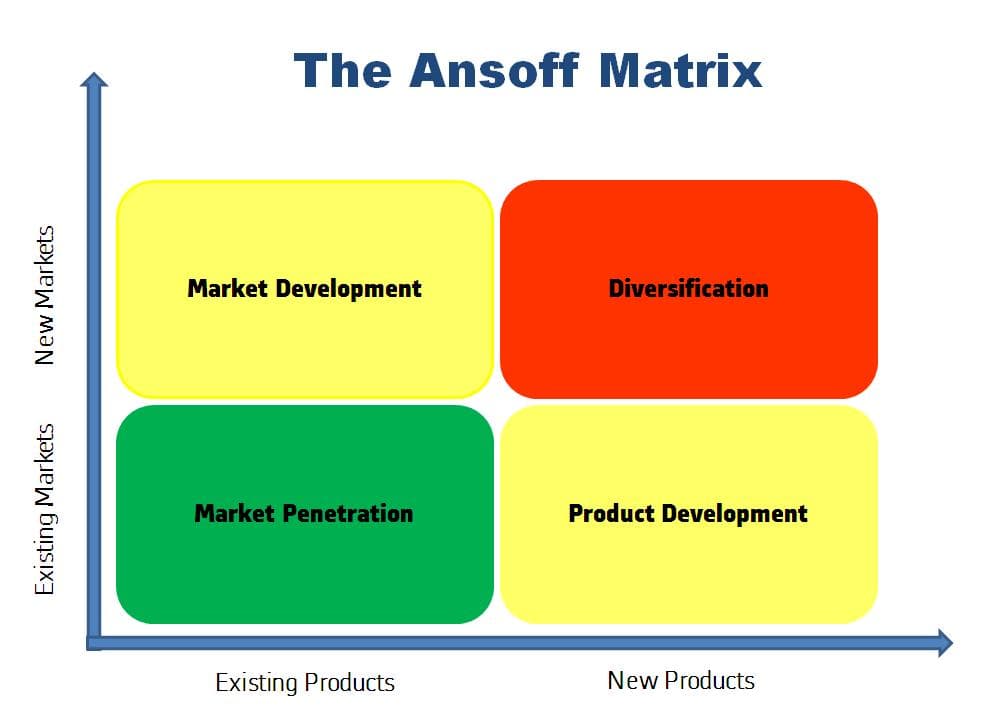
The Ansoff Matrix: Four Paths to Business Growth
The Ansoff Matrix maps growth strategy onto a 2x2 grid of products (new vs. existing) and markets (new vs. existing). It helps you decide whether to sell more of what you have or invent something new. The footgun is underestimating the risk of new ventures.

How do user personas and stories inform technical design and edge cases?
Tests if you translate product requirements into technical constraints and failure modes. Strong answers map persona pain points to architecture, derive unhappy paths from preconditions, and validate edge cases through vertical slices.
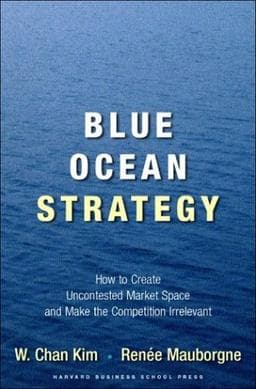
Blue Ocean Strategy: Make Competition Irrelevant
Instead of fighting rivals in a crowded market ("red ocean"), Blue Ocean Strategy creates new, uncontested space ("blue ocean") that makes competition irrelevant. It applies when you pursue both differentiation and low cost.
What technical steps would you take to investigate a user's workflow frustration?
Tests if you can turn qualitative user pain into structured technical investigation. Strong answer: reproduce the exact workflow, then inspect logs and traces for errors or latency spikes, and segment by the user's environment.

Diffusion of Innovations: How Good Ideas Spread
New tech spreads in a predictable S-curve, moving through groups from Innovators to Laggards. Use this model to target the right users at the right time, like focusing on Early Adopters to cross the 'chasm' to the majority.
Differentiate functional and non-functional requirements with user research examples.
This tests separating specific behaviors from measurable quality criteria. A strong answer defines functional requirements as behaviors and non-functional requirements as quality attributes with examples. A red flag is vague NFRs like fast.
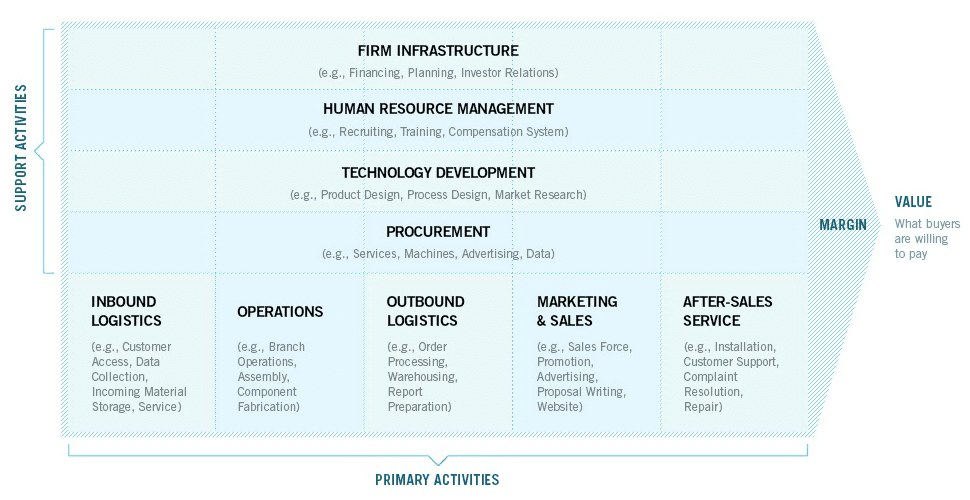
Value Chain Analysis: Find Your Edge by Mapping Your Activities
Value Chain Analysis maps a company's activities to find its competitive edge. Instead of a list of costs, it shows how each step adds value, revealing where you can lower costs or justify higher prices.
How would you instrument front-end and back-end to quantify reported slowness?
This tests translating vague complaints into end-to-end telemetry. A strong answer covers front-end Web Vitals, back-end traces, and segments by user or page to isolate pain points. A red flag is focusing only on server CPU or logs without real user timings.