All bites
The whole library, newest first. Filter by what you are here for, or pick a topic if you already know.
8664 bites
Page 46

Thematic Analysis: Finding Patterns in Qualitative Data
Thematic Analysis finds patterns in qualitative data, like sifting user interviews for recurring ideas. It's about interpreting meaning, not just counting words. Use it on feedback to understand needs.
How would you scope a one-quarter v1 against a three-quarter solution?
Tests bounded technical debt via stable interfaces. A strong answer defines a thin core, pushes complexity into swappable modules, documents debt ledger, and negotiates scope cuts. Red flag: promising to refactor later without concrete boundaries or ownership.

How would you design a system to monitor competitors' technical changes?
Monitor public bundles and DNS; diff over time; alert on strategic pivots like new checkout APIs.

The Competitive Matrix: Visualizing Your Strategic Edge
A competitive matrix is a map of your market, plotting your product against rivals on key axes like price and features. Use it to spot market gaps, justify new features, or refine pricing.
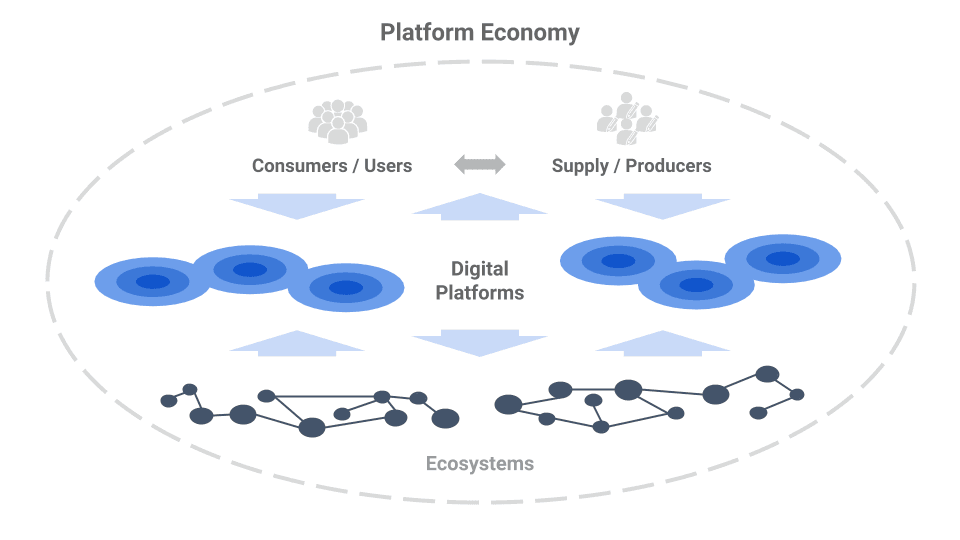
Propose a platform strategy to beat competitor feature velocity
Tests trading feature parity for architectural leverage. Strong answers frame the platform as an intermediary enabling interactions and innovation via self-service APIs, composable primitives, and data loops. Red flag: a shared library creating bottlenecks.
Perceptual Mapping: Charting How Customers See Your Brand
A perceptual map charts your brand's position based on customer views, not your own. It's a reality check on how you're perceived against competitors on axes like price vs. quality. The biggest footgun is mapping based on internal beliefs, not customer data.

How would you design architecture to sidestep a competitor's proprietary dataset?
Tests architecture without data moats. Strong answers pick asymmetric plays like real-time loops, federated learning, or synthetic pipelines and link them to defensible design. Red flag: buying or copying the dataset.
Competitive Intelligence: Turning Market Data into Strategy
Competitive intelligence turns public data about your market into a strategic map of what might happen next. It's used when pricing products or planning campaigns. The biggest mistake is confusing it with simple competitor tracking; true CI analyzes the *why*.

Architect a fast-follower AI strategy without a research team
Tests asymmetric advantage without a research lab. Strong answers propose a model-agnostic gateway, buy commoditized inference, build proprietary data loops only, and use open-source for control.
Competitor Teardown: Reverse-Engineering Product Strategy
A competitor teardown reverse-engineers a product to reveal its underlying strategy, not just its features. PMs use it to understand how rivals solve user problems and inspire new ideas.
What NFRs would you identify for a globally scalable, accessible service?
Tests decomposing vision into architecturally significant requirements. A strong answer pairs global with latency, residency, and failover; accessible with compliance and i18n; then prioritizes by impact.
Switching Costs: The Moat Around Your Product
Switching costs are the gravity holding users to a product—the sum of all financial, mental, and effort-based pain of leaving. This is why bundled services are sticky. The footgun is creating costs that feel like traps, which destroys long-term trust.
How do you analyze and present performance trade-offs against a trust vision?
Tests if you frame technical risk through the trust vision. Strong answers quantify speed versus trust cost, present mitigated options with staged rollouts, and assign business risk owners.

Network Effects: Value Grows with Users
A product with network effects is like a telephone: its value grows as more people join. This powers social media, marketplaces, and communication tools. The main pitfall is the 'cold start problem'—attracting the first users to an empty, valueless network.
How do you translate a non-technical product vision into SLIs and SLOs?
This tests converting qualitative goals into measurable reliability metrics. A good answer identifies user journeys, picks SLIs like latency or yield, sets thresholds from user pain not hardware limits. Red flag: infra metrics like CPU minus user impact.

Sales Battle Cards: Frame Your Competition, Don't Just Attack Them
A sales battle card is a one-page cheat sheet that frames your competitor's product for a different audience, not just lists its flaws. Sales teams use it to steer conversations toward your strengths.

How would you prove roadmap divergence from vision and correct course?
Quantify coupling, complexity, and service creep; link compromises to feature delays; propose a funded ATD roadmap with milestones.
Sustainable Competitive Advantage: Building a Moat
A sustainable competitive advantage is a structural 'moat' that makes your business hard to copy. It's seen in network effects (social media), high switching costs (enterprise software), or economies of scale (Amazon).
When is it appropriate for engineering to propose a vision change?
Tests your sense of engineering's strategic boundary: co-creating vision without owning it. Strong answers cite a trigger where tech changes business constraints, outline a 2-week spike on the riskiest assumption, and quantify impact.
Barriers to Entry: The Moats Around a Business
Barriers to entry are the 'cover charge' for a market that new players must pay, but incumbents didn't. They're the moats protecting a business, seen in regulated industries or with strong brand loyalty.