All bites
The whole library, newest first. Filter by what you are here for, or pick a topic if you already know.
8664 bites
Page 54

Platform Strategy: Solving the Chicken-and-Egg Problem
A platform isn't a product; it's an environment where groups create value for each other. This strategy is key for marketplaces (Uber) or ecosystems (iOS) where value grows with users.
Public API design versus internal API design
Public needs strict versioning, long deprecation, scoped auth like OAuth and API keys, and polished docs; internal can move faster.
Trust and Safety: The Immune System of Online Platforms
Trust and Safety is an online platform's immune system, protecting users from harmful content, abuse, and fraud. It's critical for moderating social media and preventing e-commerce scams.
Design a tiered API rate limiter
Pick token bucket or sliding-window, key limits by partner tier, track counters in a shared store like Redis, decide at the edge.
Stakeholder Communication Plan: Who Gets Told What, and When
A stakeholder communication plan is a roadmap for who needs to know what, when, and how. It's used to keep executives, dependent teams, and users aligned on project progress. The biggest footgun is a one-size-fits-all approach; tailor updates to each group.
Components of a project technical roadmap
State goals, phased milestones, dependencies and risks, and success metrics; use it to align the team and report upward.
Managing Up: Be the Co-Pilot, Not Just a Passenger
Managing up isn't flattery; it's making your manager more effective by aligning your work with their goals. This is key for getting projects resourced and ensuring your priorities align with the organization's, preventing wasted effort.
Identify competitors via technical signals
Inspect job postings, public APIs and docs, status pages, open-source and GitHub activity, and tech-stack fingerprints.
Strategic Narrative: Your Company's Source Code for Story
A strategic narrative is the source code for your company's story, defining its unique value. It's the blueprint for marketing, sales, and internal decisions, ensuring everyone tells the same story.
Modeling TCO and risk for a new market
Enumerate build, compliance, and run costs; quantify technical risk and timelines; tie payback to revenue.
Force-Field Analysis: Map the Tug-of-War of Change
Force-Field Analysis visualizes a decision by mapping 'driving forces' (pros) against 'restraining forces' (cons). Use it to gauge the viability of a change, like a new project. The main footgun is listing forces without scoring their relative strengths.
Countering a PM's suboptimal technical proposal
Restate the user problem, separate it from the proposed solution, present an alternative with explicit tradeoffs.
Principled Negotiation: Focus on Interests, Not Positions
Principled negotiation avoids a battle of wills by focusing on shared interests, not rigid positions. It's a method for finding mutually acceptable agreements in conflicts. Use it in business deals or team disagreements.
Using mission to prioritize debt vs new feature
Map each task to mission impact, time horizon, and reversibility; weigh learning value against risk.
Executive Presence: The Ability to Inspire Confidence
Executive presence is the ability to inspire confidence in your team, peers, and superiors. It's the 'X-factor' that gets you chosen for senior roles and high-stakes projects.
Framing a build debate with the mission
Separate user simplicity from internal complexity, weigh new-framework risk, decide via mission and reversibility.
Principle of Charity: Argue the Strongest Case
The Principle of Charity means engaging with the strongest possible version of a colleague's argument, not the weakest. Use it in design reviews to find the best idea, not just to win the debate. The footgun is straw-manning an idea to easily knock it down.
Designing an API for power vs novice personas
Power users want control, batching, and precise errors; novices want defaults, guardrails, and guidance; both want consistency.
The Golden Circle: Leading with Why
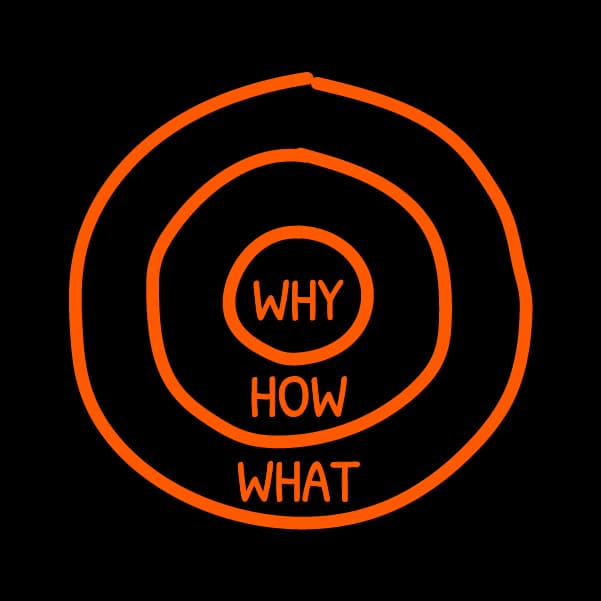
The Golden Circle is a framework for inspiring action by communicating from the inside out: starting with your purpose (Why), then your process (How), and finally your product (What). It's used to build loyalty by connecting on belief, not just features.
Resolving power-vs-simplicity product tension
Progressive disclosure, a stable core with optional advanced layers, escape hatches; or pick one if the audiences truly diverge.