All bites
The whole library, newest first. Filter by what you are here for, or pick a topic if you already know.
8668 bites
Page 191
How do you architect self-service GitOps with central policy enforcement?
What it tests: balancing self-service GitOps with hard guardrails. A strong answer covers namespace-scoped controllers, OPA/Kyverno deny policies, and a centralized policy repo. Red flag: proposing manual ticket reviews instead of automated admission gates.
How would you use GitOps to manage Kubernetes cluster lifecycles?
This tests cluster lifecycle GitOps, not just app delivery. A strong answer uses Flux plus Cluster API on a hub cluster, stores cluster definitions in Git, and rolls upgrades via MachineDeployments.

Describe a robust strategy for GitOps database schema migrations
Tests imperative-to-declarative schema reconciliation. Strong answers version idempotent pre-sync jobs and colocate schema state in Git. They use dedicated operators, not infra tools, for live execution.
What is configuration drift in GitOps and how do tools handle it?
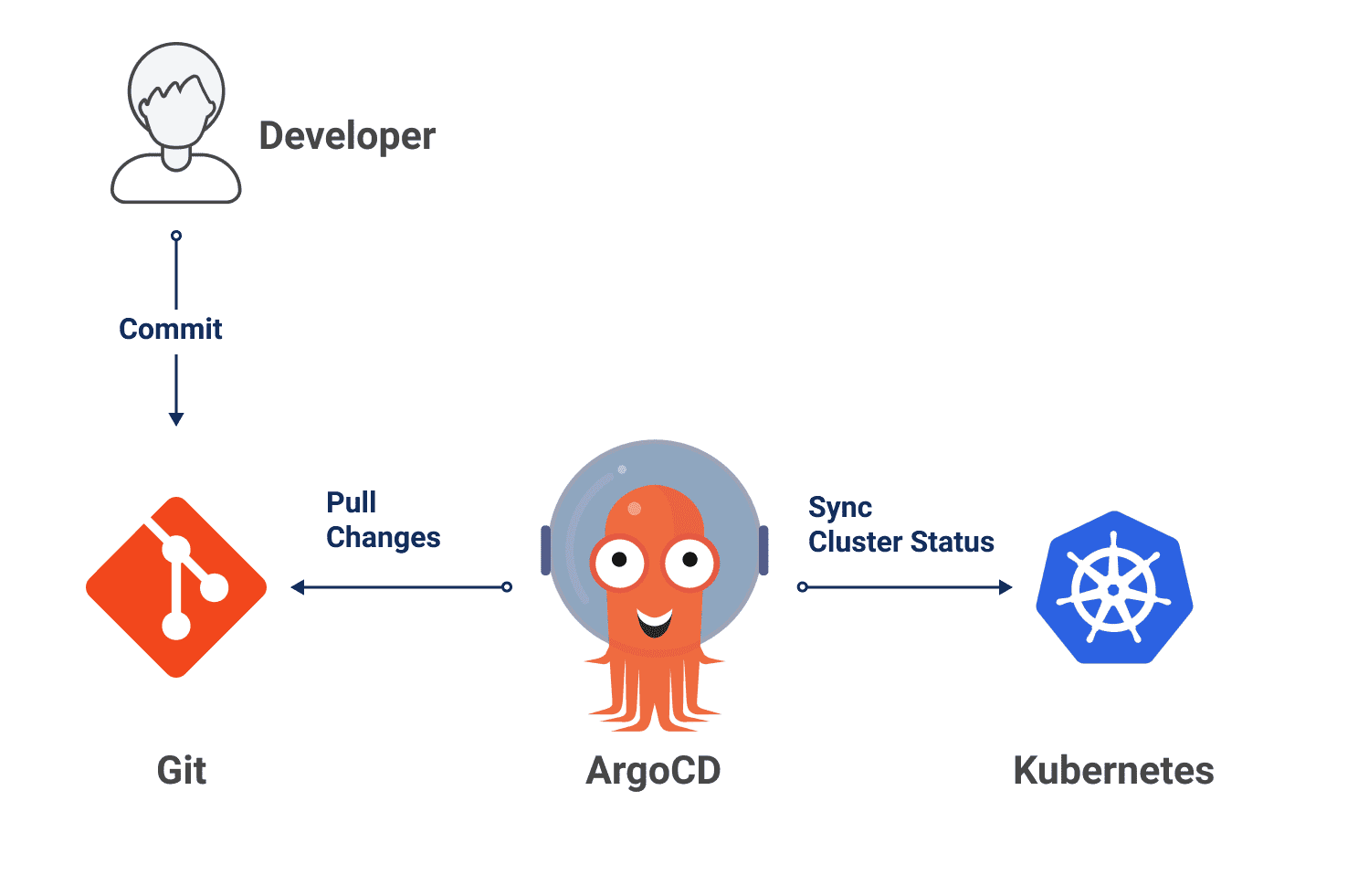
This tests declared and actual state and GitOps reconciliation. A strong answer defines drift as out-of-band changes, notes auditability, and contrasts self-healing sync with read-only detection. A red flag is suggesting manual patches rather than fixing Git.
Two common GitOps repository layouts for multiple environments
Tests GitOps state-store trade-offs beyond single-cluster demos. Contrast a monorepo with directory overlays against repo-per-env; weigh polling overhead, blast radius, and promotion flow. Recommending branch-per-env destroys immutability and invites drift.
How do you secure secrets in a GitOps repository?
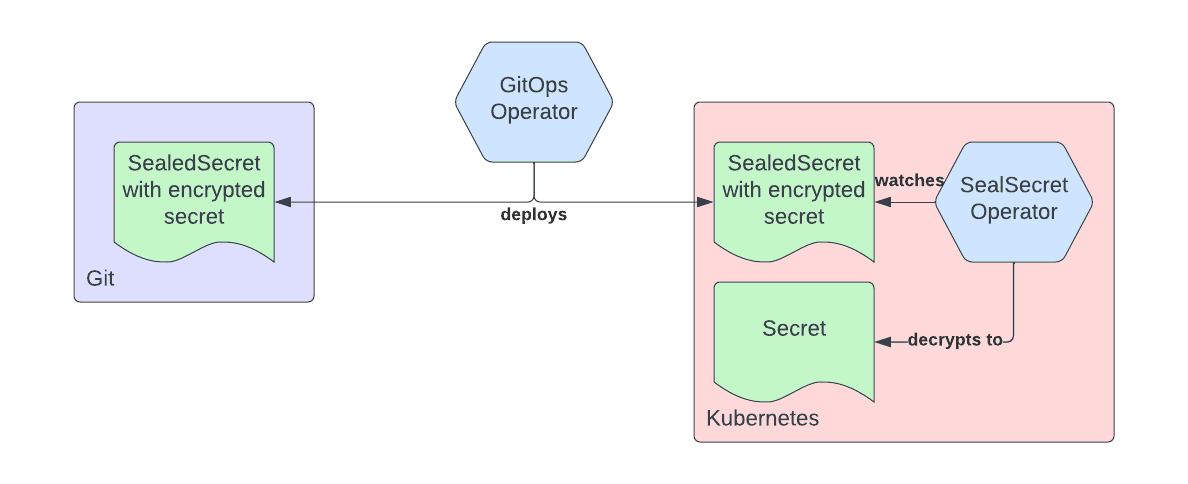
Tests whether you treat Git as source of truth while excluding plaintext credentials. A strong answer covers encrypting at rest with SOPS or Sealed Secrets, external stores like Vault, and operator workflows.
Walk me through deploying a new version using a GitOps workflow
Merge updates manifests; the GitOps controller compares desired state in Git to live state and reconciles.
Blue/green vs canary release: differences and when to choose each.
This tests release-automation risk mitigation. A strong answer contrasts instant full-environment swaps with gradual traffic shifts, pairing blue/green with hotfixes and canary with risky changes. A red flag is calling them identical or ignoring blast radius.

How do you unify real-time CI/CD health across hundreds of microservices?
Canonical event schema over an event bus; domain-level SLI views; federated ownership with golden paths.
What statistical methods automate canary-baseline comparison and handle noise?
Tests statistical rigor in automated canary analysis. Strong answers use non-parametric tests, multi-metric aggregation with effect-size gates, MAD-based outlier rejection, and smoothing windows.
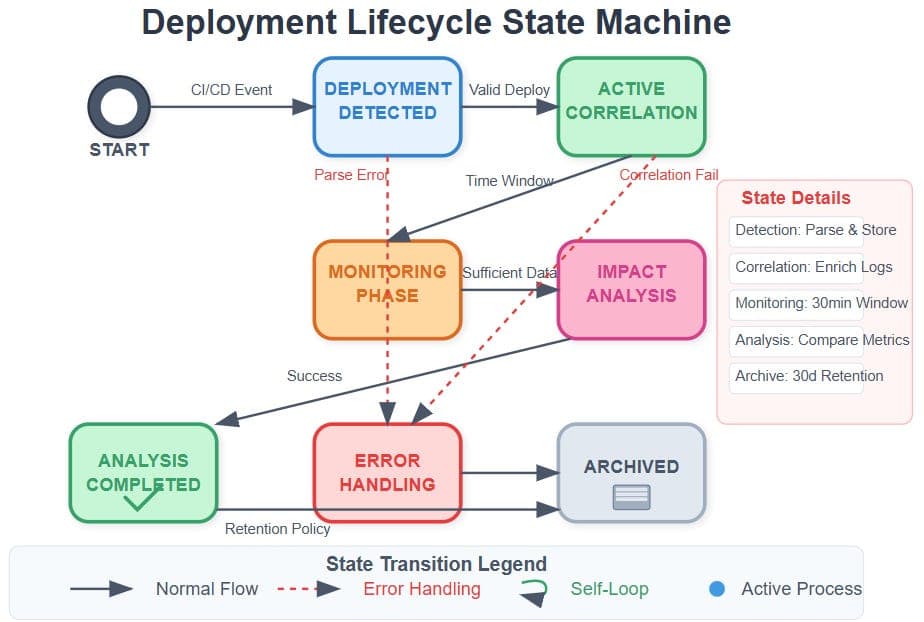
Design a system correlating CI/CD deployments with observability metrics
Tests event-driven correlation and temporal join patterns across distributed data. Strong answers outline: async deploy event ingestion, time-windowed metric joins with version tags, and handling clock skew.
How would you instrument CI/CD to measure a DORA metric accurately?
Tests mapping DORA definitions to pipeline events. A strong answer picks one metric, defines exact boundaries from merge to production, and correlates deployments with incidents.
How would you use distributed tracing to debug a deployment latency issue?
This tests causal request-path analysis beyond aggregate metrics. A strong answer filters traces by the new version, finds the exact regressed span, and compares it to a pre-deployment baseline.
Design an automated rollback process when deployment error rates spike
Gate on error-rate and latency thresholds; use blue-green deploys to limit blast radius; require human approval for stateful rollbacks.
How do you diagnose a progressively slower CI pipeline?
Profile stage durations and critical path, audit runner CPU/memory/disk, flag flaky or late-failing tests.
What are the four Golden Signals for service health monitoring?
Tests whether you can name the four essential metrics—latency, traffic, errors, saturation—and explain why each matters for detecting user-facing regressions after a release, rather than drowning in infrastructure noise.
How would you use a Kubernetes Admission Controller as CI/CD security gate?
Tests pre-deployment enforcement via admission webhooks. Strong answers: ValidatingAdmissionWebhooks blocking bad manifests, Pod Security Standards restricted profiles, and OPA/Gatekeeper for image signatures. Red flag: confusing with RBAC or runtime scanning.
How would you integrate automated security scanning for Terraform in CI/CD?
Run Checkov or TFLint in CI to block builds; catch open security groups, missing encryption, secrets in code, and bad IAM.

Compare SAST and DAST. Why use both, and their limits?
Tests whether you understand complementary security testing layers in CI/CD. A strong answer contrasts static source analysis without execution against dynamic runtime attack simulation and explains that relying on only one leaves applications vulnerable.
How do you investigate and resolve a critical transitive dependency vulnerability?
It tests transitive CVE triage. A strong answer reproduces the finding, traces the dependency path, upgrades the direct dependency if possible, and considers build-tool overrides otherwise. Red flag: ignoring it as transitive or blind upgrades without tests.