All bites
The whole library, newest first. Filter by what you are here for, or pick a topic if you already know.
8667 bites
Page 284
Managing Up: Be the Co-Pilot, Not Just a Passenger
Managing up isn't flattery; it's making your manager more effective by aligning your work with their goals. This is key for getting projects resourced and ensuring your priorities align with the organization's, preventing wasted effort.
Stakeholder Communication Plan: Who Gets Told What, and When
A stakeholder communication plan is a roadmap for who needs to know what, when, and how. It's used to keep executives, dependent teams, and users aligned on project progress. The biggest footgun is a one-size-fits-all approach; tailor updates to each group.
Trust and Safety: The Immune System of Online Platforms
Trust and Safety is an online platform's immune system, protecting users from harmful content, abuse, and fraud. It's critical for moderating social media and preventing e-commerce scams.

Platform Strategy: Solving the Chicken-and-Egg Problem
A platform isn't a product; it's an environment where groups create value for each other. This strategy is key for marketplaces (Uber) or ecosystems (iOS) where value grows with users.
Platform Envelopment: Eat or Be Eaten
Platform envelopment is when a large platform absorbs a competitor's market by bundling its core features, often for free. This is common in tech, like an OS adding a feature that makes a standalone app obsolete.
Developer Evangelism: Building a Movement for Your Tech
Developer evangelism builds a movement for a technology, aiming to make it a standard through network effects. It's used to drive adoption for new platforms, APIs, or frameworks by inspiring developers, not just selling to them.
SDKs: A Strategy to Make Your Platform the Default
An SDK is a strategic tool to drive adoption. By bundling compilers and frameworks, you make it easy for developers to build for your platform or integrate your service, making your ecosystem the path of least resistance.
Open vs. Closed Platforms: Walled Garden or Public Park?
An open platform is a public park, inviting others to build on it; a closed one is a walled garden with total control. This choice defines growth: via a third-party ecosystem (Android) or tight integration (Apple).
API-as-a-Product: Your API Is Your Business
Treat your API as a core product with developers as your customers, not just a technical integration. This mindset is crucial when exposing data to partners or building a developer ecosystem, like Stripe or Twilio do.
DevRel: Building For and With Developers
DevRel is the bridge between a company and the developers using its tools, treating them as partners, not just customers. You see it in API docs, tutorials, and community forums. The footgun is treating it as just marketing, not a feedback loop to improve the.
Two-Sided Markets: Playing Matchmaker for Value
A two-sided market plays matchmaker, connecting two distinct groups like buyers and sellers. It creates value by enabling their interaction, growing stronger as more users from each side join.

Platform Business Model: Connecting, Not Owning
A platform business connects groups (like buyers and sellers) instead of making its own products. It's a marketplace, not a store. This model powers ride-sharing apps and app stores.
Portfolio Balancing: Don't Bet Everything on One Project
Portfolio balancing treats your projects like an investment portfolio, diversifying bets. It's used to allocate engineers between new features, tech debt, and R&D. The footgun is only funding short-term wins, starving long-term health and innovation.
Product Ecosystem Strategy: Competing Through Collaboration
A product ecosystem strategy builds a network of collaborating and competing partners around a core offering, making the whole more valuable than any single part. It's the model behind app stores and smart home devices.
Brand Architecture: Your Company's Brand Family Tree
Brand architecture is a family tree for a company's products, organizing how the main corporate brand relates to its sub-brands. It dictates whether a new product gets the parent's name or a standalone identity, maximizing value across the portfolio.
GE-McKinsey Nine-Box Matrix: Portfolio Strategy Beyond the 2x2
The GE-McKinsey matrix plots business units on a 3x3 grid to guide 'invest, hold, or divest' decisions. It's used to prioritize investments by weighing multiple factors for market attractiveness and business strength, not just market share and growth.

Portfolio Roadmap: The Strategy Across Your Products
A portfolio roadmap is the top-line strategy for a group of related products, ensuring they all pull in the same direction. Use it to align multiple product lines with business objectives.
Product Line Strategy: Selling a Family of Products
A product line strategy sells a family of related products individually, not as a bundle. It's used to capture different market segments, like offering 'good, better, best' software tiers or car trims.

Product Sunsetting: Retiring Products Gracefully
Product sunsetting is the managed process of retiring a product to free up resources. It's used when a product is no longer profitable or strategically relevant. The biggest footgun is a sudden shutdown without a clear migration path, which alienates users.
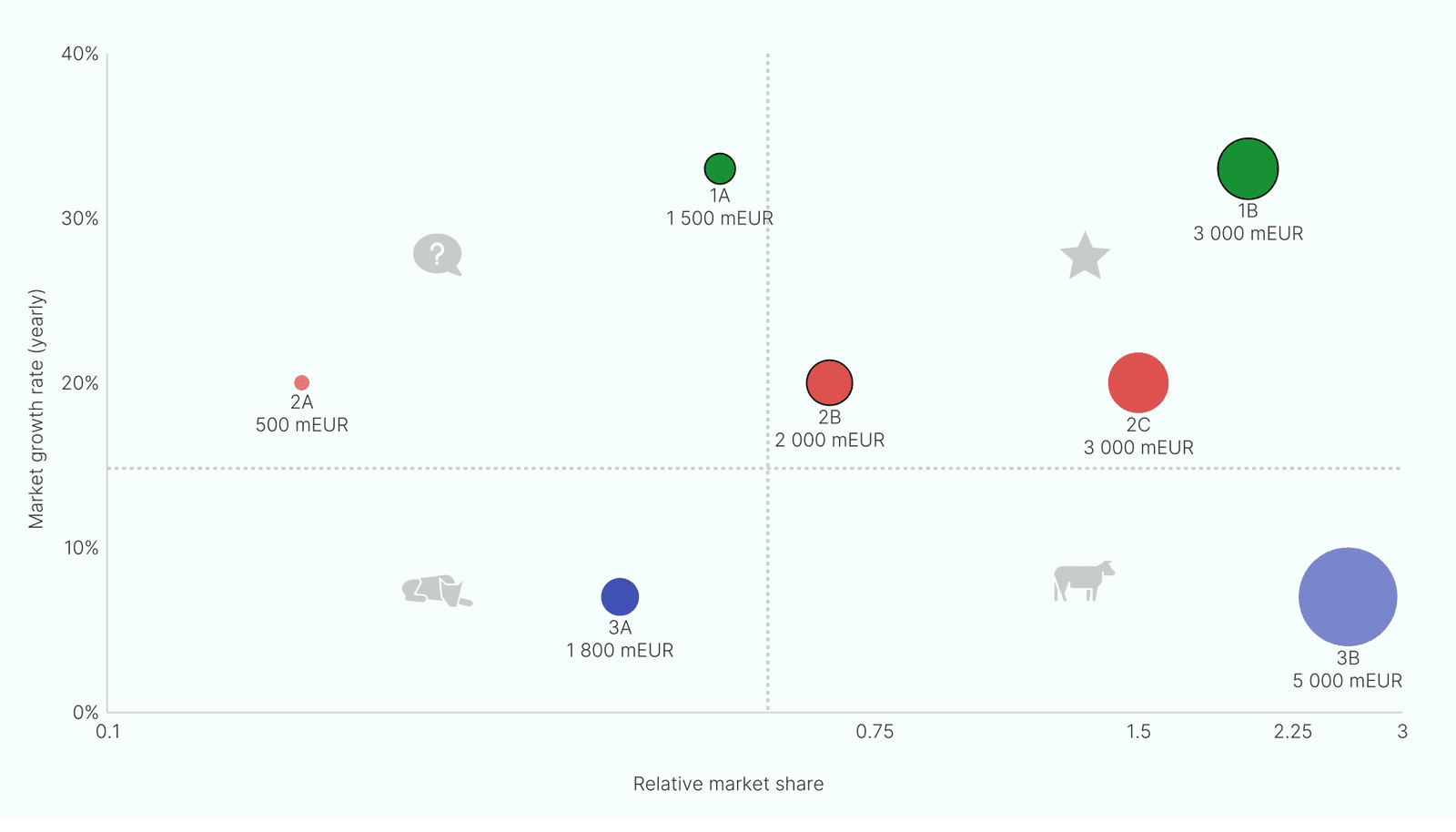
BCG Growth-Share Matrix: A Map for Your Product Portfolio
The BCG Matrix plots products on a 2x2 grid of market growth vs. market share to decide where to invest. It's used to categorize products as Stars, Cash Cows, Question Marks, or Dogs. The footgun is treating it as a static, predictive tool.