All bites
The whole library, newest first. Filter by what you are here for, or pick a topic if you already know.
8668 bites
Page 87
What is the difference between a Service and an Ingress?
This tests L4 versus L7 networking abstractions. A good answer says Services load-balance to Pods internally while Ingresses route external HTTP to Services via a controller, then gives a path-based scenario.
Compare Terraform and Ansible: when to use each and both together
This tests whether you distinguish provisioning from config management. Strong answers define Terraform for immutable infra and Ansible for mutable state, contrast day 0 versus day 1-2 work, and cover Terraform for VMs and Ansible for setup.

What is IaC and its CI/CD benefits over manual provisioning?
Cover descriptive models, idempotency, and on-demand environments for repeatable CI/CD.
How can artifact management and CI identify affected services and block deployments?
Tests supply chain forensics and CI gating. Strong answers hit: SBOMs mapping transitive blast radius; artifact metadata tracing deployed versions; scan gates and quarantine policies blocking promotion.

How would you integrate artifact signing into CI/CD and secure the keys?
Tests supply chain architecture and secrets management. A strong answer: remote HSM or KMS signing isolated from build runners, signature verification at deploy gates, and key rotation with audit logging.
Explain blue-green deployment, its prerequisites, and how it reduces deployment risk.
Tests operational maturity for zero-downtime cutover. Great answers: parallel environments, load balancer switching, backward-compatible schemas, externalized state, and instant rollback vs partial in-place failure.
What is Infrastructure as Code (IaC), and how does it support CI/CD?
This tests if you link declarative definitions to repeatable pipelines. A strong answer covers idempotence, versioned templates, and preventing snowflake environments. A red flag is calling IaC mere scripting without CI/CD integration.

What does shift left mean in CI/CD, and give two concrete examples?
Your grasp of moving verification earlier to reduce cost and risk. Define shift left as earlier-stage testing; cite two concrete examples like pre-commit unit tests and PR-level SAST scans. Never call it "more testing" instead of earlier feedback.
Continuous Delivery vs Continuous Deployment: key differences and choosing between them
Tests the human-gate distinction: Delivery readies artifacts but requires manual approval; Deployment pushes automatically. Strong answers cite compliance, blast radius, and maturity. Red flag: conflating terms or claiming full automation fits every app.
GitLab Pipeline Configuration Hierarchy
GitLab pipeline settings stack like access-control layers. Project visibility, pipeline toggles, and role permissions interact to determine who sees logs, artifacts, or can cancel jobs.
Android Becomes an Intelligence System: I/O 2026 Recap
Google I/O 2026 repositions Android as an intelligence system with ADK for Kotlin, Gemini Nano 4 on-device inference, and Compose-first UI, forcing teams to rethink app architecture around AI agents instead of static screens.
Kotlin 2.4.0 Ships Stable Context Parameters and UUID API
Kotlin 2.4.0 ships stable context parameters, a built-in UUID API, and Java 26 support. Context parameters replace manual dependency threading through call chains.
Android CLI 1.0 Stable Unlocks Headless CI
Android CLI 1.0 went stable at I/O, exposing project scaffolding and device management commands that run without Android Studio. The release finally lets teams script full build pipelines on headless agents and remote dev boxes.
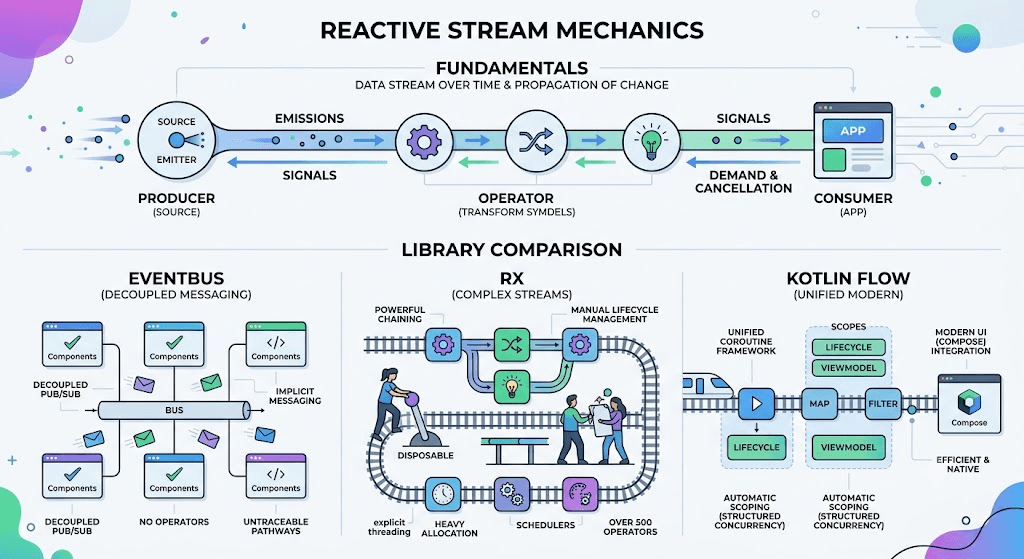
Unify Android EventBus and RxJava with Kotlin Flow
Mixing EventBus, RxJava, and Kotlin Flow in Android codebases creates memory leaks and GC pressure from stream wrapping. Operator translation and lifecycle mismatches drive engineering debt.
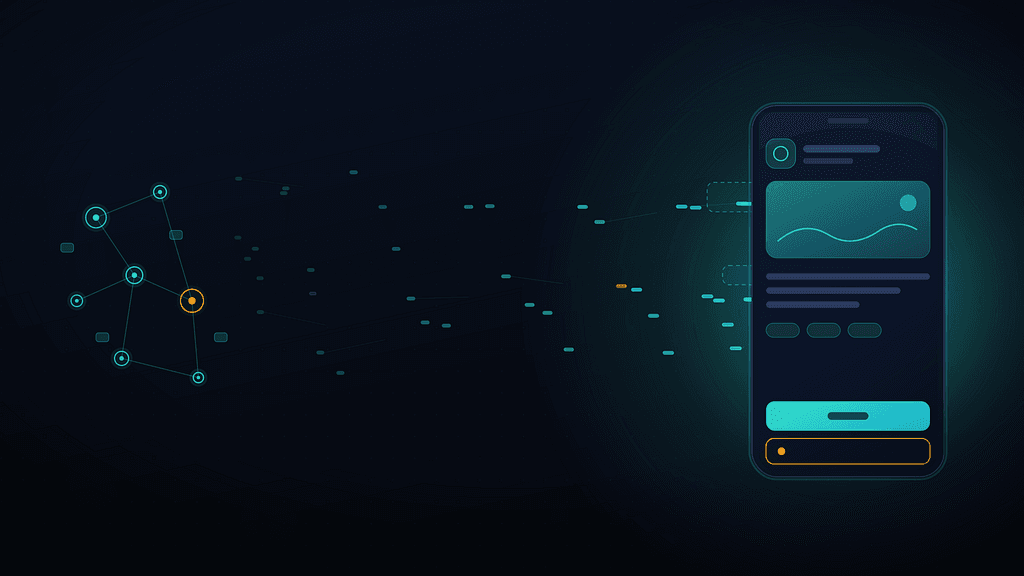
I/O 2026 Standardizes AI Server-Driven UI for Android
I/O 2026 made A2UI, Remote Compose, and AppFunctions first-class Android primitives, validating AI server-driven UIs. KMP plus Compose Multiplatform renders cross-platform from one codebase.
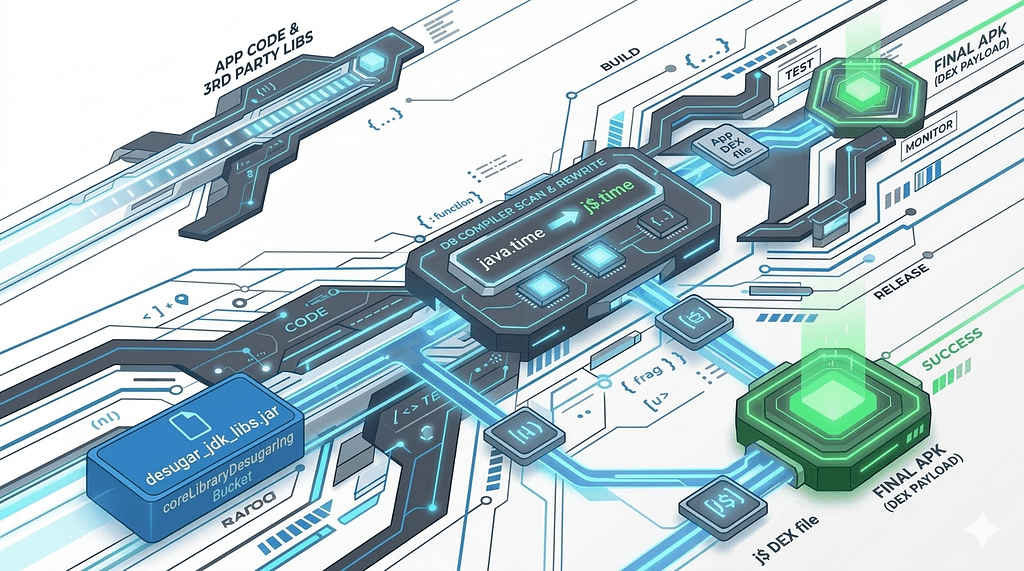
isCoreLibraryDesugaringEnabled Nears End of Life
isCoreLibraryDesugaringEnabled and desugar_jdk_libs 2.1.3 are being phased out as Google modularizes Android system updates, ending the j$ namespace workaround for java.time on legacy devices.
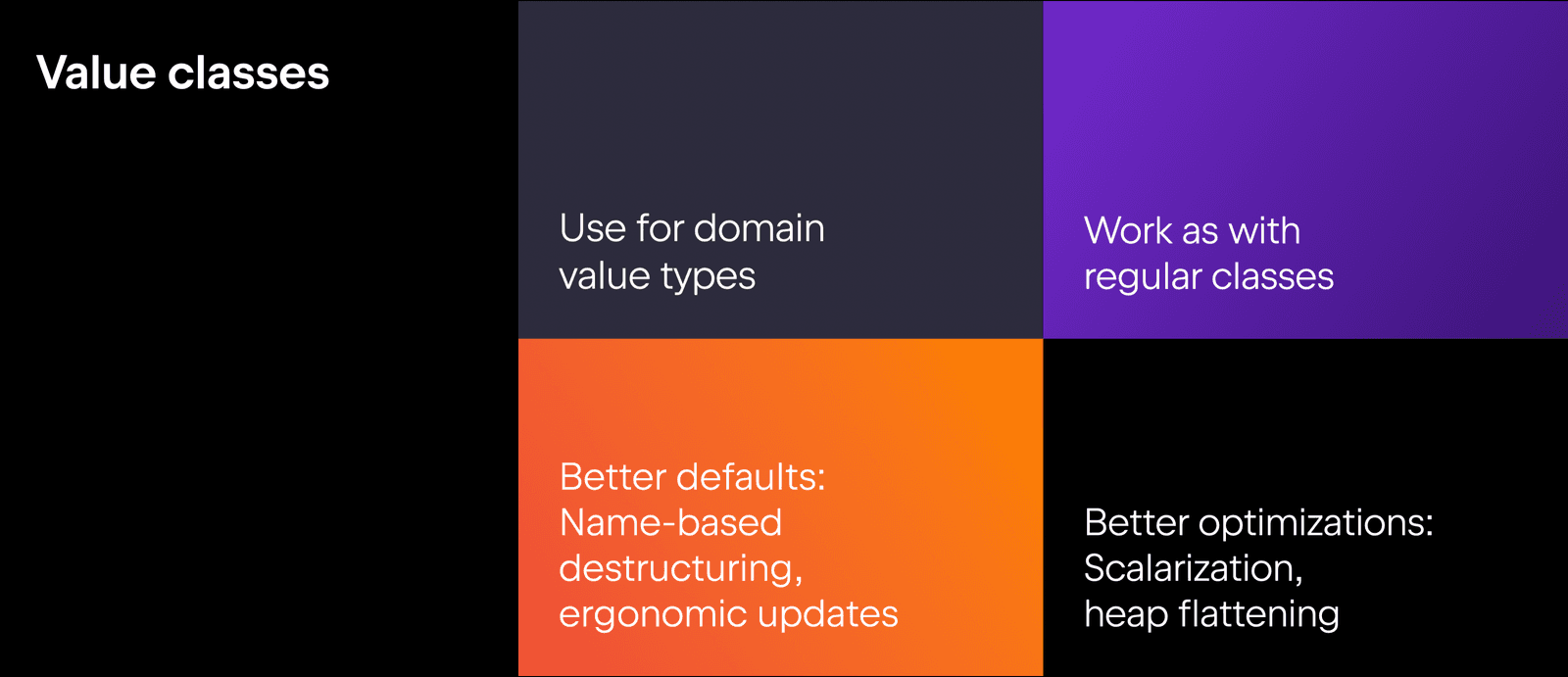
Kotlin 2.4.0 Preview, Unified Toolchain, and LSP Alpha Land
Kotlin 2.4.0 stabilizes context parameters and explicit backing fields. A new Kotlin Toolchain unifies build, test, and agent workflows under one command, while the Language Server hits Alpha.
Koog 1.0 Stabilizes Kotlin AI Agent Framework
Koog 1.0 locks APIs for one year in JetBrains' Kotlin AI agent framework, adding local Android LiteRT inference and OpenTelemetry. JVM teams can build production agents without breaking changes. Adopt stable core first, then add beta features as needed.
Kotlin 2.4.0 ships Swift package support and Java 26
Kotlin 2.4.0 adds Swift package dependencies for Native, Java 26 for JVM, and WebAssembly Component Model. Multiplatform teams can consume Swift libraries directly and target newer Java. Upgrade via IntelliJ IDEA, Android Studio, or Gradle.

How does WorkManager guarantee task execution across reboots and process death?
Tests your understanding of WorkManager's durability under process death. Strong answer: Room database persists requests; JobScheduler or AlarmManager executes them; BroadcastReceiver reschedules on reboot.