Cumulative Flow Diagrams: Spotting Workflow Bottlenecks
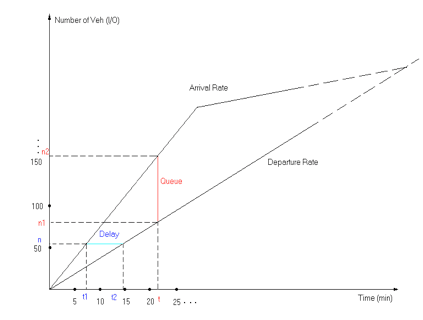
A Cumulative Flow Diagram is a geological cross-section of your project, showing work moving through states over time. Agile teams use it to spot bottlenecks by seeing where tasks pile up. The footgun is misinterpreting a widening band as a failure.
The mental model
Think of a Cumulative Flow Diagram (CFD) as a geological cross-section of your project. Instead of rock layers, you see bands representing work states like "To Do," "In Progress," and "Done." The diagram shows how the quantity of work in each state changes over time, making it easy to see where things are flowing smoothly and where they are getting stuck.
How it works
A CFD is an area graph with time on the horizontal axis and the cumulative count of work items on the vertical axis. Each colored band represents a stage in your workflow. The top line of the entire graph shows total work items created (arrivals), while the bottom line of the "Done" band shows total items completed (departures). The vertical distance between these two lines at any point is your total Work In Progress (WIP). The horizontal distance across any band indicates the average time items spend in that stage. If a band gets wider over time, it means more work is entering that stage than leaving it, signaling a bottleneck.
When to use it
Use a CFD to get a high-level, diagnostic view of your entire workflow's health. It's perfect for answering system-level questions: Is our process stable? Is WIP growing? Where are our biggest delays? It is a core tool in flow-based systems like Kanban to ensure a smooth, predictable delivery pace and identify opportunities for process improvement.
When not to use it
A CFD is the wrong tool for tracking individual performance or the status of a specific task. It's an aggregate view and intentionally smooths out daily fluctuations to reveal long-term trends. It's also less effective for projects where work items vary dramatically in size and complexity, as it treats all items as equal units, which can skew the visualization.
One canonical example
An engineering team's CFD shows the "In Review" band steadily widening over two weeks. This indicates that code is being developed faster than it can be reviewed. Instead of blaming developers for writing too much code, the team can see they have a systemic bottleneck in their review process. The solution might be to allocate more time for reviews, train more reviewers, or simplify the review criteria, all of which are system-level fixes prompted by the CFD.
Interview question
In a Cumulative Flow Diagram, what does a steadily widening band for a specific workflow state primarily indicate?
- a.The overall project's Work In Progress (WIP) is increasing.
- b.The team members assigned to that stage are not performing effectively.
- c.The project is experiencing an unexpected increase in scope or new work items.
- d.Work items are entering that stage at a faster rate than they are being completed and moved to the next stage.Correct
Why? this is the answer
The card explicitly states that "If a band gets wider over time, it means more work is entering that stage than leaving it, signaling a bottleneck." This directly corresponds to option D. Option B is a common misinterpretation, as CFDs are not for tracking individual performance but for identifying systemic issues.
Just read this? Test yourself on what you have been reading.
Read the original → en.wikipedia.org
You just looked this up. Could you explain it out loud?
That is the part interviews actually test. Tezvyn takes questions like this one and gives you what the interviewer is really checking, the answer that lands, and the mistake that ends the conversation, in the four minutes before your next meeting.
The iPhone app is on the way
We are building it. Until it lands, nothing here is held back from you: every interview card, your saved cards, streaks and the job board all work in Safari, plus hundreds of free practice quizzes of thirty questions each. Sign in and it all carries over to the app the day it arrives.
Want it as an icon? Tap Share at the bottom of Safari, then Add to Home Screen. It opens full screen and the cards you have read stay available offline.
We are hiring for this. Open roles that interview on agile — each one lists the topics its interview covers.
See open roles