DAU/MAU Ratio: Measuring Product Stickiness
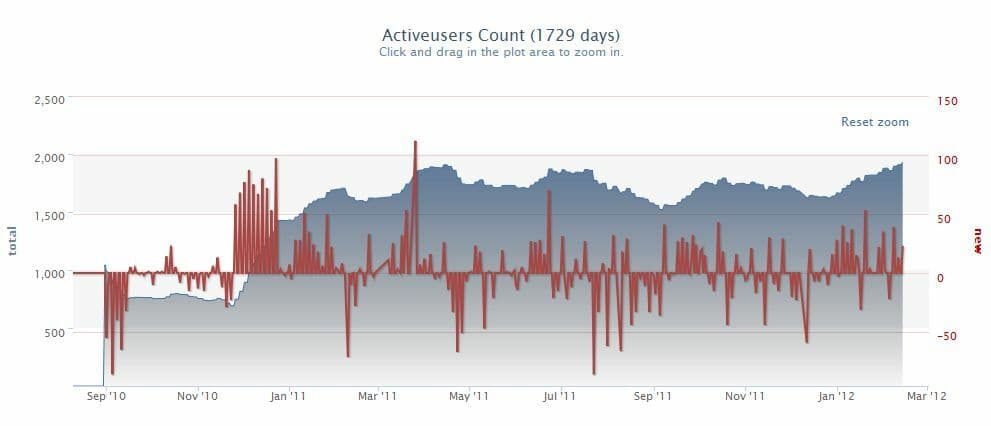
The DAU/MAU ratio measures product stickiness by comparing daily to monthly users. Social media apps aim for high ratios (50%+), while e-commerce expects lower ones. The footgun is comparing ratios without context; a 'good' number varies by product type.
The mental model
The DAU/MAU ratio is a percentage that tells you how many of your monthly users return on a daily basis. Think of it as a "habit score" for your product. A high score means users are deeply engaged and returning frequently, while a low score indicates more sporadic, infrequent use.
How it works
DAU stands for Daily Active Users, the count of unique users who perform a key action on a given day. MAU is the Monthly Active Users, the unique count over a 30-day period. The ratio is calculated as (Average DAU over 30 days) / (MAU for that same 30 days). For example, if you have 10,000 MAU and an average of 1,500 DAU, your ratio is 1,500 / 10,000 = 15%. This means on an average day, 15% of your monthly user base is active.
When to use it
This metric is most valuable for products where high-frequency engagement is a primary goal. Three key areas are: first, social media and communication platforms where daily check-ins are the core loop; second, mobile games with daily rewards; and third, news apps that aim to be part of a user's daily routine. It helps product teams gauge if feature changes are making the product stickier.
When not to use it
The DAU/MAU ratio is misleading for products with naturally low-frequency use cases. For example, an app for filing annual taxes, B2B software for quarterly reporting, or an e-commerce site for large appliance purchases. For these, metrics like conversion rate or task completion rate are more relevant. Focusing on DAU/MAU here would lead to poor product decisions.
One canonical example
A social media app has 1 million monthly active users (MAU). Over that same 30-day period, it averages 500,000 daily active users (DAU). Its DAU/MAU ratio is 500,000 / 1,000,000 = 50%. This is a very sticky product. In contrast, a travel booking site might have 1 million MAU but only 50,000 DAU, for a ratio of 5%. This simply reflects that people book travel infrequently.
Interview question
Which product type would find the DAU/MAU ratio least effective for measuring its core success?
- a.A daily news aggregator app
- b.A mobile game with daily bonuses
- c.A social media application
- d.An online store for annual tax softwareCorrect
Why? this is the answer
The DAU/MAU ratio is designed for products aiming for high-frequency engagement. An online store for annual tax software is an inherently low-frequency use case, making the ratio a misleading indicator of its success, which would be better measured by metrics like conversion rate.
Just read this? Test yourself on what you have been reading.
Read the original → en.wikipedia.org
- #analytics
- #metrics
- #product
- #engagement
Put your scrolling time to good use
Learn one idea, try a quiz and save useful cards for revision. Tezvyn makes it easy to learn and stay current in your tech field, a few minutes at a time.
The iPhone app is on the way
We are building it. Until it lands, nothing here is held back from you: every interview card, your saved cards, streaks and the job board all work in Safari, plus hundreds of free practice quizzes of thirty questions each. Sign in and it all carries over to the app the day it arrives.
Want it as an icon? Tap Share at the bottom of Safari, then Add to Home Screen. It opens full screen and the cards you have read stay available offline.
We are hiring for this. Open roles that interview on analytics — each one lists the topics its interview covers.
See open roles