Kaizen: The Art of Continuous Improvement
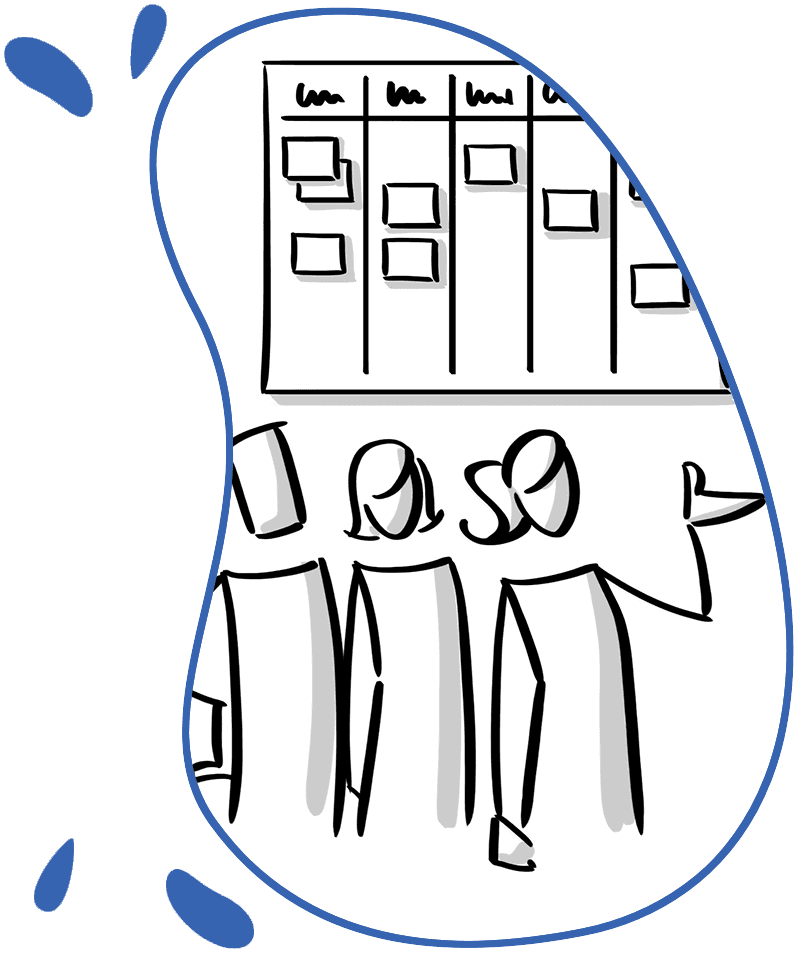
Kaizen means "continuous improvement," making small, frequent changes instead of big, risky ones. In Scrum, this is the heart of the Sprint Retrospective, where teams inspect their process and define concrete actions for the next sprint.
The mental model
Kaizen is the principle of making small, frequent, and incremental improvements rather than waiting for large, disruptive, big-bang changes. It's a cultural shift from viewing improvement as a special project to making it a continuous, daily activity involving every team member.
How it works
Originating from Toyota's lean manufacturing practices, Kaizen means "change for the better." In an Agile context, it embodies the principle of "inspect and adapt." Instead of saving up problems for a major overhaul, teams make small adjustments constantly. Scrum embeds this philosophy in its events. The Sprint Retrospective is the most explicit example, where the team reflects on its process and defines concrete actions for the next Sprint. The Daily Scrum allows for micro-adjustments based on progress toward the Sprint Goal. The Sprint Review provides a forum to gather feedback from stakeholders, which informs improvements to the product and process.
When to use it
Kaizen is not a tool for a specific situation but a continuous cultural practice. It should be embedded in any team's workflow, especially within Agile frameworks like Scrum. Use it to foster a culture of sustained excellence, empower team members to identify and solve problems, and reduce the risk associated with large, infrequent changes.
When not to use it
Kaizen's focus on incrementalism makes it unsuitable for situations requiring an immediate, drastic pivot or a fundamental business model change. While Kaizen can improve an existing system, it is not a substitute for the initial strategic decision to build a completely new one or abandon a failing product. It improves the path you are on; it does not choose a new path for you.
One canonical example
The Sprint Retrospective is Kaizen in action. At the end of a Sprint, the Scrum Team meets to discuss what went well, what could be improved, and what they will commit to changing in the next Sprint. For instance, a team might identify that interruptions are hurting their focus. Instead of launching a complex "productivity initiative," they apply Kaizen by creating one small, testable improvement: "For the next Sprint, we will block off 1-3 PM as 'focus time' and use a shared document for non-urgent questions." They inspect the results at the next retrospective and adapt accordingly.
Interview question
In which scenario would the Kaizen principle be least appropriate or effective?
- a.A Scrum team wants to optimize its Sprint Retrospective process to be more engaging.
- b.A company needs to completely shift its core business model due to market disruption.Correct
- c.An organization seeks to empower its employees to identify and solve small, daily operational issues.
- d.A software development team aims to incrementally improve its coding standards over several sprints.
Why? this is the answer
Kaizen focuses on small, frequent, and incremental improvements to an existing system or process. The card explicitly states it is unsuitable for situations requiring an immediate, drastic pivot or a fundamental business model change, as it improves the current path rather than choosing a new one.
Just read this? Test yourself on what you have been reading.
Read the original → agile-academy.com
You just looked this up. Could you explain it out loud?
That is the part interviews actually test. Tezvyn takes questions like this one and gives you what the interviewer is really checking, the answer that lands, and the mistake that ends the conversation, in the four minutes before your next meeting.
The iPhone app is on the way
We are building it. Until it lands, nothing here is held back from you: every interview card, your saved cards, streaks and the job board all work in Safari, plus hundreds of free practice quizzes of thirty questions each. Sign in and it all carries over to the app the day it arrives.
Want it as an icon? Tap Share at the bottom of Safari, then Add to Home Screen. It opens full screen and the cards you have read stay available offline.
We are hiring for this. Open roles that interview on agile — each one lists the topics its interview covers.
See open roles