PDCA Cycle: The Scientific Method for Business Improvement
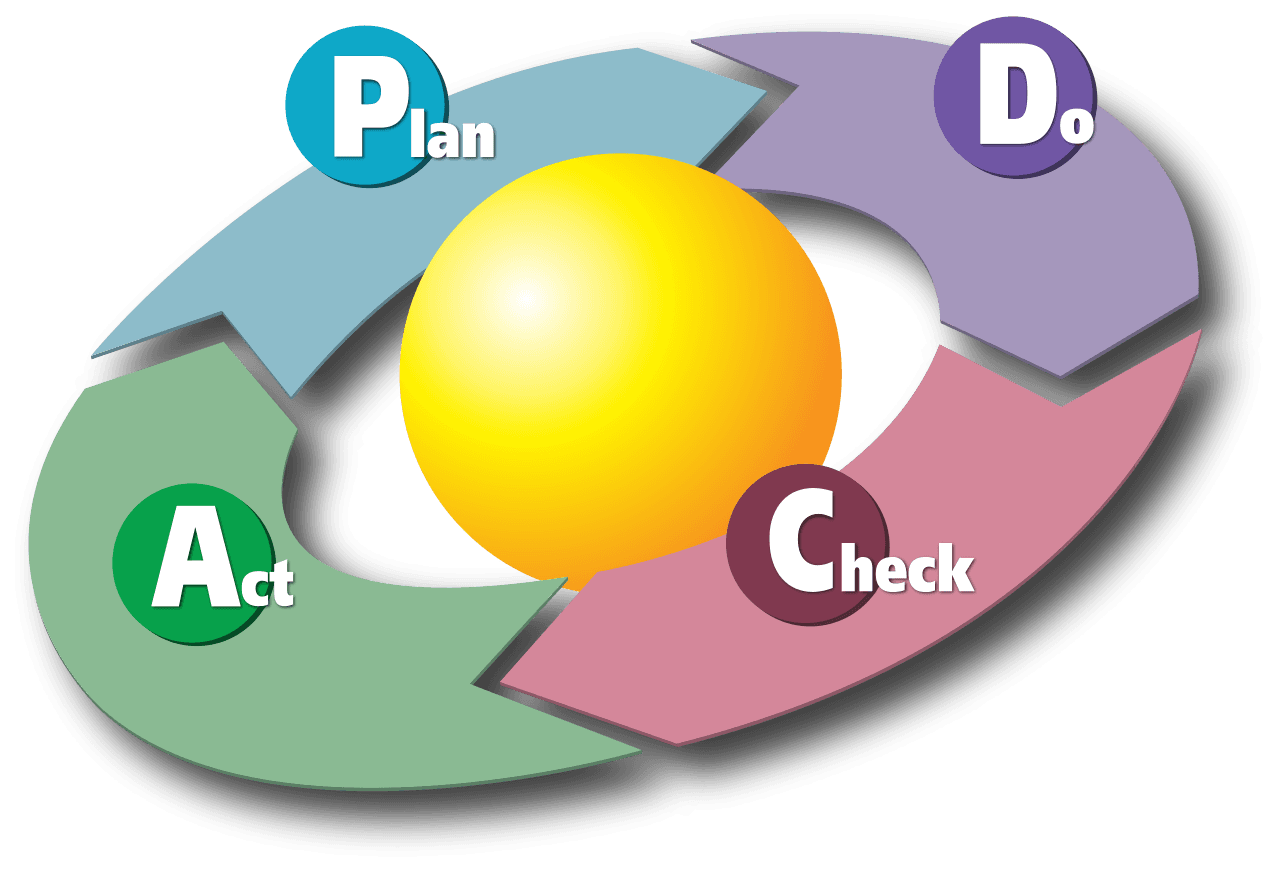
The PDCA cycle is the scientific method for business: Plan a change, Do the experiment, Check the results, and Act on the findings. It's used to refine manufacturing or improve software cycles.
The mental model
The PDCA cycle, also known as the Deming or Shewhart Cycle, is a simple but powerful four-stage loop for continuous improvement. Think of it as applying the scientific method to your work: you form a hypothesis for an improvement (Plan), run a controlled experiment (Do), analyze the data (Check), and then implement the learning (Act). It transforms process improvement from guesswork into a structured, iterative practice.
How it works
The cycle consists of four distinct phases. First, PLAN: Identify an opportunity for improvement and develop a hypothesis. Define the metrics you will use to measure success and create a plan to test the change on a small scale. Second, DO: Execute the plan. Implement the change as a pilot or experiment. Document any problems or unexpected observations. Third, CHECK: Analyze the results from the "Do" phase against the expectations set in the "Plan" phase. Compare the new data with the baseline to see if the change resulted in a measurable improvement. Fourth, ACT: Based on the results, you take action. If the experiment was successful, you standardize the improvement and implement it broadly. If it failed, you discard the change and begin the cycle again with a new plan based on what you learned.
When to use it
PDCA is ideal for any situation requiring incremental, continuous improvement. Use it for refining manufacturing processes, improving quality control, streamlining software development workflows, or optimizing any repeatable business operation. It's the core engine of philosophies like Lean Manufacturing and the Toyota Production System.
When not to use it
The cycle is less effective for radical, one-off innovations or large, complex projects that cannot be easily broken down into small, testable changes. If you need a complete overhaul or a "big bang" launch, other project management frameworks might be more suitable. It assumes a process already exists to be improved.
One canonical example
A software team wants to reduce bug resolution time. PLAN: They hypothesize that a dedicated daily 15-minute bug triage meeting will help. They plan to run this for one sprint and measure the average time-to-close for new bugs. DO: They hold the meeting every day for a two-week sprint. CHECK: At the end of the sprint, they see the average resolution time dropped by 20%. ACT: The improvement is validated. They make the daily triage meeting a permanent part of their team's process.
Interview question
Which scenario is LEAST suitable for applying the PDCA cycle?
- a.Optimizing an existing customer support script to improve satisfaction scores.
- b.Refining the effectiveness of a newly implemented employee onboarding process.
- c.Launching a groundbreaking, entirely new service offering.Correct
- d.Reducing the time it takes to process invoices in an accounting department.
Why? this is the answer
The PDCA cycle is less effective for "radical, one-off innovations or large, complex projects" like launching an entirely new service. It is designed for incremental, continuous improvement of existing or repeatable processes, as described in options A, C, and D.
Just read this? Test yourself on what you have been reading.
Read the original → en.wikipedia.org
- #process improvement
- #agile
- #management
- #kaizen
Put your scrolling time to good use
Learn one idea, try a quiz and save useful cards for revision. Tezvyn makes it easy to learn and stay current in your tech field, a few minutes at a time.
The iPhone app is on the way
We are building it. Until it lands, nothing here is held back from you: every interview card, your saved cards, streaks and the job board all work in Safari, plus hundreds of free practice quizzes of thirty questions each. Sign in and it all carries over to the app the day it arrives.
Want it as an icon? Tap Share at the bottom of Safari, then Add to Home Screen. It opens full screen and the cards you have read stay available offline.
We are hiring for this. Every open role lists the topics its interview covers, so you can prepare for the real thing rather than guessing.
See open roles