Skip to content
tezvyn:

Triangulation: Stronger UX Insights from Multiple Angles
Source: nngroup.comHardHow cards are made

Triangulation: Stronger UX Insights from Multiple Angles

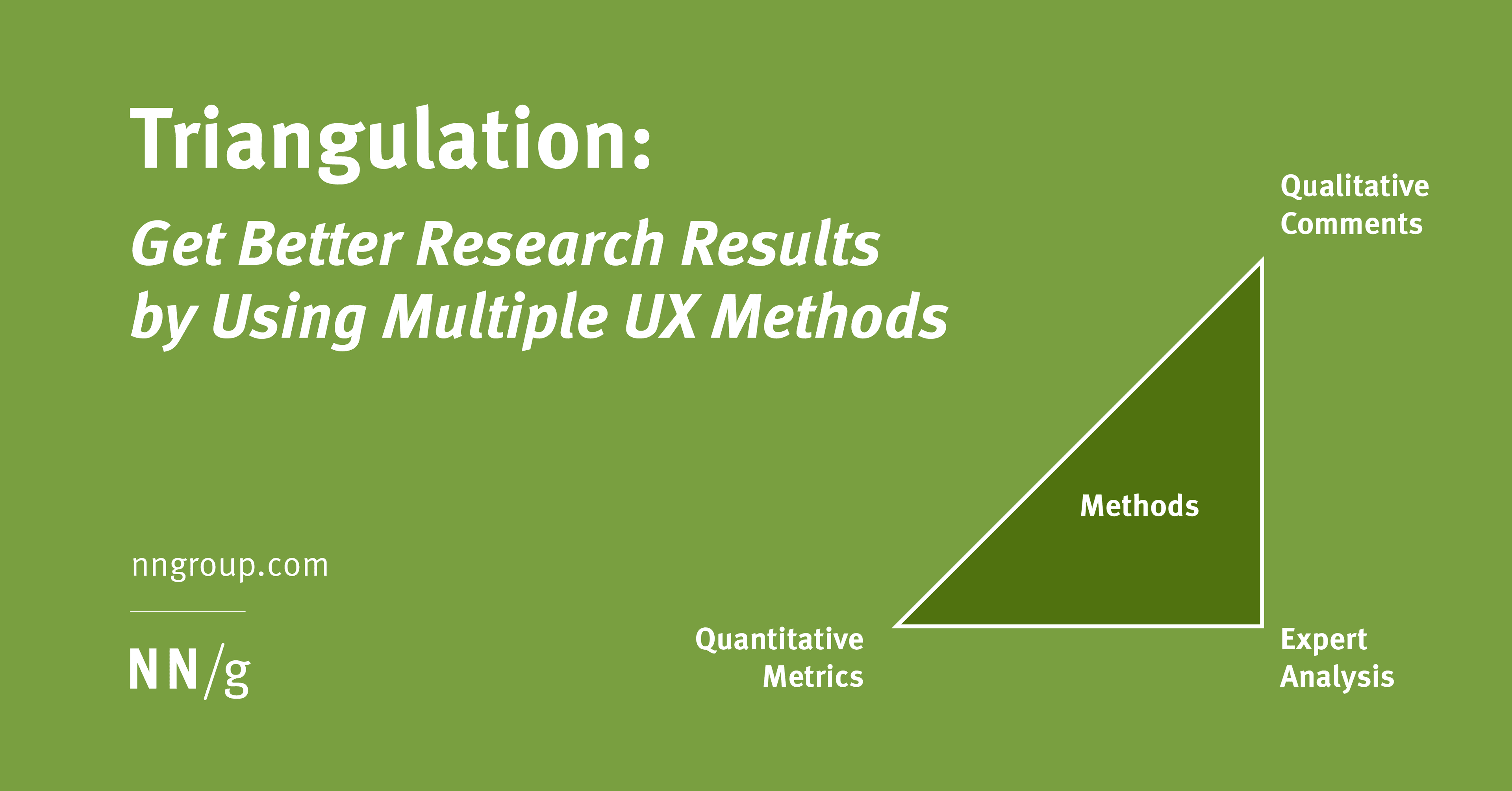
Triangulation strengthens research by combining methods to cover each one's blind spots. For example, pair a quantitative study showing *what* users do with a qualitative one explaining *why*. The footgun is treating a single data source as definitive proof.

Why it exists

All research methods have limitations. A small qualitative study can't be statistically proven, making it easy for stakeholders to dismiss. A large quantitative analysis shows what is happening but lacks the context of why it's happening. Triangulation exists to create a more credible and complete picture by overcoming these individual weaknesses.

The mental model

Think of triangulation like a detective investigating a case. A detective doesn't rely on a single witness. They gather physical evidence (like analytics), interview witnesses (qualitative studies), check alibis (surveys), and consult with experts (heuristic review). Each piece of evidence corroborates the others, building a much stronger case than any single item could alone.

How it works

Triangulation means looking at a question from multiple viewpoints to enhance a study's credibility. This can take several forms. First, using multiple methods, like a quantitative test to find what is failing and a follow-up qualitative study to find out why. Second, using multiple data sources, such as correlating a drop in satisfaction scores with revenue and time-on-page metrics. Third, using multiple researchers, where two analysts independently theme interview transcripts to see if they arrive at the same conclusions, reducing individual bias.

When to use it

Use triangulation whenever a single data source gives you an incomplete or puzzling picture. It's especially powerful for building a strong case for stakeholders. If interviews suggest a surprising user motivation, run a survey to see how common that motivation is. If analytics show a feature has a high error rate, check customer support records to see what specific problems are being reported.

When not to use it

While always beneficial, full triangulation might be overkill for very small, low-risk decisions where "good enough" data from one source is sufficient. It requires more time and resources, so for minor UI tweaks or very early-stage exploratory work, a single method might be all that's practical. Match the research rigor to the risk of the decision.

One canonical example

A product team sees in their analytics that a new subscription form has a very low completion rate (the "what"). This quantitative data is alarming but doesn't explain the problem. To triangulate, they run a small qualitative usability study with five users. They observe that three of the five get confused by the credit card input field's validation logic (the "why"). By combining the quantitative data (low success rate) with the qualitative insight (confusing validation), they have a strong, actionable finding.

Interview question

What is the primary benefit of employing triangulation in UX research?

  • a.It ensures all research findings are statistically significant and generalizable to a larger population.
  • b.It provides a more comprehensive and credible understanding by addressing the limitations of individual research methods.Correct
  • c.It eliminates the need for qualitative research by focusing solely on quantitative data from multiple sources.
  • d.It streamlines the research process, making it faster and more cost-effective.
Why?

The card explicitly states that triangulation exists to "create a more credible and complete picture by overcoming these individual weaknesses" of research methods. Option A is incorrect because triangulation often combines qualitative methods, which are not statistically significant, and its goal is not solely statistical significance but a richer understanding.

Just read this? Test yourself on what you have been reading.

Read the original → nngroup.com

You just looked this up. Could you explain it out loud?

That is the part interviews actually test. Tezvyn takes questions like this one and gives you what the interviewer is really checking, the answer that lands, and the mistake that ends the conversation, in the four minutes before your next meeting.

The iPhone app is on the way

We are building it. Until it lands, nothing here is held back from you: every interview card, your saved cards, streaks and the job board all work in Safari, plus hundreds of free practice quizzes of thirty questions each. Sign in and it all carries over to the app the day it arrives.

Want it as an icon? Tap Share at the bottom of Safari, then Add to Home Screen. It opens full screen and the cards you have read stay available offline.

Get it on Google PlayiPhone app coming soon

We are hiring for this. Open roles that interview on ux research — each one lists the topics its interview covers.

See open roles