What automated tests belong in CI before deploying a classification model?
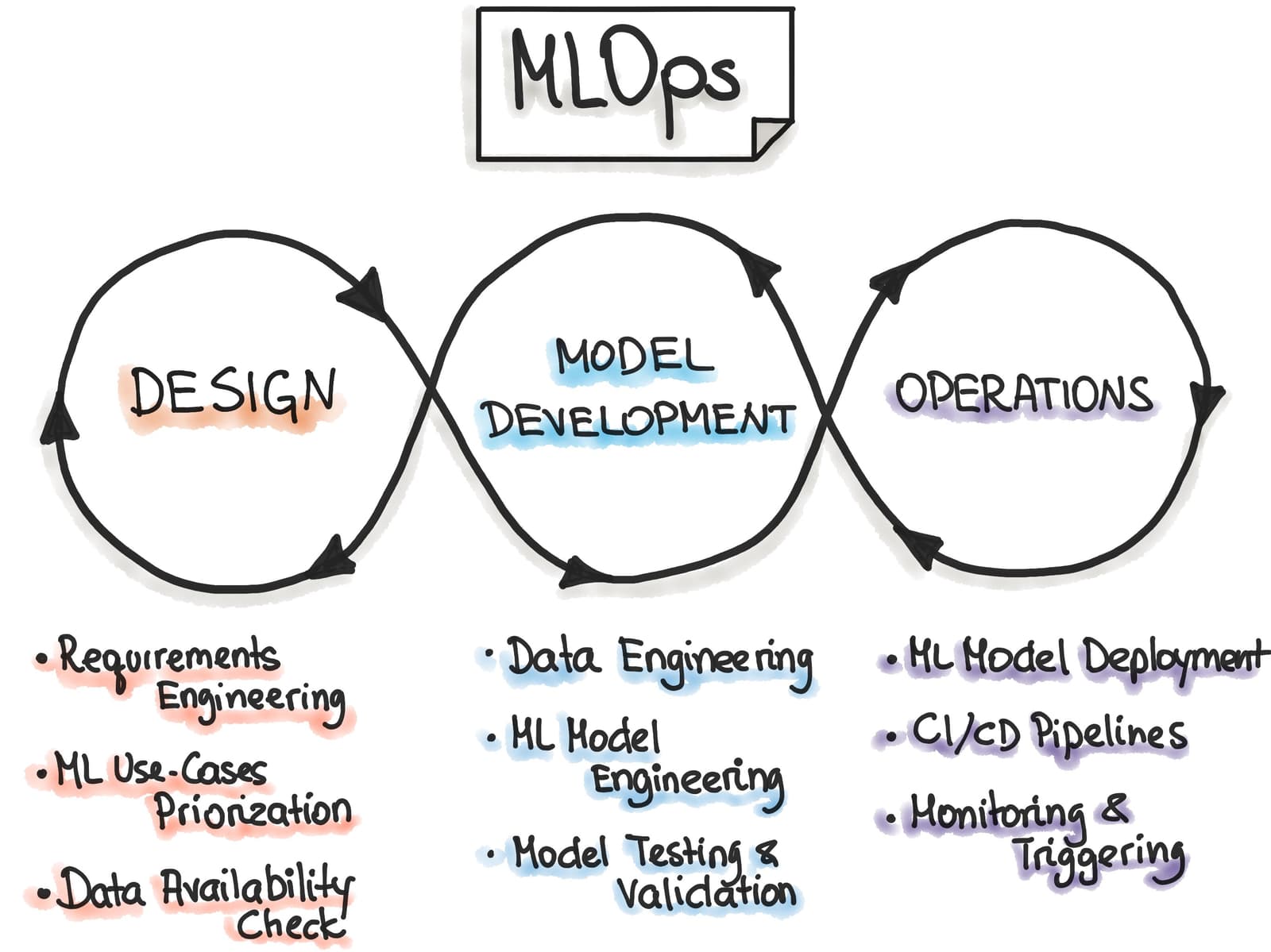
Distinguishing code tests from ML-specific CI validation.
Name data schema checks, performance regression vs baseline, bias audits, and artifact integrity.
Only testing the inference API while ignoring model behavior.
What's really being asked
This question checks whether you treat a machine learning model as a first-class software asset that requires its own validation layer in CI. The interviewer wants to see that you understand the distinction between testing the code that trains a model and testing the model artifact itself. MLOps maturity depends on automating validation across data, model, and code pipelines, not just running unit tests on Python functions.
The full answer
A good answer hits four things in order. First, data validation tests such as schema checks, distribution drift detection, and null rate assertions on the training and holdout sets. Second, model performance regression tests that compare the new model against a baseline or champion on accuracy, precision, recall, or AUC-ROC with thresholds that fail the build if the new model underperforms by more than one or two percent. Third, model-specific behavior tests including fairness or bias audits across demographic slices, confusion matrix validation per class, and out-of-vocabulary or adversarial input checks for the classification task. Fourth, artifact and reproducibility checks such as verifying model file hashes, ensuring the training container is reproducible, and confirming that the serialized model loads correctly in the inference environment.
The mistakes people make
The biggest red flag is listing only API or integration tests like HTTP status codes and response latency while ignoring model behavior. Another weak pattern is mentioning manual notebooks or human-in-the-loop review as a CI gate. Saying you would test the training code but not the resulting artifact is also a miss. Finally, vague answers like just run end-to-end tests without specifying what properties of the model are being asserted show shallow MLOps experience.
What usually comes next
The interviewer may ask how you would automate a champion-challenger rollout in the CD stage after CI passes. They might probe how you handle data drift detection when labels are delayed, or ask you to define the exact metrics and thresholds you would enforce for a binary classifier in a regulated domain like finance or healthcare.
A concrete example
For a fraud detection classifier, the CI pipeline would first assert that the transaction feature schema has not changed and that the fraud rate in the training batch is between 0.1 and 5 percent. Next, it would run the trained model on a holdout set and require that precision at the default threshold is no more than 0.5 percent below the current production model. Then it would run a slice analysis to ensure recall for high-value accounts does not drop below 92 percent. Finally, it would verify the exported ONNX artifact checksum and run a smoke test loading the model in the serving container to confirm inference completes in under 50 milliseconds.
Interview question
Which combination of automated CI tests best validates a classification model artifact before deployment?
- a.End-to-end tests confirming the training script finishes and the inference API returns predictions within 50 milliseconds
- b.HTTP endpoint tests, response latency checks, and load testing of the serving container
- c.Data schema checks, performance regression against a baseline, bias audits, and artifact integrity testsCorrect
- d.Unit tests for the training code, code coverage thresholds, and pipeline linting
Why? this is the answer
Data schema checks, performance regression, bias audits, and artifact integrity tests validate the model artifact itself rather than just the surrounding code. Option A is tempting because it verifies the pipeline runs and responds quickly, but it never asserts whether the model's accuracy, fairness, or data assumptions have degraded.
Just read this? Test yourself on what you have been reading.
Read the original → ml-ops.org
- #mlops
- #ci-cd
- #model-testing
- #machine-learning
- #deployment
You just looked this up. Could you explain it out loud?
That is the part interviews actually test. Tezvyn takes questions like this one and gives you what the interviewer is really checking, the answer that lands, and the mistake that ends the conversation, in the four minutes before your next meeting.
The iPhone app is on the way
We are building it. Until it lands, nothing here is held back from you: every interview card, your saved cards, streaks and the job board all work in Safari, plus hundreds of free practice quizzes of thirty questions each. Sign in and it all carries over to the app the day it arrives.
Want it as an icon? Tap Share at the bottom of Safari, then Add to Home Screen. It opens full screen and the cards you have read stay available offline.
We are hiring for this. Open roles that interview on mlops — each one lists the topics its interview covers.
See open roles