What production metrics and auto-thresholds trigger model retraining?
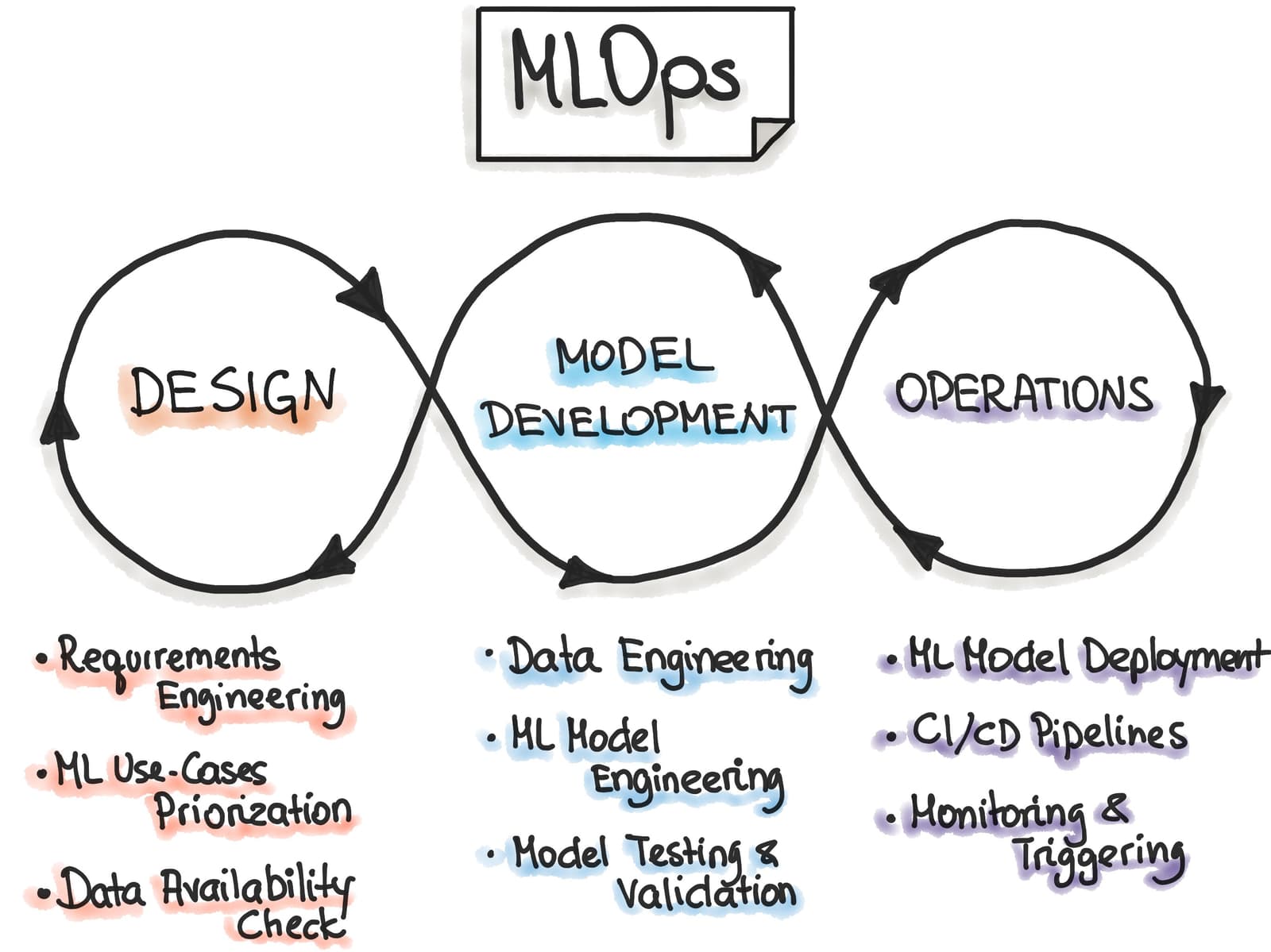
This tests production monitoring maturity. A strong answer covers technical drift metrics, business KPIs tied to model decisions, and automated thresholds that page or trigger CI/CD retraining.
What's really being asked
This question probes whether you can design a production monitoring stack that connects model health directly to business value and automates remediation without manual intervention. Interviewers want to see that you clearly distinguish between technical model performance and downstream business impact, and that you understand how to build closed-loop MLOps automation rather than relying on manual dashboards or ad hoc reviews.
The full answer
A strong response structures monitoring into four distinct layers. First, technical metrics: input drift detection using population stability index or KS-test scores exceeding thresholds like 0.2, output drift such as predicted class distribution shifts, and label-aware metrics like precision or recall decay over rolling windows. Second, business metrics: conversion rate changes, fraud dollar amounts, customer churn, or cost per prediction tied directly to model decisions. Third, automated thresholds: alerts on latency p99 spikes, data schema changes, or missing feature rates, and retraining triggers on sustained accuracy drops of 5 percent or more or business metric degradation exceeding a predefined cost threshold. Fourth, trigger logic: paging an on-call engineer for infrastructure issues versus launching a full continuous integration and continuous deployment retraining pipeline when drift exceeds retrain thresholds, reflecting the principle that machine learning assets should move through the same automated release process as other software components.
The mistakes people make
Red flags include only mentioning offline accuracy or F1 score without discussing production data drift or label delay. Another mistake is proposing manual retraining checks or simple calendar-based retraining without monitoring-driven triggers. Suggesting thresholds that are far too sensitive and cause alert fatigue, or ignoring business metrics entirely and focusing only on engineering telemetry, signals junior thinking and a lack of operational maturity.
What usually comes next
Interviewers often ask how you would handle delayed labels in a classification system when ground truth is not immediately available, how to A/B test a retrained model before full rollout, or how you would debug a model that shows no statistical drift yet business metrics are falling. They may also probe how you version datasets and models during automated retraining.
A concrete example
For a fraud classifier processing 10,000 transactions per hour, you might monitor KS-drift on transaction amount and merchant category weekly, alert if population stability index crosses 0.25, and trigger retraining if precision on high-value transactions drops below 0.92 for two consecutive hours. You would also track blocked fraud dollars per hour as a business metric, and auto-retrain only after the new model passes integration tests in the continuous integration and continuous deployment pipeline, ensuring the retrained asset is validated before replacing production traffic.
Interview question
Which event should trigger an automated CI/CD retraining pipeline rather than just an alert or manual review?
- a.Offline F1 score decay on last month's test set noticed during a weekly manual check
- b.Single-hour PSI drift and predicted class shift during a known promotional event
- c.Sustained accuracy drop of 5% over a rolling window or business metric degradation past a predefined cost thresholdCorrect
- d.p99 latency spike and missing feature rate jump indicating infrastructure issues
Why? this is the answer
The card specifies that automated retraining launches on sustained accuracy drops of 5% or more or business metric degradation exceeding a cost threshold, whereas latency spikes and missing features should page an on-call engineer for infrastructure issues. Weekly manual reviews and overly sensitive single-hour drift alerts are red flags that signal immature operational practices.
Just read this? Test yourself on what you have been reading.
Read the original → ml-ops.org
- #mlops
- #monitoring
- #production
- #classification
- #automation
You just looked this up. Could you explain it out loud?
That is the part interviews actually test. Tezvyn takes questions like this one and gives you what the interviewer is really checking, the answer that lands, and the mistake that ends the conversation, in the four minutes before your next meeting.
The iPhone app is on the way
We are building it. Until it lands, nothing here is held back from you: every interview card, your saved cards, streaks and the job board all work in Safari, plus hundreds of free practice quizzes of thirty questions each. Sign in and it all carries over to the app the day it arrives.
Want it as an icon? Tap Share at the bottom of Safari, then Add to Home Screen. It opens full screen and the cards you have read stay available offline.
We are hiring for this. Open roles that interview on mlops — each one lists the topics its interview covers.
See open roles