Intermediate interview questions in Agile & Scrum, page 5
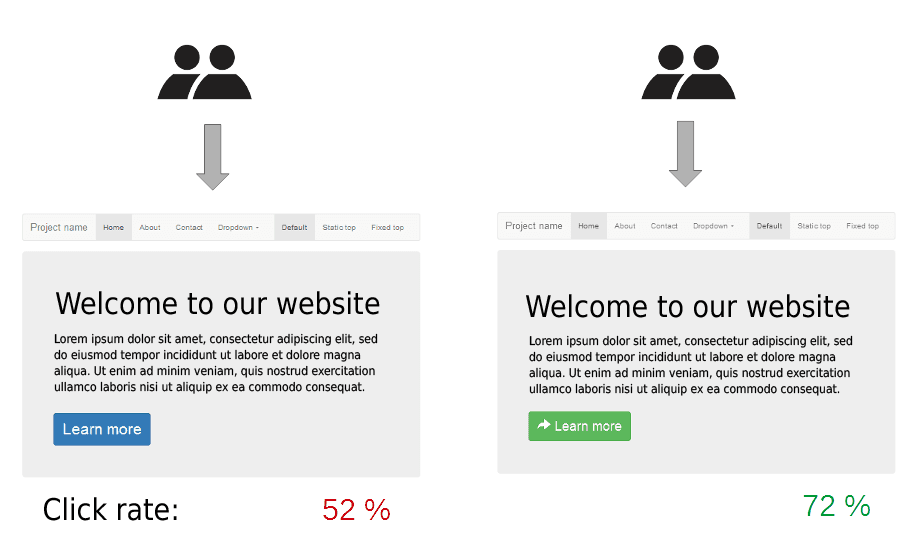
How would you A/B test a redesigned dashboard?
This tests your ability to translate a product goal into a technical plan. A good answer defines "engagement" with metrics, outlines the bucketing and instrumentation strategy, and discusses statistical significance.

How do you differentiate an MVP from a throwaway prototype architecturally?
Distinguish by user commitment; define bounded contexts with stable interfaces; favor reversible decisions and day-one observability.
MVP vs. Throwaway Prototype: Technical Differences
This tests your understanding of Minimum Viable Architecture (MVA). Differentiate by intent: a prototype is a throwaway concept test, while an MVP is a sustainable first version built on an MVA. A red flag is describing a sacrificial architecture for an MVP.
Differentiating an MVP from a throwaway prototype
Tests your grasp of strategic technical investment. Differentiate by intent: an MVP is the first version, a prototype is disposable. A great answer introduces Minimum Viable Architecture (MVA) to support future needs.
How do you adapt in-progress work when feedback invalidates a key assumption?
Alert the PO, renegotiate Backlog if the Goal is at risk, use feature flags to isolate invalidated logic.
How do you adapt when user feedback invalidates your current sprint?
This tests your ability to connect process to technical strategy under pressure. A great answer involves immediately notifying the Product Owner, quantifying the impact, and proposing technical pivots like feature flagging.
How to handle user feedback that invalidates your current sprint's work?
Tests your grasp of Scrum's adaptation principle. A great answer involves immediately notifying the Product Owner, assessing Sprint Goal impact, and proposing technical pivots like feature flagging. A red flag is continuing to build the invalidated feature.

How would you measure a launched feature's success and impact?
This tests if you link code to business outcomes via agile metrics. A strong answer covers value, quality, satisfaction; names metrics like velocity or cycle time; and uses reports to track progress. Red flag: defining success purely by uptime or bug counts.
How would you measure the success and impact of a new feature?
This tests your ability to connect engineering work to business value. A strong answer defines success metrics upfront, instruments code for quantitative data like adoption rates, and gathers qualitative feedback.
How do you measure a new feature's success beyond bugs and uptime?
Tests if you connect engineering to business value. A great answer links success to the feature's original goals, proposes user behavior and business impact metrics, and names specific tools.

How would you implement Classes of Service in Kanban?
Tests whether you segment work by risk and cost of delay. A strong answer defines explicit policies, visualizes classes with color or lanes, and reserves WIP capacity per class. Red flag: using classes as simple priorities without capacity rules.
How would you implement Classes of Service in Kanban?
This tests your understanding of risk management and differentiated service delivery. A good answer defines the 4 classes (Expedite, Fixed Date, Standard, Intangible), explains their different pull policies, and gives a risk-based example.
How would you implement Classes of Service in Kanban?
Tests your grasp of risk management and flow optimization in Kanban. A good answer defines classes (Expedite, Fixed Date), explains implementation via swimlanes and WIP limits, and gives an example showing trade-offs.
Sprint velocity is highly variable. What technical root causes do you check?
Check scope stability via carryover, flow via cycle time, quality via rework, and estimation via point variance.
Investigating Variable Sprint Velocity: Technical Root Causes
This tests your ability to diagnose team issues with data, not anecdotes. Propose technical hypotheses like flaky tests or merge conflicts and link them to metrics like CI/CD failure rates or PR cycle time. A red flag is blaming individuals or poor estimation.
Investigating Variable Sprint Velocity
This tests your ability to diagnose issues by connecting process metrics to technical health. A great answer hypothesizes technical causes (e.g., tech debt, flaky tests), identifies specific data for validation (e.g., cycle time, build logs), and avoids…
What does a widening CFD Code Review band indicate?
Tests CFD literacy: a widening Code Review band shows WIP accumulation and a bottleneck. Great answers cite WIP limits, swarming, and policy fixes before hiring. Red flag: mistaking inventory growth for increased throughput.
Diagnosing a Widening Code Review Band in a CFD
This tests data interpretation and problem-solving. A great answer defines the bottleneck, hypothesizes causes (capacity, PR size), proposes diagnostics, then offers solutions. A red flag is blaming individuals or jumping to a single, unverified solution.
CFD 'Code Review' band is widening. What does it mean?
This tests your ability to interpret a CFD and propose actions. A widening 'Code Review' band means work enters faster than it leaves. Diagnose the bottleneck (e.g., review quality, reviewer availability), then propose solutions.
Purpose of a shared Definition of Done for multi-team products
This tests empirical transparency across teams building one Increment. A shared DoD forces cross-team integration and testing before Sprint end. Letting teams keep separate DoDs hides integration debt and breaks transparency.
We are hiring for this. Every open role lists the topics its interview covers, so you can prepare for the real thing rather than guessing.
See open roles