Intermediate concepts in AI & ML, page 10
Model Merging: Combine LLM Skills Without Retraining
Model merging blends specialized LLMs into one, like creating a custom alloy from different metals. It's used to combine a coding expert with a legal expert, for example, without costly retraining.

Scene Parsing: Labeling Every Pixel in an Image
Scene parsing is like digital coloring-by-numbers, assigning a category like 'road' or 'sky' to every pixel. It's used by autonomous vehicles to understand the road and AR apps to place objects.

ML Pipeline: Systematic Model Delivery
A machine learning pipeline is the systematic workflow that carries models from data labeling through deployment inside MLOps. It keeps the AI lifecycle repeatable rather than ad hoc. The footgun is treating a one-off notebook as a production pipeline.
Unit Economics: Tying ML Costs to Business Value
Unit economics connect your ML spending to business outcomes. Instead of a total cloud bill, you see cost per prediction or per token. This helps product owners make pricing tradeoffs and engineers spot efficiency gains.

Visual Question Answering (VQA): Teaching AI to See and Reason
VQA models combine vision and language to answer questions about an image, like a visual Turing test. It's used in assistive tech and advanced image search. The footgun is models learning to answer based on language patterns, not visual content.
GPU Utilization: Are You Wasting Your Most Expensive Resource?
GPU utilization isn't just a percentage; it's a measure of your return on investment. It tells you if your expensive hardware is computing or just waiting for data. Use it to diagnose slow training jobs and right-size cloud instances for ML workloads.

Model Monitoring: A Health Check for Production AI
Model monitoring is a smoke detector for your AI, alerting you when its performance degrades. It compares live data to training data to catch data drift or shifts in user behavior. The footgun is assuming a model, once deployed, performs well forever.
Visual Odometry: Estimating Motion from Pixels
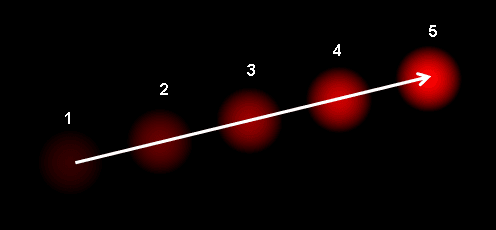
Visual odometry is dead reckoning with a camera. It estimates movement by tracking how features shift between images, without GPS or maps. It's used in robotics and AR, but its biggest footgun is that small errors accumulate, causing it to drift over time.

Stop Paying for Idle Cloud Resources
Stop paying for idle cloud servers. Automated shutdown is like turning off the lights in an empty office, running compute only when needed. It's ideal for dev environments or scheduled batch jobs. The footgun is applying this to stateful production services.
Document Chunking: Slicing Text for LLMs
Think of chunking as preparing text "bites" for an LLM. It breaks large documents into smaller, meaningful segments to fit a model's context window and improve search. It's essential for Retrieval-Augmented Generation (RAG) and semantic search.
Data Drift: Why Good Models Go Bad
Data drift is when a model's accuracy decays because the real-world data it was trained on has changed. This happens in fraud detection as scams evolve or in e-commerce as trends shift.
Data Storage Tiering: Pay Only for the Access You Need
Treat data like items in a house: hot, frequently used data on the counter; cool, less-used data in the pantry. Cloud providers use this to price storage, letting you move old logs to cheaper tiers.
Evaluating RAG Systems: Metrics for Retrieval and Generation
Evaluating a RAG system means grading its two parts: retrieval and generation. Metrics like relevance check if the right documents were found, while faithfulness and accuracy check if the final answer correctly uses those documents.

Cross-Encoder Re-ranking: Accuracy Over Speed
A cross-encoder re-ranks search results by reading the query and each document together, allowing it to spot subtle connections. It's the second, high-precision step in a search pipeline, re-ordering a small list of candidates.
IaC for MLOps: Your ML Factory's Blueprint
Treat ML infrastructure—training clusters, model registries, serving endpoints—as code in version-controlled files. This ensures reproducible experiments and consistent deployments across environments.
Agentic Reasoning: LLMs that Plan, Act, and Learn
Agentic reasoning treats an LLM as an autonomous agent that interacts with its environment. It plans tasks, uses tools like APIs, and learns from feedback to solve complex problems. The footgun is assuming its plans are optimal or actions are always correct.
Agent Memory: Short-Term vs. Long-Term Recall
Agent memory gives an LLM a sense of history, separating fleeting conversation context from persistent knowledge. Short-term memory tracks the current chat, while long-term memory recalls user facts across sessions.
Idempotent Data Pipelines: Reruns Without Side Effects
An idempotent pipeline gives the same output for the same input, no matter how many times you run it. This lets you safely retry failed jobs without side effects, which is crucial for scheduled batch inference or feature engineering tasks.
LangChain Agents: Giving LLMs a Toolkit
A LangChain Agent is an LLM given a toolkit and a goal. The agent's 'harness' prompts the model to pick tools, call them in a loop, and reason about the results until the task is complete. Use it to query databases or call external APIs.
Weights & Biases: MLOps for Experiment Tracking & Evaluation
Weights & Biases is a platform for MLOps, providing experiment tracking, evaluation, and observability for AI models. It helps you develop models and ship LLM applications. The main risk it addresses is losing track of which model version used which data.
We are hiring for this. Every open role lists the topics its interview covers, so you can prepare for the real thing rather than guessing.
See open roles