Intermediate concepts in AI & ML, page 12

Weakly Supervised Learning: Cheaper Labels, Smarter Models
Weakly Supervised Learning trains models on cheap, imprecise labels to perform complex tasks. It's used for object detection when you only have image-level tags, not pixel-perfect annotations.
Docker Image vs. Container: Blueprint vs. Runtime
A Docker image is a read-only blueprint; a container is a live instance with a writable layer. You build an image once in CI and run many containers from it in production. The footgun is mutating a running container without updating the image recipe.
AI's Dual-Use Problem: Good Tools, Bad Outcomes
AI models built for good can be easily repurposed for harm. A language model that helps with coding can also generate malware. The footgun is assuming good intentions prevent misuse; the risk is in the capability, not the creator's intent.
Why GPUs Dominate Neural Network Training
A GPU is a freight train, a CPU a race car: deep learning moves identical math across huge batches. GPUs win on transformers and CNNs. The footgun is using them for tiny models, where data transfer overhead eats the gains.
AI Coding Assistants: Your LLM Pair Programmer
AI coding assistants are like pair programmers powered by large language models. They assist in tasks across the software lifecycle, from code generation and testing to debugging and documentation. The key footgun is over-reliance; they assist, not replace.
Staging Environments for ML Pipelines
A staging environment mirrors production so models and pipelines are validated on production-like data and infrastructure before release. It catches drift, integration breaks, and serving regressions early, making promotion to production a safe, repeatable…
Open LLM Leaderboard: Separating Hype from Performance
The Open LLM Leaderboard is the de facto scoreboard for open-source models, providing reproducible benchmarks to cut through marketing hype. It helps you compare models on standardized tests, but remember that a high rank doesn't guarantee performance on your…

Proxy Metrics: Estimate Long-Term Impact Now
A proxy metric uses a model to estimate a slow, long-term outcome, like annual revenue. It lets you quickly judge an A/B test's impact without waiting months for the true result. The footgun is trusting a biased model or ignoring its error, giving you false.
Transformer Encoder-Decoder Architecture
The encoder-decoder Transformer maps an input sequence into rich contextual representations with an encoder, then a decoder generates output tokens autoregressively while attending to those representations via cross-attention, making it ideal for…
Right-Size Inference and Stop Paying for Idle GPUs
Instance right-sizing matches inference to the smallest hardware that serves it without choking. It matters when GPU endpoints idle at 10% utilization. The footgun is copying your training spec into production; inference rarely needs that memory or multi-GPU.
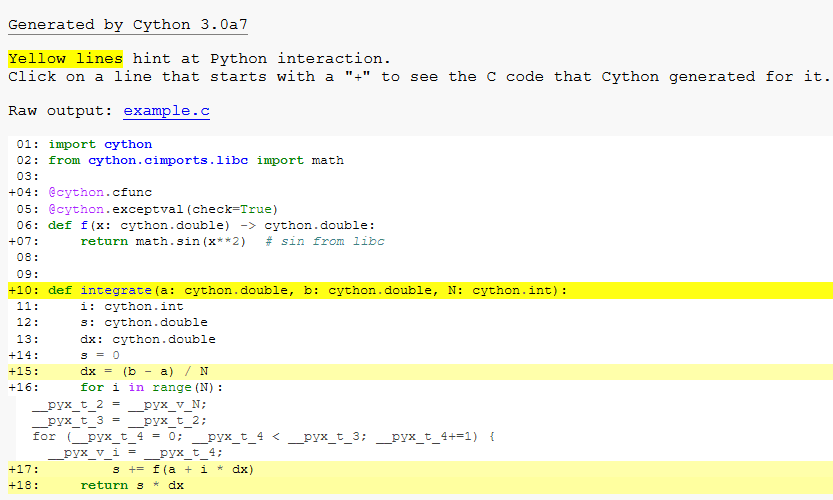
Cython: Static Typing for Faster Python
Cython speeds up Python by compiling it to C, especially when you add static types to bypass Python's dynamic overhead. Use it for CPU-bound bottlenecks like tight loops in numerical code.
Inference Health Checks: Traffic Gates, Not Heartbeats
An inference server's health check is a traffic gate, not a heartbeat. Kubernetes uses it to route requests only after the model is loaded. The footgun is probing the root path, which stays green even when the model has crashed or the GPU is wedged.
Tokenization and Input Embeddings in LLMs
Tokenization splits language into tokens, and embeddings map token IDs into vectors with meaning. Every transformer does this first. The footgun is assuming one token equals one word—token counts behave unpredictably when words merge or split.
Missing Data Imputation: Filling in the Blanks
Instead of deleting rows with missing values, imputation makes an educated guess to fill the blanks, preserving your sample size. It's used in survey analysis or time-series data where dropping records would introduce bias.
Adversarial Validation: Detect Drift with a Classifier
Adversarial validation reframes drift detection as a classification problem: train a model to separate training rows from production rows. If it can tell them apart, your feature distributions have shifted.
Position-wise FFN: Each Token's Private Workshop
Think of the position-wise FFN as each token's private gym after attention: it bulks up features and stores facts, but never shares between seats. Cutting it to save parameters starves the model because attention cannot do this alone.
Log Transformation: Taming Skewed Data for Better Models
A log transform tames skewed data by compressing large values and spreading out small ones. It's used on data like income or web traffic to help it meet the assumptions of linear models. The footgun: it fails on zero or negative values.
Directed Acyclic Graph (DAG) for Workflows
A DAG models a workflow as tasks (nodes) connected by dependency edges with no cycles, so a scheduler knows the valid execution order. It enables parallelism, safe retries, and idempotent reruns, and underpins orchestrators like Airflow for ML pipelines.
Transformer Encoder Block
A Transformer encoder block mixes full sequence context in parallel: every token attends to all others to refine its vector. It drives bidirectional models like BERT. The footgun is using it unmasked for generation, which leaks future information.
Idempotency: Making Data Pipelines Retry-Safe
Idempotency means an operation has the same effect whether run once or multiple times, like closing an already-closed door. It's essential for data pipelines where retries are common. The footgun is assuming retries are safe, leading to data corruption.
We are hiring for this. Every open role lists the topics its interview covers, so you can prepare for the real thing rather than guessing.
See open roles