Concepts in AI & ML, page 18
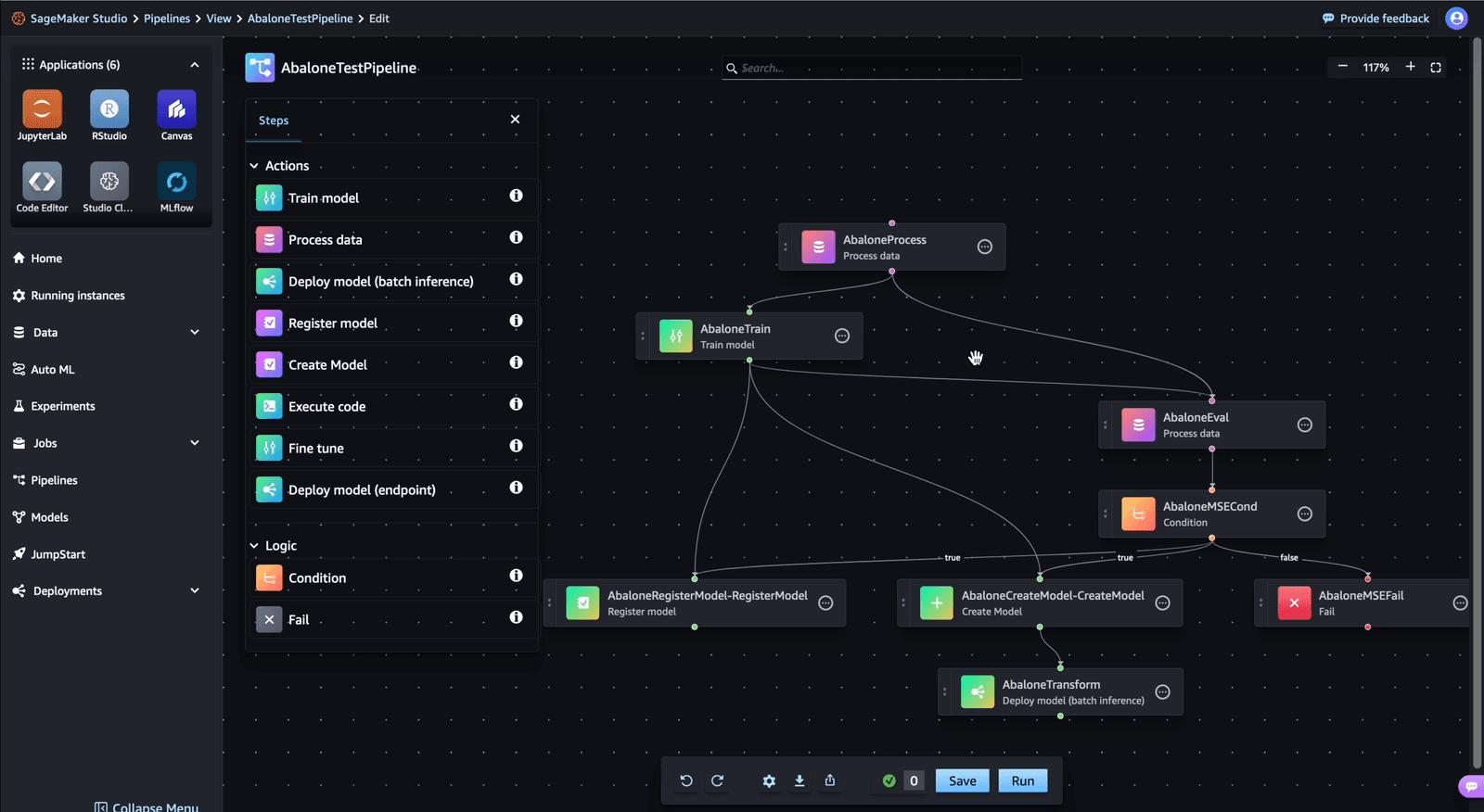
Amazon SageMaker Pipelines: Repeatable ML Workflows
Think of SageMaker Pipelines as a CI/CD pipeline for ML models, automating workflows from data prep to deployment. Use it for reproducible training and automated retraining.
Constitutional AI: Teaching Models to Govern Themselves
Constitutional AI teaches a model to self-correct against a set of principles, or a 'constitution.' This automates safety alignment for models like Claude, reducing reliance on human feedback.
Topic Modeling: Finding Themes in Unstructured Text
Topic modeling automatically finds themes in text by grouping words that often appear together. It's used to analyze customer feedback or organize large document sets.

Generative Adversarial Networks (GANs): A Forger and a Detective
A GAN pits two neural networks against each other: a Generator that creates fakes and a Discriminator that spots them. This adversarial game forces the Generator to produce highly realistic outputs, like photorealistic faces. The main footgun is mode collapse.
Vertex AI Pipelines: Orchestrating ML Workflows
Think of it as an assembly line for your machine learning models, automating everything from data prep to deployment. Use it to build reproducible, production-grade ML systems on Google Cloud.
Named Entity Recognition: Finding the 'Who, What, Where' in Text
Named Entity Recognition (NER) is a smart highlighter for text, automatically finding and tagging nouns like people, places, and organizations. It powers search and extracts structured data from news or support tickets.
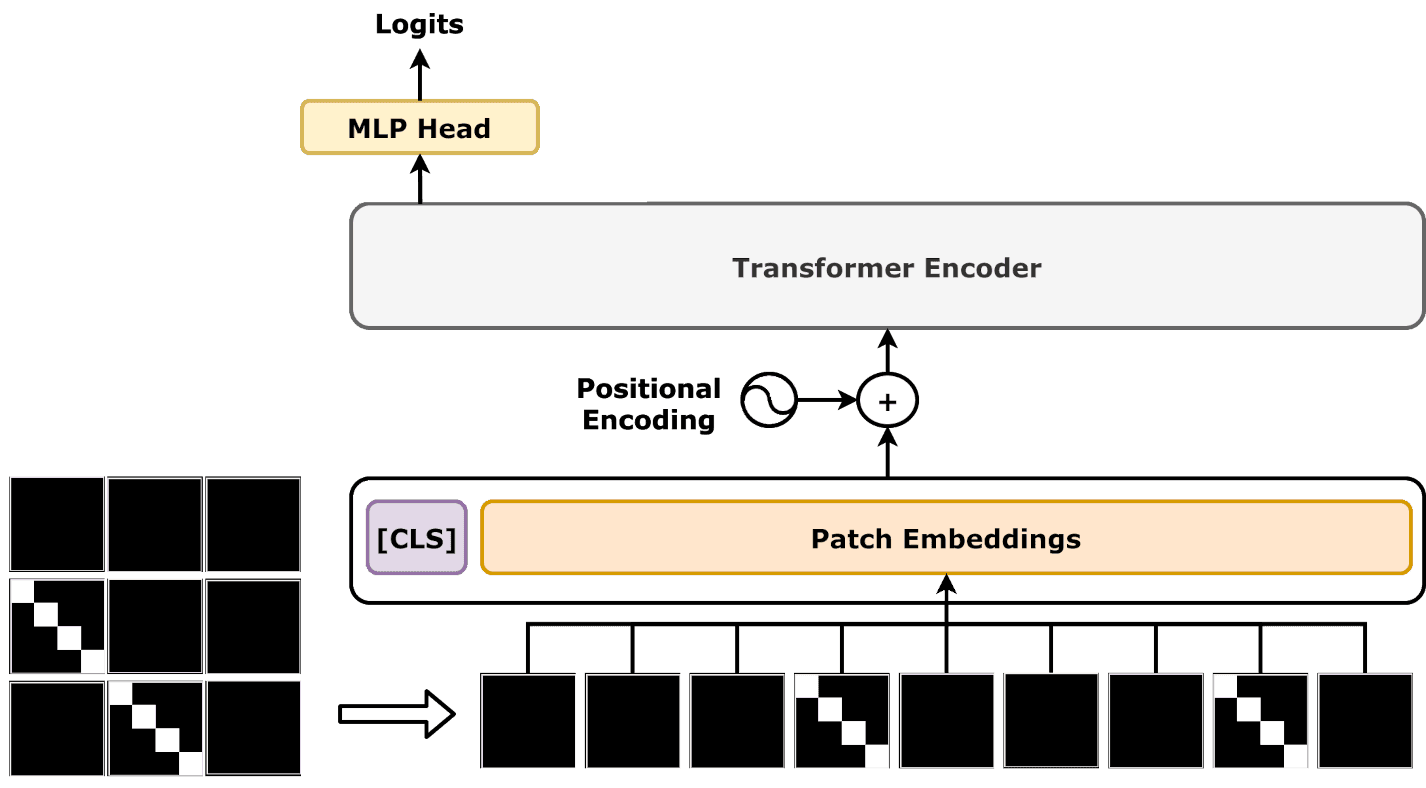
Patch Embedding: Turning Images into Words for Transformers
Patch embedding chops an image into a grid of squares, turning each into a vector. This lets sequence-based models like Transformers "read" images. It's the core of Vision Transformers (ViTs), but it discards the fine-grained detail inside each patch.
Argo Workflows: Run Complex Jobs on Kubernetes
Think of Argo Workflows as a script runner for Kubernetes, where each command is a container. It runs multi-step jobs like CI/CD or ML pipelines. The footgun is treating it like a full CI server; it's just an engine and lacks features like Git polling.
Instrumental Convergence: Why All AIs Might Act Alike
Even with different end goals, intelligent agents tend to pursue the same sub-goals like self-preservation and resource gathering. This is key in AI safety, explaining why a paperclip-making AI might compete with humans for resources, not from malice but…
Q-Learning: Teaching an Agent by Trial and Error
Q-Learning teaches an agent the 'quality' of an action in a given state through trial and error, like training a pet with treats. It's used in robotics for navigation or in games where an AI learns optimal moves.

Pipeline Step Caching: Don't Recompute What You Don't Have To
Pipeline step caching is memoization for your ML infrastructure, saving time and money by reusing previous results. It's used in MLOps pipelines when inputs and code haven't changed. The footgun: the cache is scoped to one pipeline and a timeout, not globally.
Orthogonality Thesis: An AI's Intelligence and Goals Are Unrelated
The Orthogonality Thesis states an AI's intelligence and its ultimate goals are independent. A superintelligence could pursue any objective, from beneficial to catastrophic, with equal capability.
Markov Decision Process: A Map for Sequential Decisions
A Markov Decision Process models sequential choices with uncertain outcomes. Think of it as a game with states, actions, and rewards, but where your next move is probabilistic.

Multi-Head Attention: Seeing Data From Multiple Angles
Multi-head attention lets a model analyze a sequence from multiple perspectives at once. It runs several "attention heads" in parallel, each focusing on different relationships, like syntax vs. semantics.
Transformer Architecture
The Transformer replaces recurrence with self-attention, letting every token directly attend to every other token in parallel. This enables long-range context and fast training on GPUs, making it the backbone of modern large language models and much of…
KV Cache: Don't Recompute, Just Remember
KV Cache speeds up LLM text generation by storing intermediate calculations (Key/Value vectors) instead of recomputing them for every new token. It's a standard optimization in inference engines.

Google TPU: Built for Matrix Math
A TPU is a specialist ASIC, not a faster GPU; it trades graphics flexibility for matrix-math throughput per watt. Google deploys them for TensorFlow, JAX, and PyTorch at scale. They excel at CNNs but can lag on tasks needing rasterization or recurrent logic.
Large Language Models (LLMs)
An LLM is a massive neural network trained on vast text datasets to perform language tasks. It powers modern chatbots by generating, summarizing, and translating text. The key footgun: biased or inaccurate training data makes its output unreliable.
DETR: Object Detection as Direct Set Prediction
DETR reframes object detection from a filtering task to direct set prediction. It uses a Transformer to output a fixed set of object predictions in one pass, eliminating complex post-processing.
PaaS: The Managed Platform for Building Applications
PaaS gives you a ready-to-use development environment, handling the OS and middleware so you can just code. It's used to accelerate app development for web, IoT, or ML. The main footgun is vendor lock-in, making future platform migrations difficult.
We are hiring for this. Every open role lists the topics its interview covers, so you can prepare for the real thing rather than guessing.
See open roles