Concepts in AI & ML, page 19
Post-Training Quantization: Shrink Models Without Retraining
Post-Training Quantization (PTQ) shrinks a pre-trained model by converting its weights to lower precision, like turning a WAV file into an MP3. Use it to run large models on consumer GPUs without costly retraining.
Policy Gradient: Teach an Agent What to Do, Not What's Valuable
Policy gradient methods directly learn what action to take, rather than learning the value of states. They excel in continuous action spaces like robotics or when the best policy is random.
Swin Transformer: Efficient Vision with Shifted Windows
Swin Transformer makes Vision Transformers practical by processing images in local "windows" instead of all at once. It's a powerful backbone for object detection and segmentation where scale varies.

MLaaS: Your Machine Learning Lab in the Cloud
Machine Learning as a Service (MLaaS) provides the key ingredients for ML—data, compute, and expertise—as a cloud service. This lets teams build models for forecasting or spam detection without buying expensive hardware.
ONNX Runtime: Run Any AI Model, Anywhere
ONNX Runtime is a universal engine for AI models, letting you run them efficiently on any hardware, from cloud GPUs to a user's browser. It's used to deploy models for fast inference on servers or mobile devices.
Hadoop: Processing Big Data on Cheap Hardware
Hadoop processes massive datasets by distributing work across many cheap computers, assuming some will fail. It's used for large-scale batch processing, not real-time queries. The footgun is treating it like a database instead of a batch processing framework.
Cross-Attention: How Models Fuse Text and Images
Cross-attention lets a model fuse different data streams, like asking 'what in this image corresponds to this word?'. It's key for text-to-image generation, where text queries attend to image features. The footgun is confusing it with self-attention.

Azure Machine Learning: A Service on Microsoft's Cloud
Microsoft Azure is a general-purpose cloud platform for building applications. It provides the global infrastructure and tooling support upon which specialized services, like Azure Machine Learning, are built.
FlashAttention: Faster, Memory-Efficient Exact Attention
FlashAttention is an IO-aware algorithm that computes exact attention faster and with less memory. It avoids slow GPU memory transfers, making it a key optimization for training and serving large models on modern GPUs.
HDFS: Store Big Data on Cheap, Unreliable Hardware
HDFS stores huge files across many cheap computers by assuming they will fail. It achieves reliability by replicating data, not by using expensive hardware. Use it for batch processing, but avoid it for low-latency access or many small files.
MLP-Mixer: Vision Without Convolutions or Attention
MLP-Mixer shows that simple MLPs can achieve strong vision results, challenging the need for convolutions or attention. It works by alternating between mixing features within image patches and mixing information across patches.
Speculative Decoding: A Small LLM Speeds Up a Big One
Speculative decoding uses a small, fast 'draft' LLM to guess the next few words, which a larger 'target' LLM verifies in one batch. This cuts inference latency 2-3x in production systems.
YARN: Hadoop's Cluster Operating System
YARN acts as the operating system for a Hadoop cluster, separating resource management from job processing. This allows multiple engines like Spark or MapReduce to run on the same hardware.
NeRF: Turning 2D Photos into a Walkable 3D Scene
A Neural Radiance Field (NeRF) learns to be a 'ray-tracing oracle' for a scene, predicting color and density from any angle. It's used to create walkable 3D experiences from 2D photos. The footgun: NeRFs can't invent details not in the source images.
Deep Learning Compilers: From Model to Machine Code
A Deep Learning Compiler translates a model from a framework like PyTorch into optimized code for specific hardware like a GPU or TPU. This avoids manual optimization for every model-hardware pair.
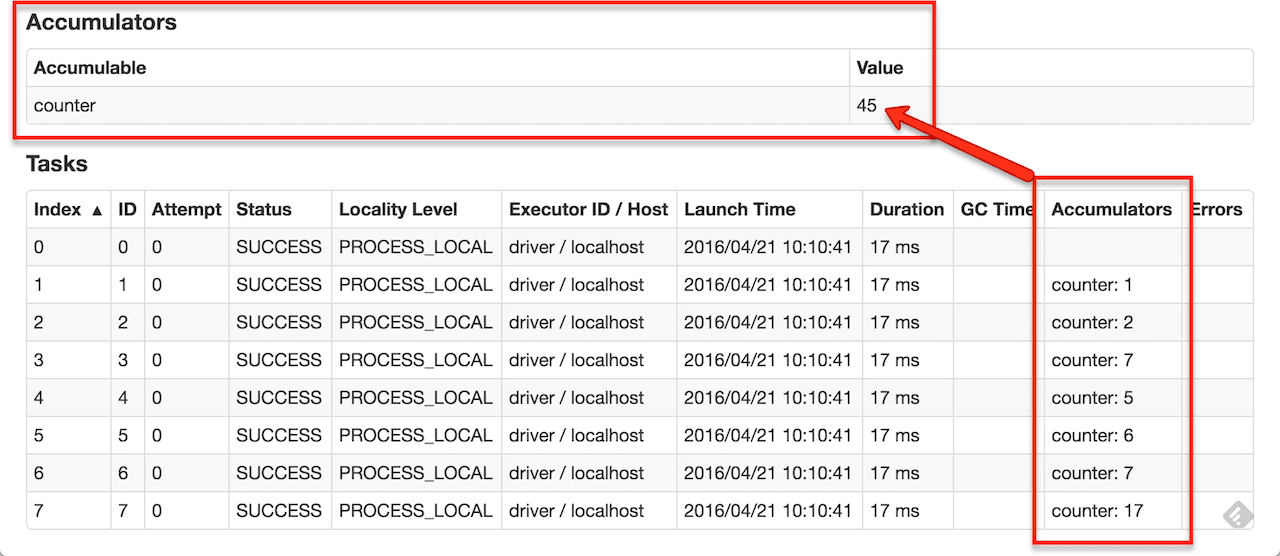
Spark RDDs: Immutable, Distributed Data Collections
An RDD is Spark's core abstraction: an immutable, partitioned collection of items processed in parallel. It's the go-to for low-level, unstructured data tasks. The main footgun is using RDDs when higher-level DataFrames offer better performance.
Diffusion Models: Generating by Reversing Noise
Diffusion models generate data by learning to reverse a process of adding noise. They power state-of-the-art image generation (DALL-E 2, Stable Diffusion). The main footgun is that their iterative sampling process is slow and computationally expensive.
The MLOps Maturity Model: A Roadmap for Growth
The MLOps Maturity Model is a roadmap from manual chaos to automated ML systems. Use it to assess your team's current state and plan incremental improvements.

vLLM: Faster LLM Inference with PagedAttention
vLLM is a serving engine that speeds up LLM inference by treating GPU memory like virtual memory. It's used to serve models with higher throughput by batching requests without wasting memory on padding.
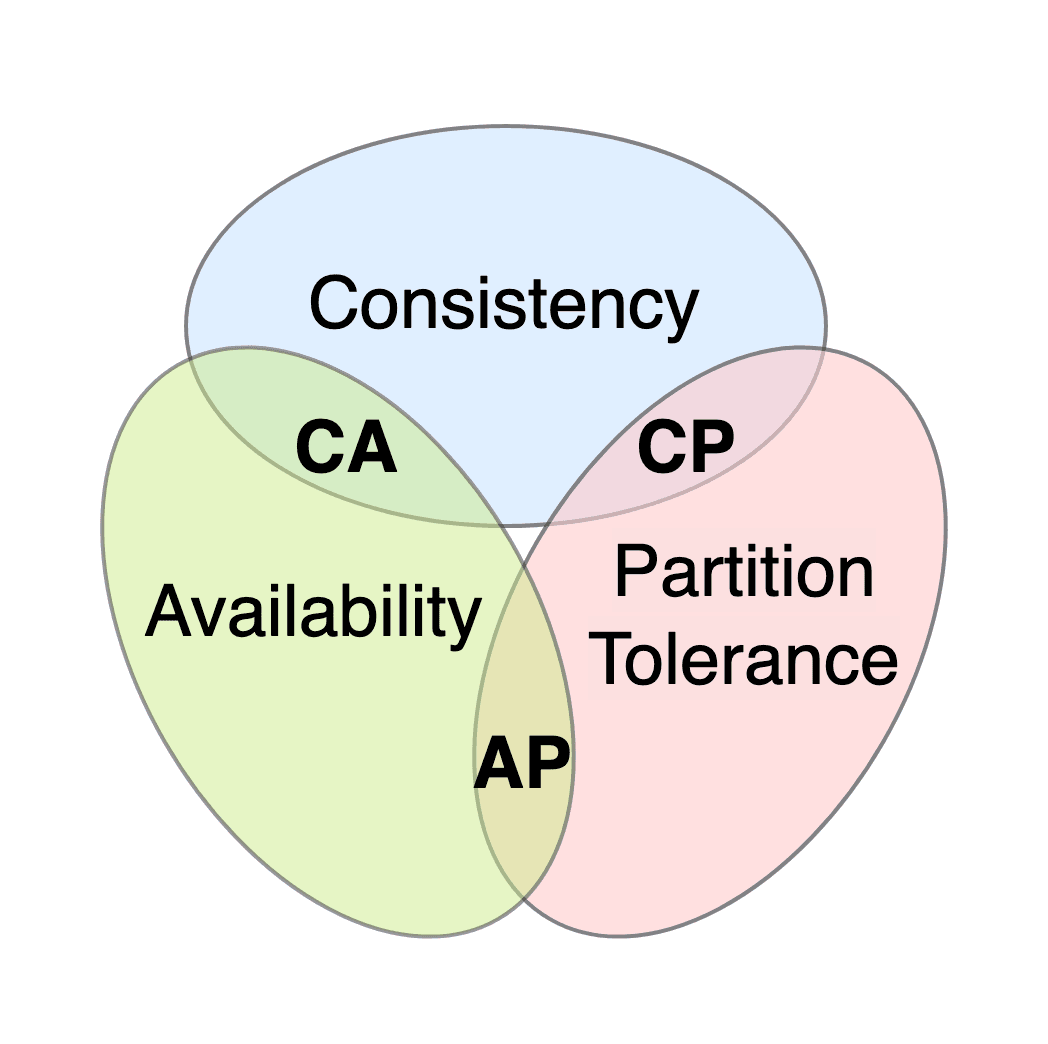
CAP Theorem: Pick Two of Three Guarantees
The CAP Theorem states a distributed system can only have two of three guarantees: Consistency, Availability, or Partition Tolerance. When the network fails (a partition), you must choose: stop responding to ensure data is consistent (CP) or keep responding…
We are hiring for this. Every open role lists the topics its interview covers, so you can prepare for the real thing rather than guessing.
See open roles