Interview questions in AI & ML, page 13

Describe the difference between online and batch inference.
Online uses autoscaling APIs for millisecond-to-second latency; batch uses scheduled compute for minute-to-hour latency.
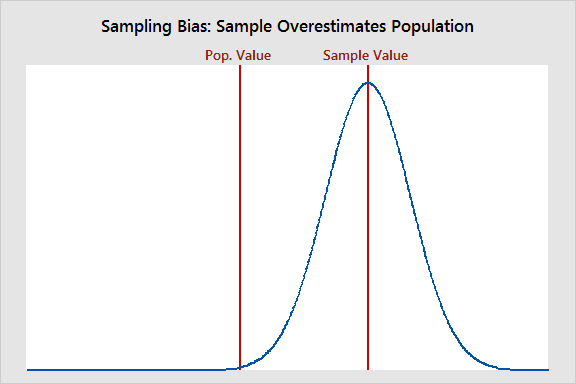
How can EDA and visualization identify dataset bias before modeling?
Tests operationalizing bias detection before modeling. Strong answers compare sample distributions to population norms, audit feature coverage with heatmaps, and track missingness by subgroup. Red flag: citing only class imbalance or ignoring sampling frame.
LLaVA versus Flamingo vision-LLM design
LLaVA projects image features into the LLM input space and feeds them as tokens, keeping the LLM mostly intact; Flamingo inserts gated cross-attention layers inside a frozen LLM.
Scene flow versus optical flow
Optical flow is 2D pixel motion in the image plane; scene flow is the 3D motion field of points in space, needing depth via stereo, RGB-D, or LiDAR.
Deploy a trained model as a containerized REST API
This tests practical MLOps fluency. A strong answer covers loading the artifact, wrapping it in a web server, building a Dockerfile, and exposing health and predict endpoints. Red flag: conflating training with serving or omitting resource limits.
Batching strategy for multimodal training
Control dataset mixing ratios, use balanced sampling and per-source weighting, keep enough text-only data to avoid forgetting, and handle variable shapes via grouping or padding.
How ViT and CNN process an image differently
A CNN slides local filters over the raw pixel grid; a ViT splits the image into patches, flattens and linearly embeds each into a token, adds positional embeddings, and feeds the sequence to…
How would you systematically diagnose high latency in an online inference service?
Check p90/p99 and TTFT to split queuing from compute; inspect queue depth, batch size, GPU, and benchmarks; check cache.
Perplexity versus BLEU for LMs
Perplexity measures intrinsic next-token prediction quality needing no references; BLEU measures n-gram overlap with reference outputs for tasks like translation.
Self-attention over image patches explained
Each patch projects to query, key, value; a patch's query is scored against all keys, softmax-normalized into weights, used to combine all values.
Explain model quantization, its benefits, drawbacks, and validation approach
Tests precision trade-offs in production. Answer: define lowering weights from fp32 to int8/int4; cite memory and latency gains versus accuracy loss; validate with downstream benchmarks and shadow A/B. Red flag: treating as lossless or skipping task metrics.

Explain bias-variance tradeoff and how regularization or tree depth manage it
Tests understanding of generalization error decomposition. Define bias as underfitting and variance as sensitivity to training noise; show regularization and shallow trees trade excess variance for slightly higher bias. Red flag: claiming both can hit zero.
Why human evaluation is the gold standard
Humans judge fluency, helpfulness, and correctness that n-gram or distribution metrics miss; automated scores correlate weakly with quality, are gameable, and penalize valid diverse outputs.
Inductive biases of ViT versus CNN
CNNs bake in locality and translation equivariance; a plain ViT has almost none beyond patch structure, so it must learn spatial relations from data, needing large datasets or strong pretraining.
How would you design an A/B test for two live ML models?
Tests production experimentation rigor beyond random splitting. Strong answers cover: consistent user hashing for sticky assignment, isolated feature stores, guardrail metrics, and pre-calculated statistical power.

How would feature engineering for categoricals differ for logistic regression versus LightGBM?
It tests model-specific encoding decisions. Logistic regression needs one-hot to avoid false ordinality; tree models like LightGBM use ordinal encoding since splits rely on thresholds, not distance.
Standard metric for image generation quality
Name FID, explain it compares feature distributions of real and generated images via a pretrained network.
Random Forest versus Gradient Boosting
Random Forest trains deep trees in parallel and averages to cut variance; boosting builds shallow trees sequentially, each correcting prior errors to cut bias, often higher accuracy but…
How Swin Transformer achieves linear attention
Swin computes attention within local non-overlapping windows of fixed size, making cost linear in patches, then shifts windows between layers so information crosses boundaries.

Design cost-effective inference for spiky traffic without idle GPUs
Tests designing inference that cuts idle GPU cost during troughs yet handles spiky peaks with low latency via SageMaker blue/green fleets, production variants, and CloudWatch baking periods. Red flag: always-on GPU pools with naive auto-scaling.
We are hiring for this. Every open role lists the topics its interview covers, so you can prepare for the real thing rather than guessing.
See open roles