Advanced everything in AI & ML, page 7

How would you build and validate a proxy target for employee burnout?
Combine survey scales with behavioral signals such as off-hours logins and PTO drops; validate via convergent and predictive validity against attrition.
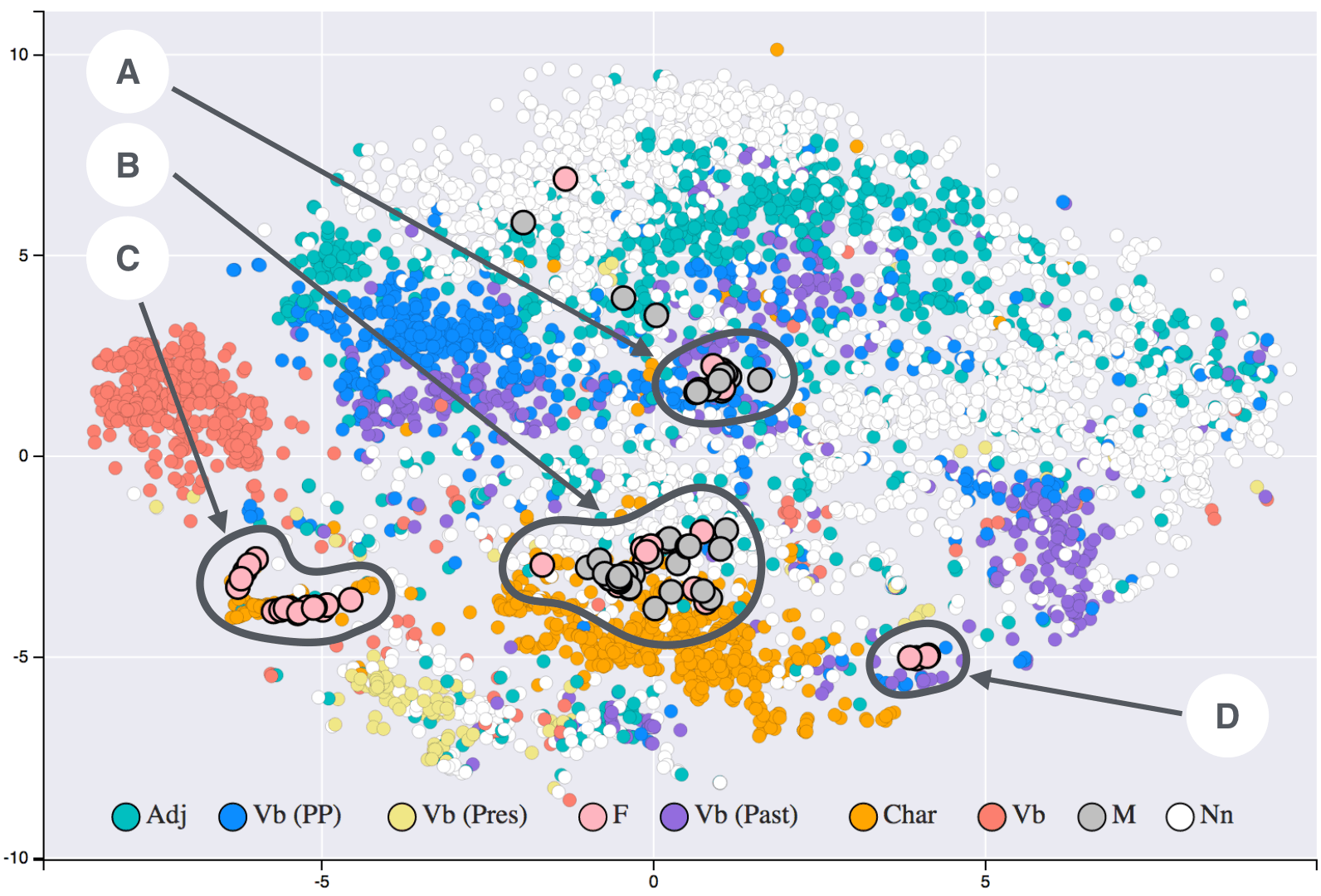
t-SNE: Map High-Dimensional Similarity to 2D
t-SNE turns high-dimensional similarity into 2D or 3D distance: similar points cluster and dissimilar points separate. Use it to visualize complex datasets on a flat map. Do not read exact distances from the plot; it preserves local probability, not geometry.

SVD: Eigendecomposition for Any Matrix
SVD treats any matrix as rotation, then scaling, then rotation. It generalizes eigendecomposition beyond square normal matrices to any real or complex matrix.
MLE: Find the Parameters That Make Data Likely
MLE tunes your model until observed data looks inevitable. Use it to fit distributions to logs, traffic, or errors. The footgun: it assumes your distribution family is correct; under a wrong model, it finds the best-fitting wrong answer with high confidence.
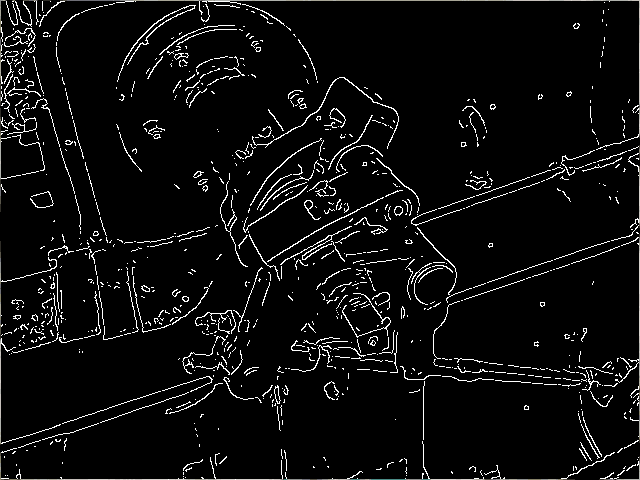
Walk me through Canny edge detection and why it beats Sobel thresholding
Tests multi-scale edge detection and noise robustness versus raw gradient thresholding. Strong answer lists Gaussian blur, Sobel gradients, non-maximum suppression, double thresholding, hysteresis. Red flag: calling it blurred Sobel without hysteresis or NMS.

How does filter separability optimize Gaussian blur and its complexity?
This tests if you know a 2D Gaussian separates into two 1D convolutions. A strong answer gives complexity as O(N^2 K^2) dropping to O(N^2 K) for an N-by-N image and K-by-K kernel. A red flag is claiming all kernels are separable or omitting dimensions.

Describe the BRDF, its advantage over Lambertian, and critical CV tasks
Tests 4D view-dependent reflectance. Strong answers define BRDF as dL_r/dE_i (sr^-1) over four angles; note Lambertian is isotropic; cite photometric stereo and shape-from-shading where specularity breaks the model. Red flag: calling it albedo.
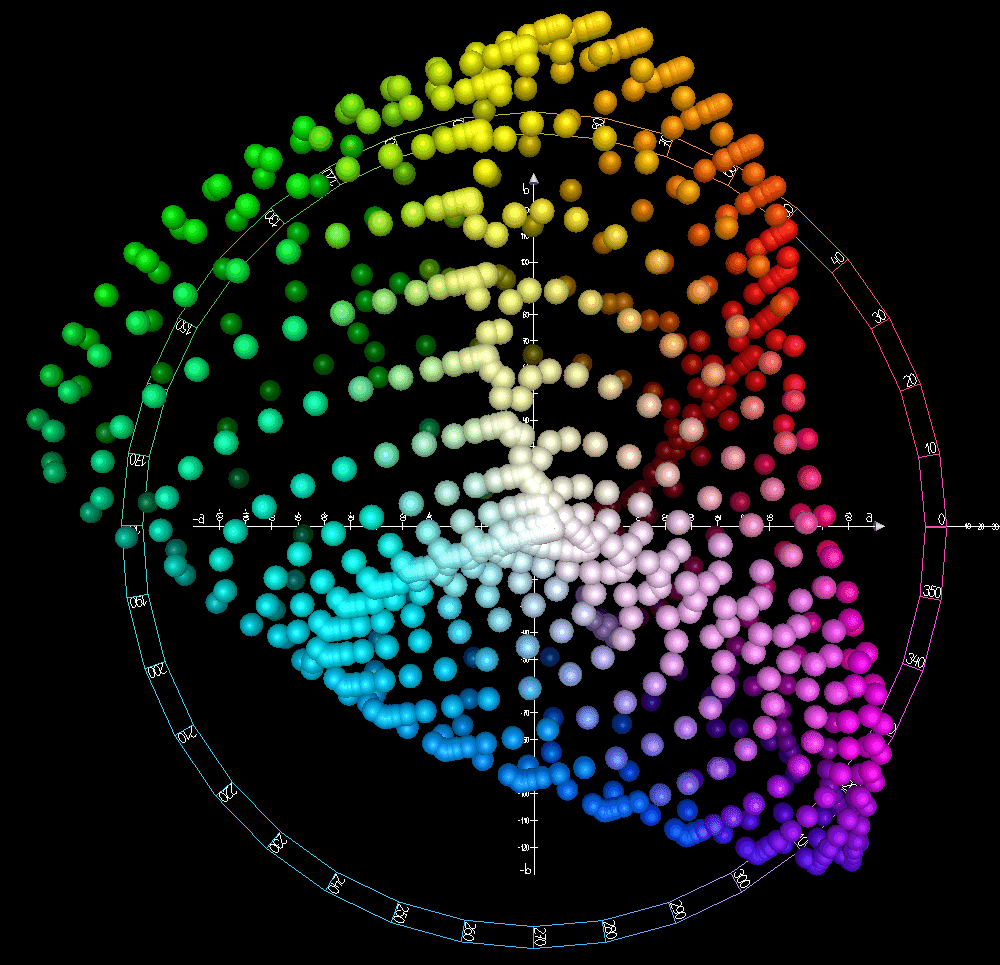
Why is RGB Euclidean distance a poor measure of perceptual color difference?
This tests perceptual uniformity. A good answer explains that RGB distance does not match human vision, then describes CIELAB as a space where deltas approximate perceived differences, making segmentation align with human vision.
Mask R-CNN: Region-Based Detection
Mask R-CNN belongs to the R-CNN family core: selective search over CNN feature maps yields bounding boxes with object categories. Reusing convolutional features for localization, not just classification, is the win.
SSD: Real-Time Detection Without Region Proposals
SSD scores default boxes across multiple scales in one forward pass. It runs real-time robotics and mobile vision where two-stage detectors lag. The footgun is ignoring shallow feature maps, which destroys small object accuracy as early layers carry fine…
FLANN Matcher for Feature Correspondence
OpenCV's FLANN matcher pairs query and train descriptors to find cross-image feature correspondences as an alternative to Brute-Force. Engineers often assume FLANN shares Brute-Force's normType and crossCheck parameters, causing silent configuration errors…

Slash Your Cloud Bill by Taming Data Egress Costs
Data egress is the tax for moving data out of a cloud provider's network, a common cost in MLOps when moving models or datasets. To save money, keep compute and data in the same region. The footgun is forgetting that traffic between regions also counts.

Cloud Cost Anomaly Detection: Finding Waste
Think of it as a smoke detector for your cloud bill, distinguishing 'good' growth-related costs from 'bad' waste. It automatically flags unexpected spending spikes from misconfigurations or bugs.
Reserved Instances vs. Savings Plans: Pre-pay for Cloud Discounts
Think of Reserved Instances and Savings Plans as buying cloud compute in bulk for a discount. You commit to a certain usage level for 1-3 years to save money on steady-state workloads like production databases.
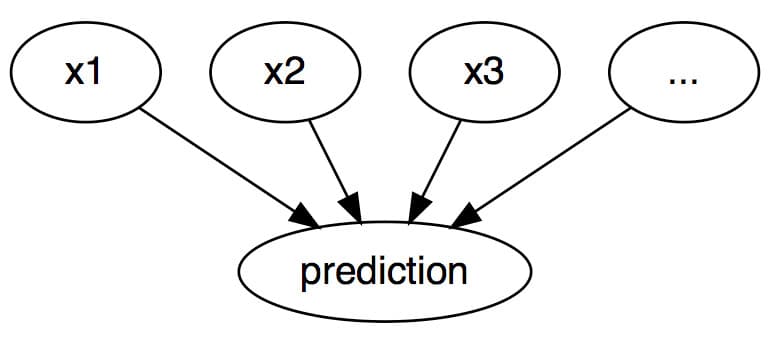
Counterfactual Explanations: How to Change a Model's Mind
A counterfactual explanation finds the smallest input change that flips a model's prediction. It's used to give actionable feedback, like telling a user what to change to get a loan approved.
Adversarial Attacks: Fooling Smart Models with Tiny Changes
Adversarial attacks trick ML models with tiny, imperceptible input changes, causing misclassification. It's like a visual illusion for an AI, turning a 'stop sign' into a 'speed limit' sign by altering a few pixels.
Hybrid Cloud MLOps: Train Anywhere, Deploy Everywhere
Treat your ML infrastructure like your applications—a consistent platform that runs anywhere, avoiding siloed stacks for data science and app dev. Use it to train on cloud GPUs but deploy on-prem for low latency, ensuring dev/prod parity across environments.
Compute Abstraction Layer: Run Code Anywhere
A Compute Abstraction Layer is a universal adapter for your code, letting you run it on a laptop, cloud GPU, or cluster without changes. It's used in MLOps to scale a script from local debug to production training. The footgun is a leaky abstraction.
DDM: Detecting Drift with Error Rate Statistics
DDM acts as a statistical alarm on your model's error rate, watching for spikes that signal the underlying data has changed. Use it for online binary classification with immediate feedback, like spam filtering.
Logging Model Explanations, Not Just Predictions
Log *why* your model makes a prediction, not just the output. This captures the model's reasoning, creating a debuggable audit trail. It's essential for diagnosing model drift and ensuring fairness.
We are hiring for this. Every open role lists the topics its interview covers, so you can prepare for the real thing rather than guessing.
See open roles