Easy everything in AI & ML, page 11
Handling Duplicate Data
Finding duplicate records is a key part of data cleansing. It's not just about deleting rows with the same ID; duplicates can be subtle and require careful handling to avoid corrupting your dataset. The footgun is assuming all duplicates are safe to delete.
JSON: The Lingua Franca of Web APIs
JSON is a universal translator for data, using human-readable text to describe objects and lists. It's the default for web APIs sending data to browsers. The footgun is treating it as a JavaScript object; JSON is a stricter string format.
Web Scraping: Automating Data Collection from Websites
Web scraping is an automated copy-paste for websites. A bot browses sites and extracts specific data, like prices or articles, into a structured format. The main footgun is assuming scraping cleans the data or grants you rights to use it.
Consuming REST APIs: Speaking to Web Services
Think of consuming a REST API like ordering from a menu. You use standard actions (GET, POST) on specific URLs to request or change data. This is how apps fetch user profiles, get weather data, or submit forms. The footgun: Don't ignore HTTP status codes.
pandas DataFrame: A Spreadsheet in Code
Think of a pandas DataFrame as a powerful spreadsheet you control with code. It's the workhorse for loading, cleaning, and analyzing tabular data in Python, like sales figures from a CSV.
NumPy ndarray: Fast, Typed, Multidimensional Grids
A NumPy ndarray is a fast, memory-efficient grid for numbers of a single type. It's the backbone for scientific computing, used for image data to ML model weights. The main footgun: slicing often creates a view, not a copy, so edits can alter the original.

Vector Spaces: A Playground for Vectors
A vector space is a collection of vectors with strict rules for how they can be added or stretched. It's the foundation for linear algebra, used in graphics and physics. The footgun: not every set of vectors forms a valid space.

Probability Distributions: Mapping Odds to Outcomes
A probability distribution is a map of all possible outcomes and their chances. It's used to model everything from coin flips to customer churn. The footgun is assuming a simple bell curve when reality is often skewed or unpredictable.
5 Whys: Find the Root Cause, Not the Symptom
The 5 Whys technique finds a problem's root cause by repeatedly asking "Why?" to trace a cause-and-effect chain. Use it in post-mortems to understand system failures. The footgun is blaming people instead of asking why the process allowed the error.
Stakeholder Analysis: Mapping Influence and Interest
Stakeholder analysis maps your project's human landscape, plotting who is affected (interest) and who can affect its outcome (influence). It's used to anticipate needs and align on goals.
Confusion Matrix: Grading Your Model's Predictions
A confusion matrix is a scorecard showing how a classification model gets confused. It grids predicted labels against actual labels to reveal specific error types. It's essential for diagnosing failures that overall accuracy metrics might hide.
Data Labeling: Teaching Computers How to See
Data labeling is like creating flashcards for an AI. You show it an image and explicitly tell it what's important, like 'this is a cat.' It's essential for training models for self-driving cars or medical imaging.
ImageNet: The Dataset That Launched the Deep Learning Boom
ImageNet is a massive, human-labeled image library that became the standard benchmark for teaching computers to "see". It's the dataset behind the deep learning revolution, used to pre-train models for photo search and more.
Image Sensors: Converting Light to Data
An image sensor is the digital equivalent of film, turning light into electrical signals. It's the core component in everything from your phone's camera to medical imaging.

Focus Stacking: Combining Focal Planes for Ultimate Sharpness
Focus stacking creates an image with impossible depth of field by combining the sharpest parts of multiple photos. It's essential for macro, landscape, and microscopy where one shot can't keep everything sharp.
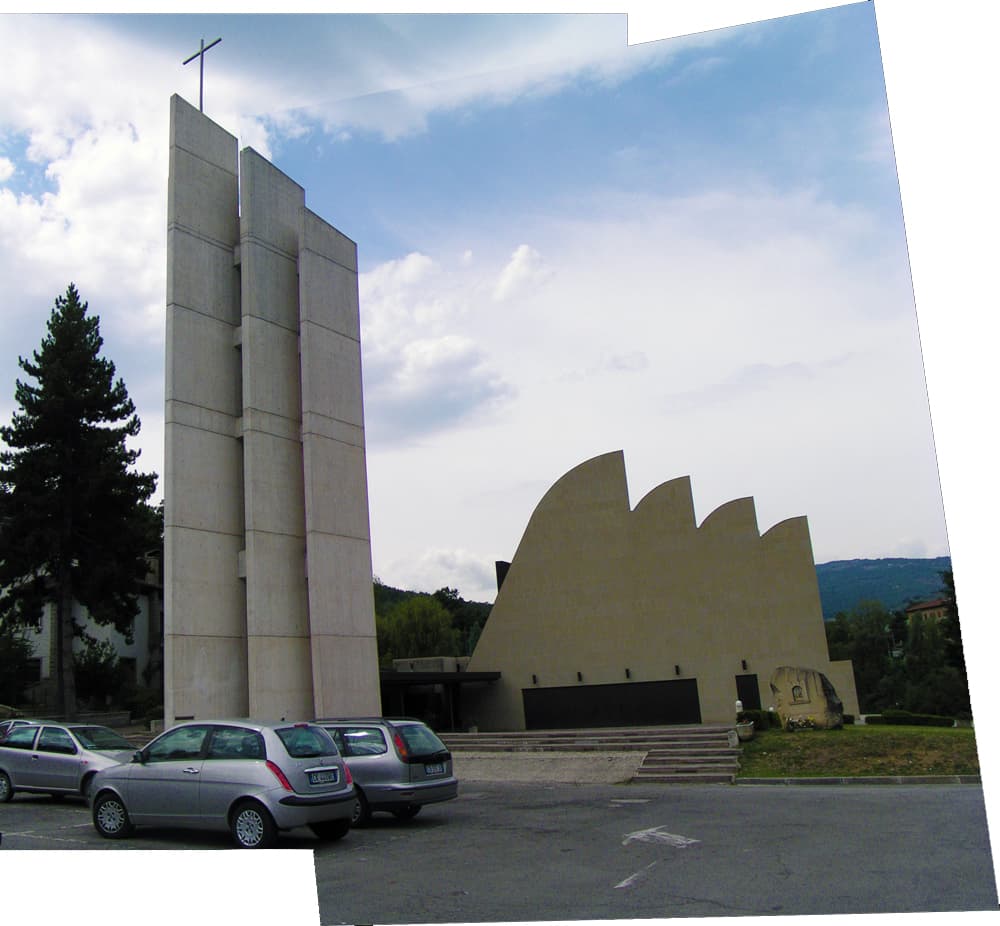
Image Stitching: Creating Panoramas from Overlapping Photos
Image stitching digitally 'tapes' together overlapping photos to create a single, wider panorama or a super-high-resolution image. It's used in phone panorama modes and for creating gigapixel photos. The main footgun is insufficient overlap between shots.
High Dynamic Range (HDR): Seeing More Light
HDR captures a wider range of light and dark than standard images, preventing blown-out highlights and crushed shadows. It's used to show scenes as the human eye sees them. The footgun is thinking HDR is just 'brighter'—it's about more detail in the extremes.

N-way-K-shot: Classifying with Few Examples
N-way-K-shot is a framework for testing a model's ability to learn from scarce data. It asks: 'Can you classify between N categories after seeing only K examples of each?'
Semi-Supervised Learning: More From Less Data
Semi-supervised learning uses a small set of labeled data and a large set of unlabeled data to train a model. It's ideal for tasks like image classification where labeling is costly. The footgun: if your unlabeled data is noisy, it can degrade performance.
Pretext Tasks: Making Data Teach Itself
A pretext task is a fake problem you invent for a model so it learns from unlabeled data. For example, asking it to predict a missing image patch forces it to learn about objects. This is the core of self-supervised learning.
We are hiring for this. Every open role lists the topics its interview covers, so you can prepare for the real thing rather than guessing.
See open roles