Intermediate everything in AI & ML, page 11

Low GPU utilization on multi-GPU instance: diagnose and right-size
Tests distributed bottleneck triage. Strong answers profile CPU/GPU/disk, compare gradient sync time to compute, validate per-GPU batch size, and check NVLink vs PCIe. Red flag: suggesting more GPUs before ruling out data starvation or all-reduce overhead.
Design an ML workflow that masks PII from scientists
This tests privacy-preserving pipeline design and least-privilege access for ML teams. Propose automated de-identification before experimentation, restrict re-identification to production jobs, and enforce role-based access with audit logs.

Compare and contrast Apache Airflow versus Kubeflow Pipelines for ML orchestration
This tests matching orchestrators to ML constraints. A strong answer contrasts Airflow's task scheduling and backfills with Kubeflow's K8s-native GPU scaling, choosing based on team skills.

Explain dynamic batching in inference servers and its trade-off
Dynamic batching launches when a time window or max size is met, improving throughput over static batching, but short ones wait for the slowest.

Design a multi-tenant GPU serving system for hundreds of fine-tuned models
Tests GPU memory tradeoffs versus cold-start latency in multi-tenant serving. Strong answers propose tiered CPU staging, predictive pre-warming, and disaggregated prefill and decode. Red flag: keeping all models GPU-resident or ignoring transfer overhead.

Compare Canary and Blue/Green ML deployments and model-specific metrics
Contrast Canary gradual shift vs Blue/Green instant swap; highlight silent failures, data drift, prediction distribution; cite accuracy and calibration.
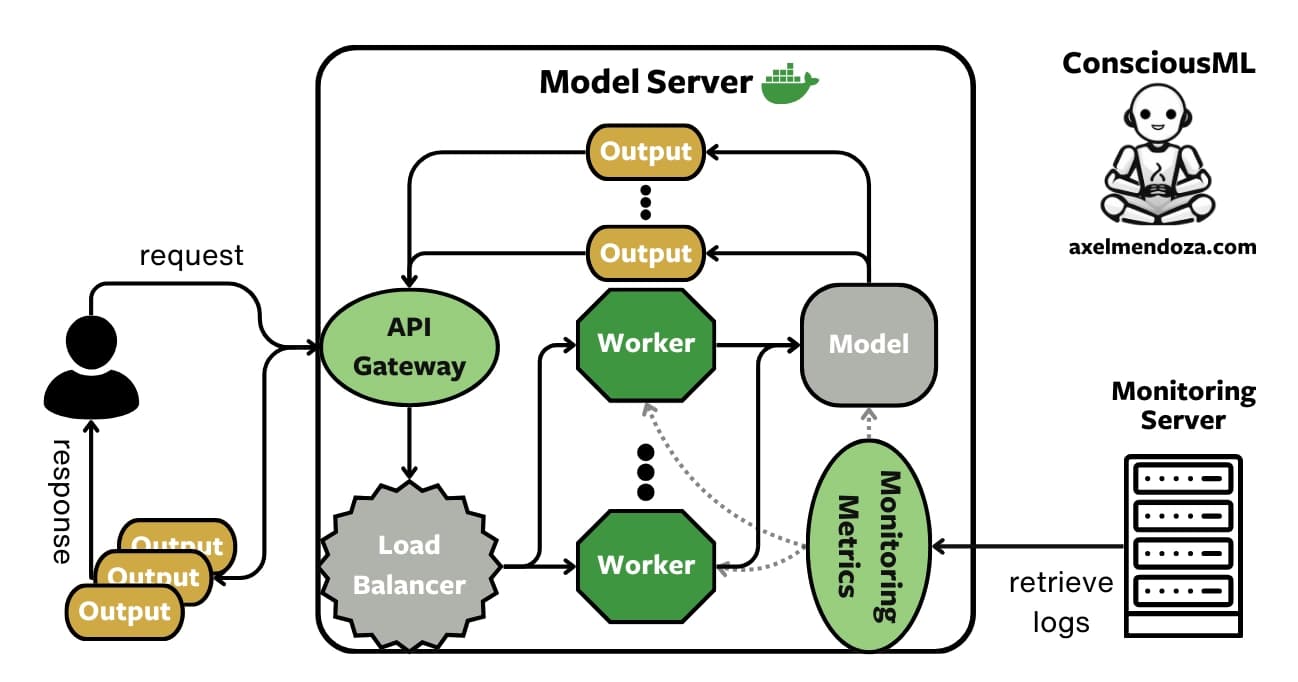
Expose a trained model as a simple web service
Practical MLOps knowledge from model serialization to serving. Package the model into a standard format, containerize it, expose a REST endpoint behind a load balancer, and add monitoring. A bare Flask server without containers or health checks is a red flag.

How would you version control a 50GB dataset in a CI/CD pipeline?
Contrast Git LFS (simple, but 50GB chokes CI clones) with DVC (git metadata plus S3; enables selective pulls and CI cache).

How would GDPR requirements influence experiment tracking and model management design?
Immutable data lineage, user exclusion lists, audit logs, versioned explainability.
How do you ensure ML experiment reproducibility beyond random seeds?
Tests system-level reproducibility through data versioning, environment capture, and pipeline automation. Strong answers cover versioned datasets, containerized dependencies, and immutable experiment logs.
Design a near real-time cost visibility system for ML teams
Tests cost attribution across shared ML infrastructure and streaming pipeline design. Strong answers combine billing exports with resource labels, sub-hour aggregation, and anomaly detection for training spikes.
How do you adapt ML training for spot instance interruptions?
Tests resilience under preemption. Strong answers cover frequent checkpoints to durable storage, SIGTERM handling, idempotent retries with budgets, and compute-state separation. Red flag: saving checkpoints only on local ephemeral disks or solely at epoch end.

What is the wrong and right way to manage ML database secrets?
This tests secret management hygiene for ML pipelines. A strong answer rejects hardcoded secrets and env vars, then proposes AWS Secrets Manager with IAM retrieval, TLS, caching, and rotation. A red flag is suggesting .env files, ConfigMaps, or CLI arguments.
How would you programmatically monitor a deployed model for demographic bias?
Tests operationalizing fairness beyond static audits. Track group metrics like parity and equalized odds; slice by protected attributes; alert on drift; route violations to review. Red flag: treating fairness as a one-time check versus continuous monitoring.
Describe securing an automated ML pipeline and CI/CD integration points
Tests ML supply-chain depth versus bolt-on appsec. Strong answers stage checks across
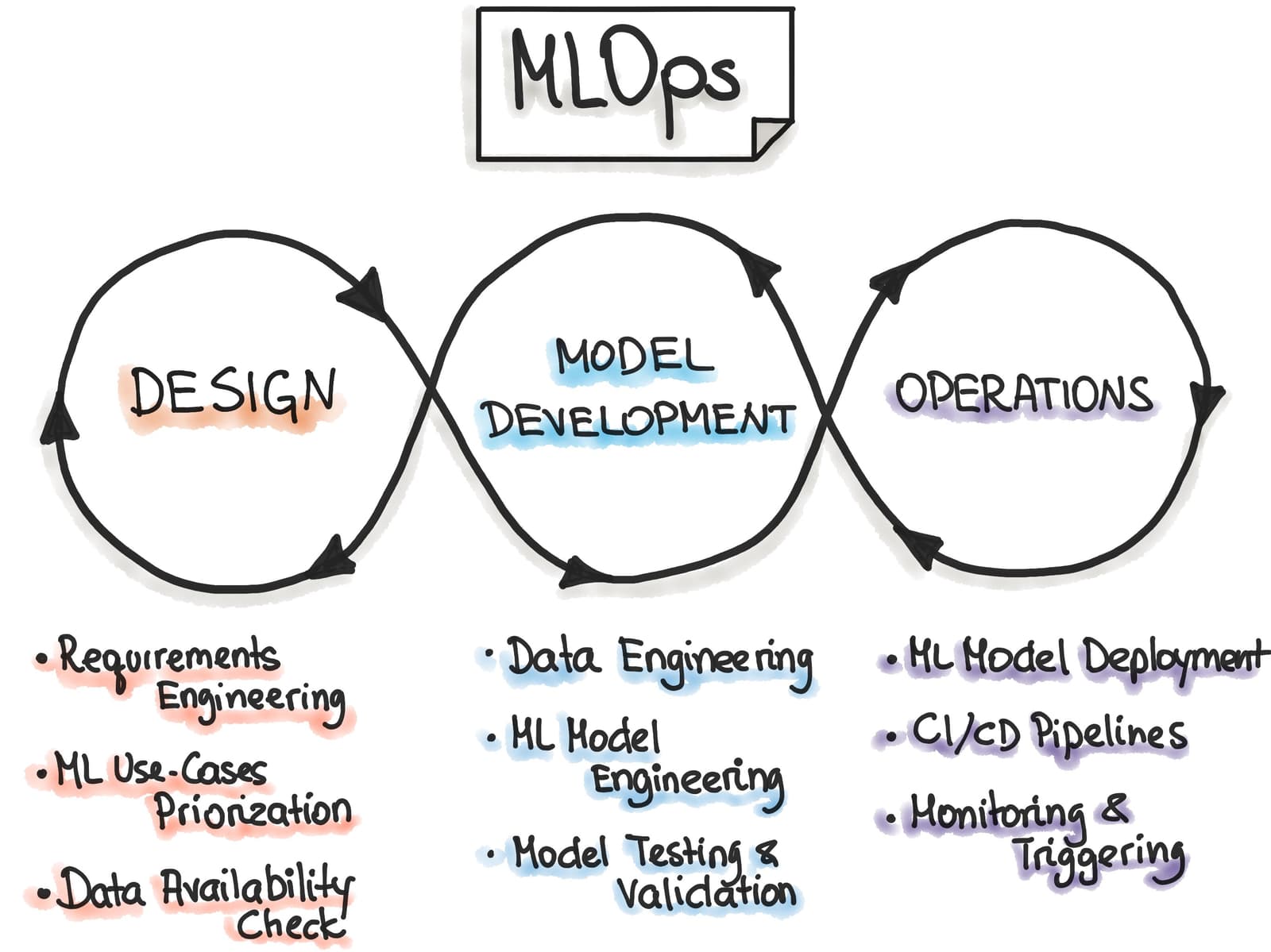
How would you design a reproducible ML training pipeline?
Tests if you can version ML's three moving parts: code, data, and environment. Good answers cover Git for code, DVC or lakehouse versioning for data, and Docker plus locked dependencies for environments.

What trade-offs decide managed ML platforms versus open-source Kubernetes?
Weigh total cost plus hidden engineering headcount, lock-in vs flexibility, and audit feature gaps.
How do you programmatically promote a retrained model to production?
Compare on held-out data using significant metric uplift, schema, latency, and drift checks before shadow release.
How would you implement automated data validation before training?
Enforce schema contracts, halt training on failure, quarantine bad batches, and alert owners.
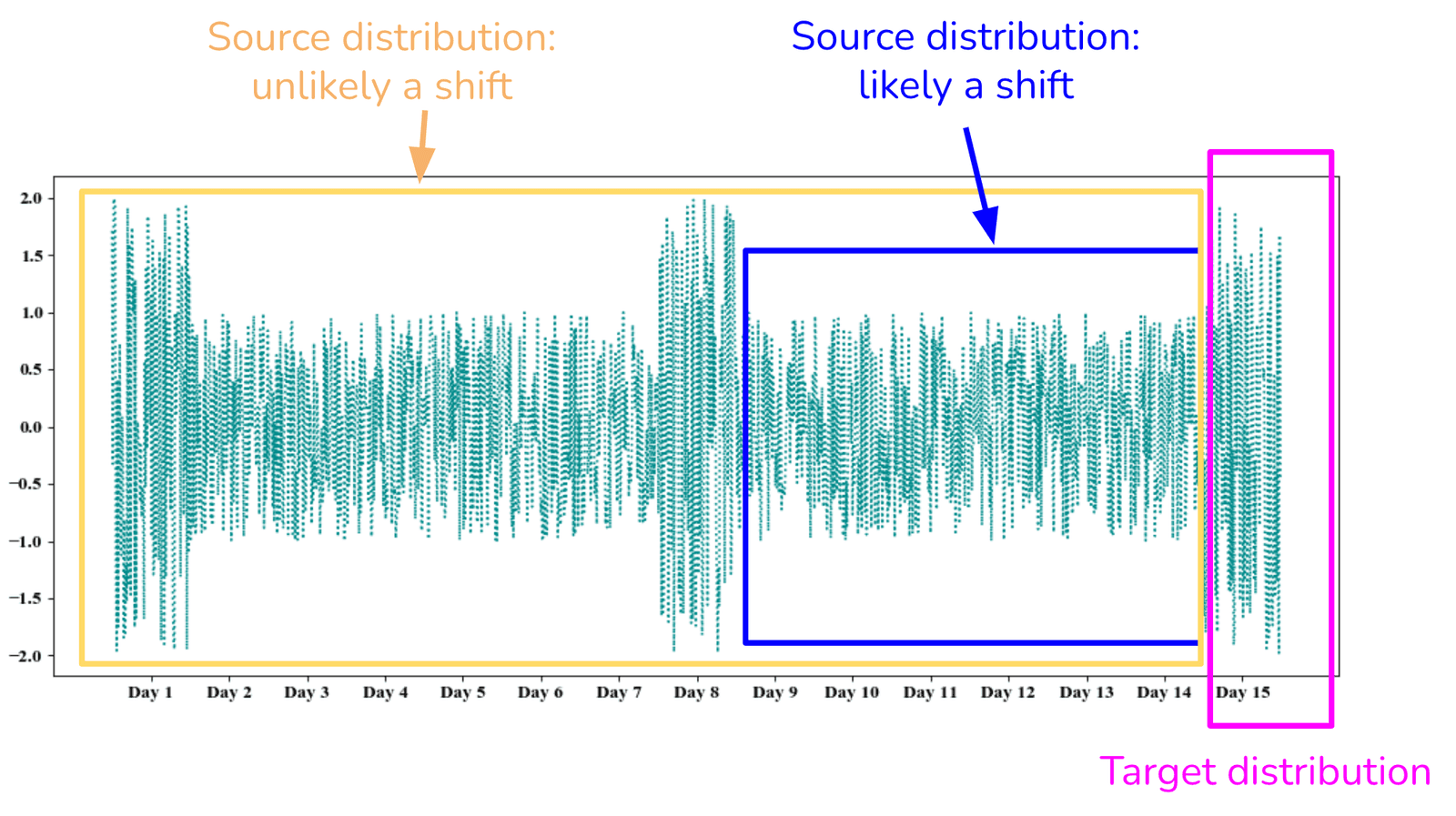
Model output distribution shifts. What are root causes and next steps?
This tests covariate vs label shift vs concept drift when outputs shift. A strong answer checks features before labels, then feedback loops or staleness. A red flag is generic drift without separating P(X), P(Y), and P(Y|X).
We are hiring for this. Every open role lists the topics its interview covers, so you can prepare for the real thing rather than guessing.
See open roles