More in AI & ML — page 38
HumanEval: Testing if AI-Generated Code Actually Works
HumanEval is a benchmark that tests if an LLM's generated code is functionally correct, not just syntactically valid. It's used to compare models like Codex by having them solve programming puzzles.
LLM-as-a-Judge: Using Models to Grade Models
Instead of paying humans to rate AI outputs, LLM-as-a-Judge uses a powerful 'judge' model to do it automatically. This is used to evaluate chatbot responses or summarization quality, but the main footgun is assuming the judge model is unbiased or perfectly…
Why Elo Ratings for LLMs Can Be Misleading
Elo ranks LLMs like chess players, but models have fixed skills, not dynamic ones. This method powers leaderboards but produces volatile scores, meaning a model's rank can be an unstable estimate of its true, unchanging ability.
MMLU Benchmark
MMLU (Measuring Massive Multitask Language Understanding) is a popular benchmark for evaluating large language models. Its influence is shown by its many spin-offs, making it a foundational tool for comparing AI capabilities.
BERTScore: Judging AI Text on Meaning, Not Just Words
BERTScore evaluates AI-generated text by comparing its meaning to a reference, not just matching words. It's used to score machine translation or summarization where phrasing can vary.
HellaSwag: A Benchmark Designed to Fool LLMs
HellaSwag is a commonsense benchmark designed to fool language models. It asks an AI to pick the most logical sentence ending, but the wrong answers are specifically generated to trick machines, not humans. It's used to test for true contextual understanding.
Inception Score: Judging AI Art for Quality and Variety
Inception Score judges an AI image generator on quality and variety, using a classifier to check if images are distinct and the overall set is diverse. Its main footgun is that it only measures what another AI can classify, not what a human finds appealing.

Human Evaluation: Judging AI When Metrics Aren't Enough
Human evaluation is the ultimate reality check for AI, using people to judge qualities like fluency and coherence that automated scores can't capture. It's essential for tasks like summarization but is too slow and costly to use for everything.
Text-to-Video Generation: From Prompt to Picture Show
Text-to-video models are like a film director in a box, turning written descriptions into moving pictures. This tech, powered by video diffusion models, is used for creating short-form content or prototyping visual ideas from a simple text prompt.
Flamingo: Few-Shot Learning for Vision-Language Models
Flamingo is a vision-language model that learns new visual tasks from a few examples, like a child seeing a picture book before the zoo. It can tackle multiple tasks without needing massive, task-specific datasets.
BLIP: Bootstrapping Better Vision-Language Models
BLIP is a pre-training framework that masters both image understanding and generation by creating its own training data. It uses a captioner and filter to generate clean image-text pairs from noisy web data.
Text-to-Speech (TTS): Turning Text into Spoken Audio
Text-to-Speech (TTS) systems are digital voice actors, converting written language into artificial human speech. They are the core of any system that needs to speak text aloud.
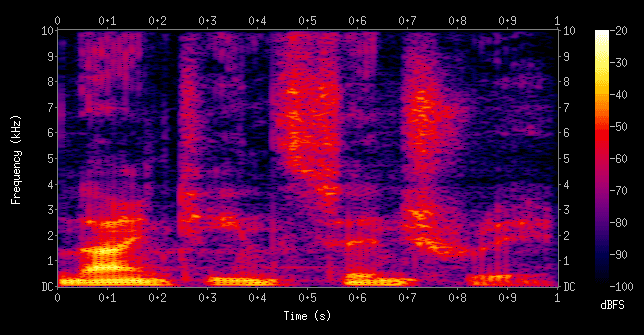
Audio Spectrograms: Turning Sound into Images for AI
A spectrogram turns sound into an image, plotting frequency against time, with color showing intensity. This lets vision-based AI models "see" audio for tasks like speech recognition or music generation. The footgun is mistaking it for a simple waveform.
Large Multimodal Models (LMMs): Beyond Text
An LMM is like a large language model that can also see and hear. It processes and connects information from multiple sources—like text, images, and audio—to perform tasks like describing a picture or answering questions about a video.
Multimodal Fusion: Combining Senses for AI
Multimodal fusion lets an AI combine data types like text, images, and audio into one understanding, much like a human brain. It's key for visual question answering or analyzing video sentiment.
Joint Embedding Space: A Rosetta Stone for AI
A joint embedding space acts like a Rosetta Stone, mapping different data types—like images and text—to a shared coordinate system where similar concepts are close together. This powers text-to-image models and cross-modal search.
Speech-to-Text (ASR): Turning Spoken Words into Data
Speech-to-Text (ASR) is a digital stenographer, turning spoken language into machine-readable text. It's the engine behind voice assistants, automated call routing, and video captioning.
Multimodal Models: Beyond Just Text
A multimodal model understands the world by connecting different data types, like images and text, instead of just one. It's how AI generates images from descriptions or answers questions about a photo. The footgun is assuming more data types always helps.
Latent Diffusion Models (LDM)
Latent diffusion models denoise in a compressed latent space instead of raw pixels. A pretrained autoencoder shrinks the image first and expands it back after, cutting compute enough to make text to image generation practical on consumer hardware.
Fréchet Inception Distance (FID): Grading AI Art
FID grades AI-generated images by comparing their statistical "vibe" to real ones. It uses a pre-trained network (InceptionV3) to see if a batch of generated images has similar feature distributions to a real dataset. A lower score is better.