Intermediate interview questions in Analytics & Metrics, page 2
How do you approach user identity stitching across devices?
This tests your grasp of event-driven data pipelines and identity management. A strong answer outlines an identifier hierarchy, the "stitch" event (login), and a backend process for retroactively applying a canonical user ID.
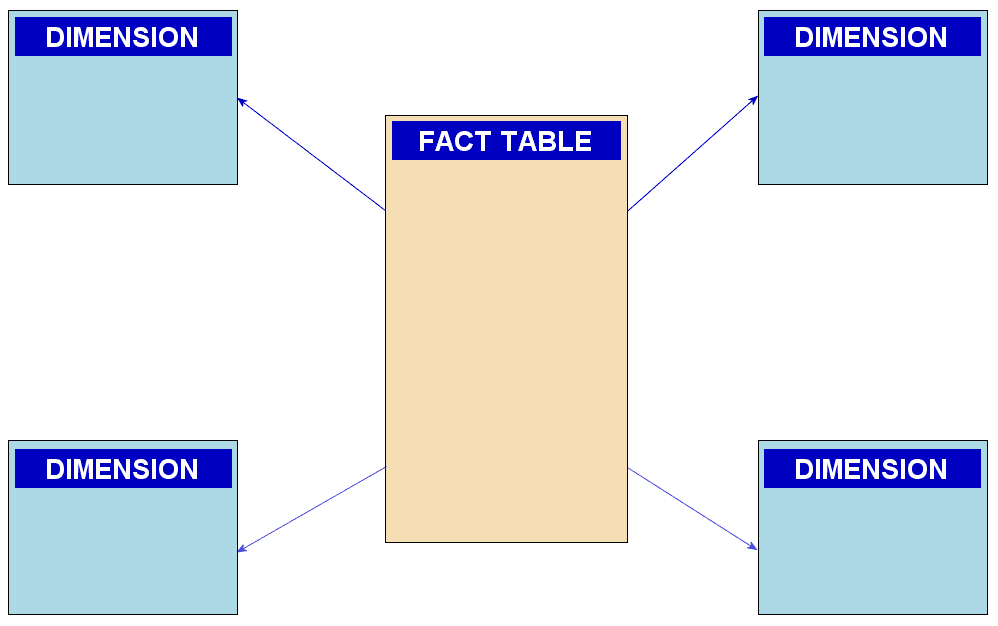
Describe star and snowflake schemas and their trade-offs
Star schemas flatten dimensions for fast joins; snowflake schemas normalize hierarchies to reduce redundancy but add joins.
Star vs. Snowflake Schemas: Trade-offs
Tests your grasp of data warehouse design trade-offs. Define star (denormalized, fast queries) and snowflake (normalized, storage efficient) schemas. Explain the core trade-off: star's query speed vs. snowflake's storage/integrity.
Describe star and snowflake schemas and their trade-offs.
Tests your grasp of data warehouse design trade-offs. Define star (denormalized dimensions) and snowflake (normalized dimensions) schemas. Contrast them: star is faster for queries but uses more space; snowflake is space-efficient but requires more joins.
How would you handle late-arriving data in a streaming analytics pipeline?
Tests understanding of event-time processing, watermarks, and windowing for correctness. A strong answer covers watermarks with allowed lateness, event-time triggers, and idempotent updates to sinks.
Handling Late-Arriving Data in a Streaming Pipeline
Tests your grasp of event time vs. processing time. A great answer defines watermarks to track completeness, uses event-time windowing to group data, and sets triggers with allowed lateness to correctly incorporate out-of-order events.
How do you handle late-arriving data in a streaming pipeline?
Tests understanding of event time vs. processing time and the mechanisms (watermarks, triggers, allowed lateness) to ensure correctness. Answer by distinguishing time types, using event-time windowing, defining watermarks, and configuring allowed lateness.
What is data partitioning in a cloud data warehouse?
Tests physical data layout and cost/performance tradeoffs. Strong answers define time-based or integer-range partitioning, explain partition pruning avoids full scans, and warn against high-cardinality keys.
What is data partitioning in a cloud data warehouse?
Tests your grasp of physical data layout optimization. A good answer defines partitioning as dividing a table by a column (e.g., date), then explains how this enables partition pruning to improve query speed and reduce cost by scanning less data.
What is data partitioning in a cloud data warehouse?
Tests your grasp of performance and cost trade-offs in data systems. A good answer defines partitioning, explains partition pruning for performance, and links it directly to reduced data scan costs.
Compare data warehouses and data lakes. How does a lakehouse merge benefits?
Tests schema tradeoffs. Warehouses enforce ACID for BI but cost more; lakes store raw cheaply but lack governance. Lakehouses add ACID metadata on object storage to unify ML and BI.
Data Warehouse vs. Data Lake vs. Lakehouse
Tests your grasp of modern data architectures. A great answer defines warehouses (structured, schema-on-write) and lakes (raw, schema-on-read), then explains how a lakehouse adds ACID transactions and governance on top of a lake.
Compare a data warehouse, data lake, and lakehouse
Tests your grasp of data architectures for BI vs. ML workloads. Contrast warehouses (structured) and lakes (raw), then explain how a lakehouse adds ACID/schema features to a lake's storage. A red flag is confusing schema-on-write vs. schema-on-read.
How would you implement data lineage for microservices analytics?
Tests end-to-end provenance tracking, not just docs. Strong answers cover automated metadata capture at service boundaries, a central catalog such as DataHub or OpenLineage, and column-level tracing.
Explain data lineage and how you would implement it
This tests your ability to design for data observability. Define lineage (origin, transformation, movement), then propose a solution using metadata extraction (OpenLineage) and a central graph store/UI (Marquez) to trace data from microservices to analytics.
Explain data lineage and how you'd implement it
Tests your practical data governance knowledge. Define lineage (origin, transforms, movement), then outline a solution: metadata collection from services, a central store (graph DB), and a visualization tool (Amundsen/OpenLineage).

Design a CDC pipeline that handles schema evolution gracefully
Tests designing resilient CDC pipelines against schema drift. A strong answer covers schema registries with versioning, backward-compatible serialization, and automated compatibility checks.
Handle Schema Evolution in a CDC Analytics Pipeline
This tests your ability to design robust data systems that anticipate change. A great answer includes a schema registry, compatibility rules, a dead-letter queue for non-compliant records, and automated alerting.
How to handle schema evolution in a CDC analytics pipeline?
This tests your ability to design resilient CDC pipelines. A strong answer outlines automated schema detection, using a flexible format like Avro, and enforcing governance with a schema registry. A red flag is proposing manual fixes for every change.
How would you build a Customer golden record across fragmented systems?
This tests master data management discipline for distributed, conflicting records. A strong response covers identity resolution, survivorship rules, merge architecture, lineage, and feedback loops.
We are hiring for this. Every open role lists the topics its interview covers, so you can prepare for the real thing rather than guessing.
See open roles