Easy concepts in Backend Dev, page 4
Stack vs. Heap: Where Go Puts Your Data
The stack is a fast, last-in-first-out region for local, fixed-size data. The heap is slower, flexible memory for dynamic data or values that escape a function's scope.

Express Request and Response Objects (req, res)
Think of Express's req and res as an incoming letter and your reply. req contains the client's request details, like headers and data, while res is your toolkit for sending a response. They are the core of every route handler.
Rust's Copy Trait: Implicit Bitwise Duplication
Rust's Copy trait makes assignments duplicate a value instead of moving it, allowing the original to still be used. It's an implicit, bitwise copy for simple types like integers.

How SQL Queries Become Abstract Syntax Trees
An AST turns a flat SQL string into a tree of operations the database can reason about. The parser builds this tree before execution planning. Do not confuse it with the raw parse tree, which keeps punctuation and formatting the AST strips away.
Nested Loop Join: The Brute-Force Database Join
A nested loop join is the brute-force way to match two tables. For each row in the first table, it scans every row in the second. It's simple and effective for small tables but its performance degrades quadratically on large datasets.
FastAPI's APIRouter: Grouping Routes into Modules
Think of APIRouter as a mini-FastAPI app for organizing endpoints. It lets you group related paths, like all user routes, into a separate file. This is crucial for keeping large applications maintainable.
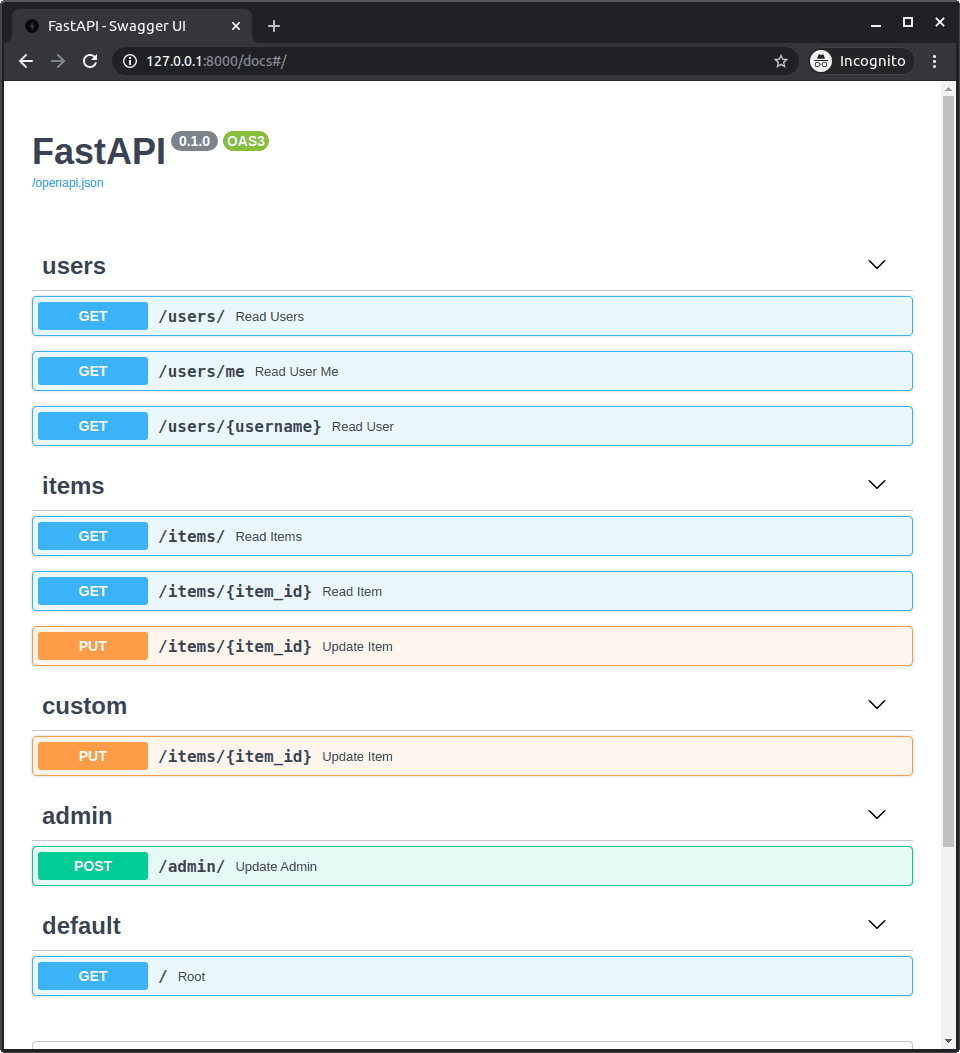
FastAPI: Splitting Your App with `include_router`
app.include_router is like plugging a pre-wired power strip of API endpoints into your main FastAPI app. It lets you organize a large app into smaller files by feature, then combine them. The footgun is forgetting to add a URL prefix for each router.

Express Middleware: Intercepting Requests Before Your Route Handler
Express middleware is like a bouncer for your routes, running code before your main handler. Use it for logging, authentication, or parsing request bodies. The biggest footgun is forgetting to call next() or send a response, which leaves requests hanging.
Go's `error` Interface: Errors Are Values
In Go, an error is any value that can describe its own failure string. Functions like os.Open return an error to signal problems. The footgun is only checking for nil and ignoring the rich, structured data a custom error type can provide.
Rust's Option<T>: Handling Absence Safely
Rust's Option<T> is a type-safe box that holds either a value (Some(T)) or nothing (None), eliminating null pointer errors. Use it for function returns that might fail or for optional struct fields. The footgun is .unwrap(), which panics on None.
Handling Errors with Rust's Result Enum
Rust's Result enum makes error handling explicit. Instead of returning a value that might be an error code, functions return either Ok(value) or Err(error). It's used for recoverable failures like I/O.
NoSQL: Databases Beyond Rigid Tables
NoSQL databases trade rigid tables for flexible models like documents or key-value pairs. This allows them to scale for massive, unstructured datasets from social media or IoT.

Key-Value Store: The Simplest Database Model
A key-value store is a giant dictionary. You give it a unique key, like "user:123", and it returns the associated data. It's the foundation for caching and session management. The footgun is trying to query by value—it's built for key lookups only.
Document Databases: Store Data as Flexible Objects
A document database stores data as self-contained objects, like JSON, instead of rows and columns. It's ideal for user profiles or product catalogs where each item might have different attributes. The footgun is treating it as a schema-less free-for-all.
The asyncio Event Loop: One Thread, Many Tasks
The asyncio event loop is a manager for a single-threaded process, juggling tasks to prevent idleness during slow I/O. It's the core of apps like FastAPI, handling network requests efficiently. The footgun is interacting with it directly; use asyncio.run().
Implicit Interface Satisfaction in Go
Go types satisfy an interface automatically by having the right methods, with no explicit implements declaration. This structural typing decouples implementations from interface definitions, so you can define interfaces around how you use a type without…
REST: The Architectural Style of the Web
REST is a set of design rules, not a strict protocol, for building massive distributed systems like the web. These constraints enable independent component deployment, scalable interactions, and a layered architecture that supports caching and security.

HTTP Status Codes: The Server's Signal
HTTP status codes are the server's signal for a request's outcome: success, client error, or server error. You see them when fetching data (200 OK), hitting a bad link (404), or when a server fails (500). Footgun: Don't just check for 'not 200'.
SQLAlchemy Engine vs. Session: The Switchboard and the Call
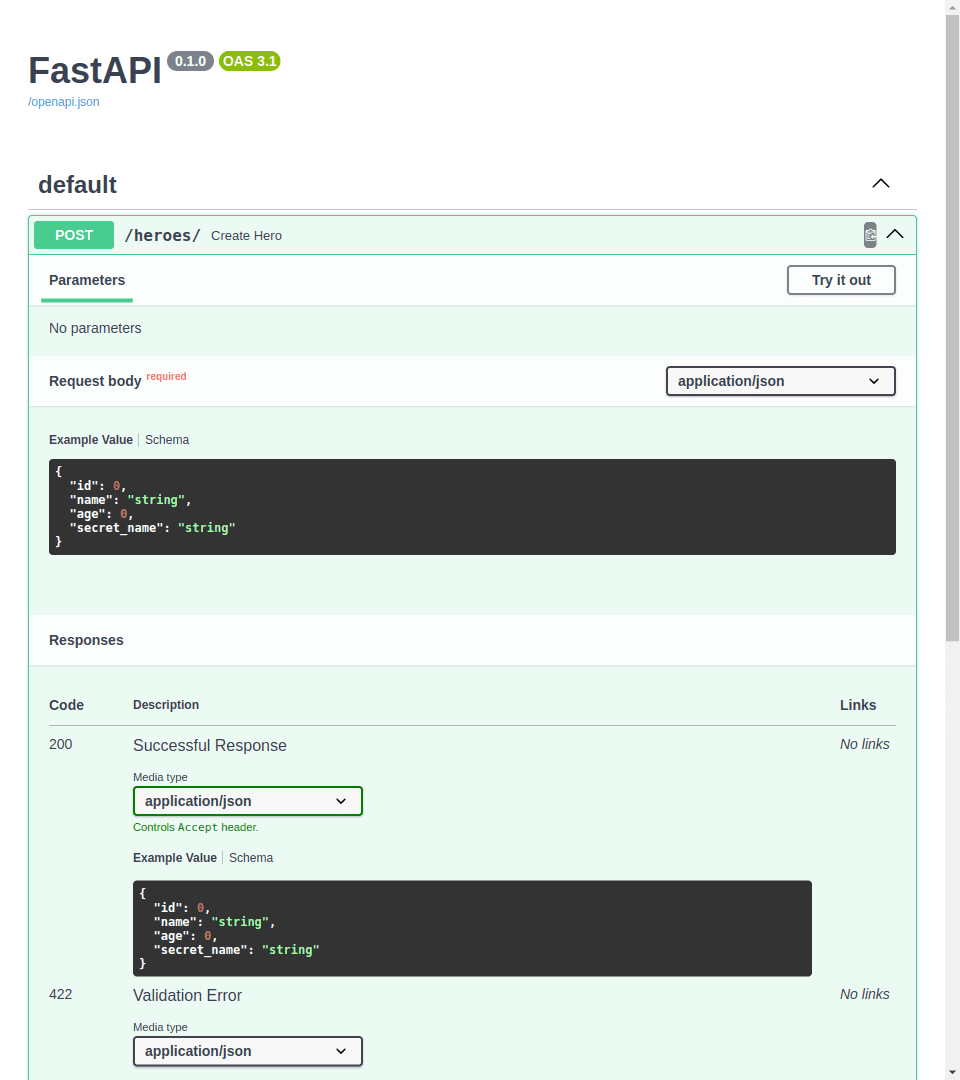
Think of SQLAlchemy's Engine as the database switchboard (one per app) and a Session as a single, short-lived phone call (one per request). This pattern is standard in FastAPI for managing database connections.
SQLAlchemy Declarative: Python Classes as Database Tables
SQLAlchemy's Declarative Mapping lets you define database tables as Python classes. You write a class with typed attributes, and SQLAlchemy generates the SQL. It's the standard way to use the ORM, turning database rows into Python objects.
We are hiring for this. Every open role lists the topics its interview covers, so you can prepare for the real thing rather than guessing.
See open roles