Intermediate concepts in Backend Dev, page 8
The Object-Relational Impedance Mismatch
The Object-Relational Impedance Mismatch is the friction between how SQL databases see data (tables, rows) and how OO code sees it (objects, inheritance). It's the core problem ORMs solve. The footgun is thinking an ORM makes the database disappear.
Go Benchmarking: Measure, Don't Guess
Go's benchmark runner finds stable performance numbers by repeatedly calling your code in a loop controlled by b.N. Use it to optimize hot paths or compare algorithm implementations. Forgetting b.ResetTimer() will include setup costs, skewing your results.
SQL Query Builders: Write SQL Without Writing SQL
An SQL query builder is a translator for your database, converting visual clicks or chained code methods into raw SQL. It's used to write safer, database-agnostic code or to let non-technical users build queries. The footgun is generating inefficient queries.
Go's Race Detector: Find Concurrency Bugs at Runtime
The Go race detector finds data races by watching memory access at runtime. Use go test -race in CI or on a canary instance, but remember: it only catches races that actually execute. If your tests don't trigger the race, it won't be found.
Database Cursors: Row-by-Row Result Processing
A database cursor is an iterator for a query's results, letting you process a large dataset one row at a time. It's for batch jobs on huge record sets that would otherwise crash your app.
cargo doc: Turn Code Comments into a Website
cargo doc turns your Rust doc comments into a searchable HTML website for your crate and its dependencies. Use it to generate a local API reference or explore a dependency's API.
ORM Lazy Loading: Defer Queries Until Needed
An ORM's lazy loading fetches related data only when you access it, not with the initial query. This speeds up the first query if you don't need related objects. The footgun is the N+1 problem, where a loop triggers many hidden, slow database queries.
Run One Test with Many Inputs using pytest.parametrize
Run one test function with many inputs using @pytest.mark.parametrize, avoiding repetitive code. It's ideal for checking a function against various inputs, edge cases, and expected failures. The footgun: mutable parameters like lists are passed by reference.
Supertest: Test Node.js APIs Without the Boilerplate
Supertest lets you test your Node.js API without running a separate server. Use it in Jest or Mocha to make requests to your routes and assert on responses. The footgun: since it's in-process, state can leak between tests if not reset properly.
Testing Async FastAPI with pytest-asyncio
To test async code, your tests must also be async. pytest-asyncio lets you write async def test_... functions to await operations like database checks after an API call.
Test Doubles: Mocks, Stubs, and Spies
A test double is a stand-in for a real component, letting you test code in isolation. Use them to fake slow dependencies like database calls or external APIs, making tests fast and predictable.
Testing FastAPI Lifespan Events
FastAPI lifespan events only run when TestClient is used as a context manager. Use this to test startup logic like DB pools before endpoints. Using TestClient(app) without with skips lifespan, leaving your app uninitialized and tests silently wrong.
Code Coverage Reporting with nyc/Istanbul
Code coverage reporting asks, "Which lines of my code did my tests actually run?" Use a tool like nyc to wrap your test runner (e.g., Mocha) and generate a report. The footgun is chasing 100% coverage, which doesn't guarantee quality.

Compute & Storage Separation: Scale One Without the Other
This architecture treats your data warehouse (cheap storage) and query engine (expensive compute) as separate services. You can scale compute for peak demand without overprovisioning storage.
Amazon Aurora: AWS's Proprietary Relational Database
Amazon Aurora is a proprietary relational database from AWS, offered as part of the Amazon Relational Database Service (RDS). It provides a managed database solution within the AWS cloud ecosystem, available since October 2014.

Amazon DynamoDB: Scalable NoSQL as a Service
Think of DynamoDB as a database where you trade complex queries for near-infinite, hands-off scaling. It's a managed NoSQL service from AWS for key-value and document data, built for high-performance applications.
Buffered I/O: Batch System Calls for Speed
Buffered I/O batches many small reads or writes into fewer, larger system calls, trading a small amount of memory for a huge speed boost. It's essential for tasks like writing log files line-by-line, preventing a system call for every single line.
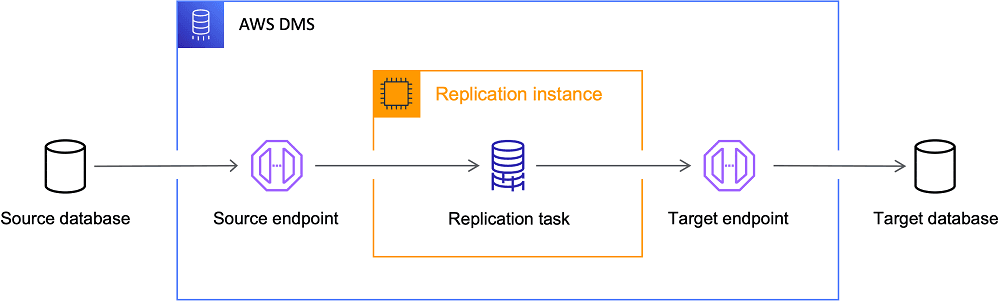
AWS DMS: Your Managed Database Migration Engine
AWS DMS is a managed service for migrating databases. It acts like a replication server you point at a source and target, handling the data transfer. It's used for one-time migrations to AWS or for continuous replication.
TCP Listeners: Go vs Rust
Go spins up TCP listeners and handles connections with lightweight goroutines—1 million costs ~500MB—but GC pauses introduce 2-5ms latency. Rust trades boilerplate for zero-cost safety and consistent sub-100µs response times without garbage collection.

Content Security Policy (CSP): An Allowlist for Browser Resources
Content Security Policy is an allowlist you send to the browser, dictating which scripts, styles, and images are safe to load. It's a primary defense against XSS attacks by blocking unauthorized resources.
We are hiring for this. Every open role lists the topics its interview covers, so you can prepare for the real thing rather than guessing.
See open roles