Concepts in Backend Dev, page 21
Go Table-Driven Tests: Test More with Less Code
Instead of copy-pasting tests, define inputs and expected outputs in a table (a slice or map) and loop through them. This is the idiomatic Go way to test functions with many edge cases. The main footgun is a closure bug in parallel tests; re-shadow the.
Delta Lake: Database Reliability for Your Data Lake
Delta Lake adds a transaction log to your data lake, giving you database-like reliability over raw files. This enables ACID transactions, schema enforcement, and unified batch/streaming pipelines.
Overriding FastAPI's OpenAPI Generator
FastAPI lets you swap app.openapi to reshape its generated schema without forking. Use this for vendor extensions, filtered operations, or merging external schemas. Forgetting to cache the result means every docs request rebuilds it and destroys performance.
Node.js Buffers: Handling Raw Binary Data
A Node.js Buffer is a fixed-size chunk of memory for raw binary data, like an array of bytes. Use it for file I/O or network streams where JS strings fail. The footgun is using allocUnsafe() without overwriting it, which can leak old, sensitive data.
Rust Unit Tests: Co-locating Tests with Code
In Rust, unit tests live inside a special tests module within the same file as the code they're testing. This lets you test a module in isolation, including its private functions.
Windowing: Taming Infinite Data Streams
Windowing chops infinite data streams into finite chunks for aggregation, like counting clicks per minute. It's essential for real-time dashboards, fraud detection, and IoT sensor analysis. The main footgun is mishandling late data by confusing event time vs.
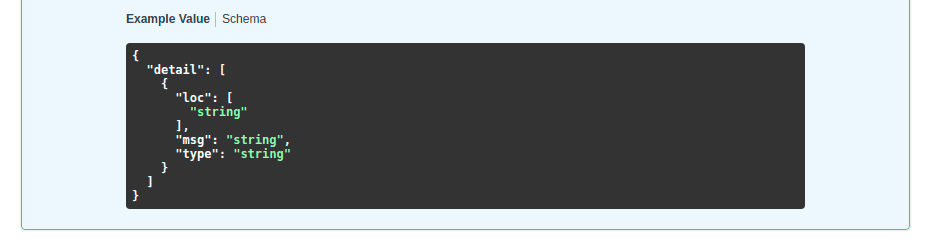
Customizing FastAPI's Swagger UI Behavior
Treat FastAPI's Swagger UI as a configurable frontend, not a static page. You can customize its behavior by passing a dictionary of settings on app startup. This is useful for changing themes or pre-filling auth fields. The footgun: keys must be camelCase.
Rust Doctests
Rust doctests are code examples written inside documentation comments that the compiler extracts, compiles and runs as real tests, so your documentation's example code is guaranteed to keep working instead of silently rotting out of date.
Inverted Index: How Search Engines Find Your Keywords
An inverted index is like a book's index: it maps keywords to the documents containing them. This is the core of full-text search in search engines and databases, allowing instant lookups.
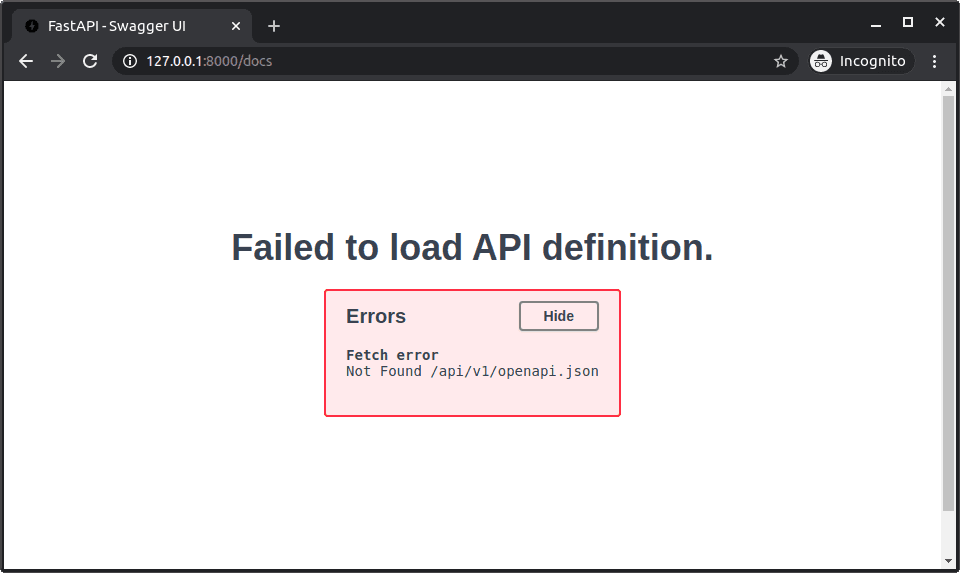
FastAPI Behind a Reverse Proxy: Fixing Docs URLs
A reverse proxy can hide the full URL from your FastAPI app, breaking OpenAPI docs. Tell your app about the proxy's path prefix by setting the root_path during initialization to ensure all generated URLs are correct.
Go Test Coverage: Rewriting Source to See What's Untested
Go's coverage tool rewrites your source code, adding counters to see what's executed during tests. It's a powerful way to find untested code, but remember: high coverage doesn't guarantee your tests are actually checking for correctness.

Cache-Aside Pattern: Your App Owns the Cache
The Cache-Aside pattern makes your application the gatekeeper for the cache. On a read, your code checks the cache first; on a miss, it fetches from the database and writes to the cache. This speeds up read-heavy apps. The key footgun is stale data.
Backpressure: Don't Drown Your Node.js Streams
Backpressure is flow control for streams, preventing a fast producer from overwhelming a slow consumer, like a traffic light for data. It's crucial when piping a fast file read to a slow network write. Ignoring it causes data to buffer and crash your app.

Vector Embeddings: Turning Meaning into Math
Vector embeddings turn complex data like words or images into lists of numbers (vectors). This lets computers measure "similarity" by calculating the distance between these vectors, powering search and recommendations.
Data Retention Policy: Your Schedule for Deleting Data
A data retention policy is your company's official schedule for deleting data, not a plan to keep it forever. It's essential for legal compliance (like GDPR) and managing storage costs.
FastAPI Lifespan: Code Before Startup, After Shutdown
FastAPI's lifespan events are "open for business" and "closing time" routines that run once before startup and after shutdown. Use them to initialize a DB pool or load a model. The footgun is putting request-specific logic here; it runs once only.
Mocking in Go: Swap Real Code for Test Doubles
Mocking in Go uses interfaces to swap slow dependencies like time.Sleep with fast fakes in tests, keeping your test suite quick. Use it for network calls or database access. The footgun is testing implementation details instead of observable behavior.
Full-Text Search: Beyond Simple String Matching
Full-text search isn't just string matching; it's a search engine for your data that understands language. Use it for e-commerce search or log analysis. The footgun is thinking a simple LIKE query is a substitute for a real search engine like Elasticsearch.
Go's pprof: Finding Your Code's Hotspots
pprof is a heat map for your code, revealing which functions consume the most CPU. It samples your program's call stacks to find performance hotspots. Use it to diagnose slow API endpoints or high-CPU background jobs. The footgun: profiling under no load.
Cache Eviction: Deciding What to Forget
A cache eviction policy is the rule for discarding data when fast-access memory is full. This is crucial for databases and CDNs. The common mistake is assuming one policy, like LRU, fits all workloads, which can cripple performance on certain access patterns.
We are hiring for this. Every open role lists the topics its interview covers, so you can prepare for the real thing rather than guessing.
See open roles