Interview questions in Backend Dev, page 23
Using context.Context across microservice calls in Go
Context carries cancellation, deadlines, and values; pass ctx as first arg, set one WithTimeout at the edge, attach a request ID via WithValue, thread it through downstream calls so all cancel…
Cross-server Socket.IO communication in horizontal scaling?
Local io.emit() only reaches local sockets, need adapter (Redis) for inter-server broadcast.
Synchronous vs asynchronous replication trade-offs
Sync waits for replica ack giving zero data loss but higher latency; async acks immediately, faster but risks losing recent writes on failover.
Rust Send and Sync marker traits explained
Send means a value can move across threads, Sync means a reference can be shared; Rc uses non-atomic refcounts, Arc uses atomic ones.
How do you broadcast WebSocket messages to all clients across server nodes?
Tests WebSocket horizontal scaling and pub/sub backplanes. A strong answer names a broker like Redis, describes cross-node fan-out, and keeps connection state purely local.
WebSocket optimization for high-frequency data?
Large payloads increase latency, frequent tiny messages waste overhead, solutions include compression, selective fields, and batching.
The N+1 query problem and how to fix it
One query for a list plus one per item for its relation, fix with eager loading or a batched join.
Architecting an L7 proxy in Go versus Rust
Go offers GC and cheap goroutines for fast delivery but tail-latency GC pauses; Rust offers ownership and async/await for predictable latency at higher complexity.
How do you handle slow startup without blocking the FastAPI event loop?
It tests FastAPI lifespan events and event loop hygiene. Use an async lifespan to offload blocking model loading to a thread pool, track readiness with a global flag, and return 503 for early requests. Never block the event loop in startup handlers.
Environment configuration and secrets management in Node.js?
Use environment variables, load from .env file (dev only), never commit secrets.
Tuning a database connection pool
Max size, min idle, connection and max-lifetime timeouts; size from cores and latency, not guesswork.
Why Pin is needed for self-referential Futures
Async blocks compile to state machines that can hold references into their own storage; Pin guarantees the value will not move so those internal pointers stay valid across polls.
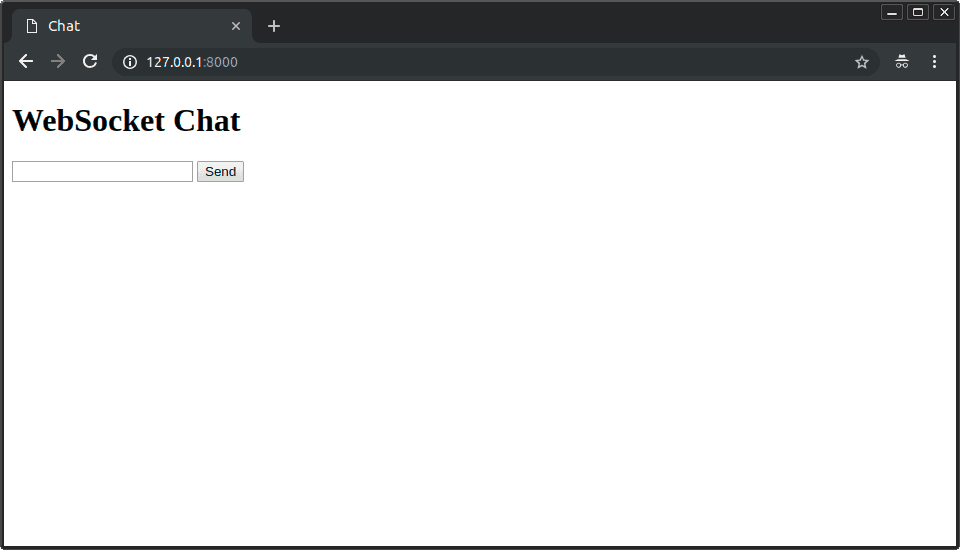
How do you inspect WebSocket close codes in FastAPI?
Tests WebSocket lifecycle handling in FastAPI. Strong answers catch the disconnect exception, read its code attribute, and log 1000 for normal closures versus 1001/1006 for crashes.
What does PM2 do for Node.js applications?
PM2 restarts crashed processes and manages multiple workers.
Upgrading a stateful Flink job without losing state
Take a savepoint, stop with drain, deploy new jar, restore from savepoint with matching operator UIDs.
Fearless concurrency: Rust compile-time vs Go runtime
Rust uses ownership plus Send/Sync to reject data races at compile time; Go encourages channels but still allows races, with the runtime race detector catching them at test…
Walk me through a basic Dockerfile for a FastAPI app
Slim base, install deps before app code to cache layers, expose port, exec-form CMD for Uvicorn.
How does NODE_ENV=production change Express behavior?
NODE_ENV is a convention signal, production disables verbose logging and enables caching.
Denormalization: trading write cost for read speed
Duplicate or precompute data to avoid joins, accept harder writes and consistency risk, justify by read-heavy access.
Rust lifetimes versus Go garbage-collected lifetimes
A lifetime is a compile-time region a reference is valid for; annotations like 'a relate input and output reference durations; Go instead uses garbage collection and escape analysis.
We are hiring for this. Every open role lists the topics its interview covers, so you can prepare for the real thing rather than guessing.
See open roles