Advanced interview questions in CI/CD & Automation, page 2
Design a zero-downtime Kubernetes Deployment strategy for a stateless microservice
Set RollingUpdate with maxSurge 1 and maxUnavailable 0; use readiness probes to gate traffic; set terminationGracePeriodSeconds and preStop to drain requests.

Canary vs shadow deployments: use cases and requirements
This tests whether you distinguish user-facing rollouts from invisible duplication. Canary routes some real users to new code to limit blast radius; shadow mirrors traffic to an isolated clone to test performance without user impact.
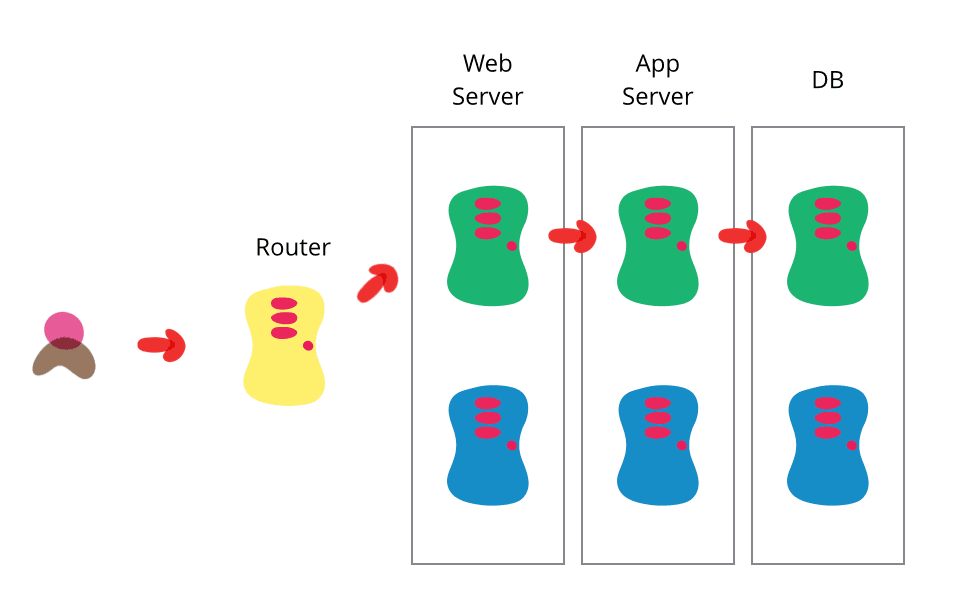
Blue/green deployment fails during switch-over with partial decommissioning; recovery and process changes?
Tests whether you can recover when a blue/green rollback path is compromised. Strong answers stop the bleed, revive blue if possible, and mandate keeping blue fully warm until green is stable. Red flag: "just roll back" ignoring partial decommissioning.

How do you deploy a hotfix during a multi-stage canary release?
Dark-launch the fix to the canary cohort, preserve metrics, then jointly promote.
How would you use a Kubernetes Admission Controller as CI/CD security gate?
Tests pre-deployment enforcement via admission webhooks. Strong answers: ValidatingAdmissionWebhooks blocking bad manifests, Pod Security Standards restricted profiles, and OPA/Gatekeeper for image signatures. Red flag: confusing with RBAC or runtime scanning.
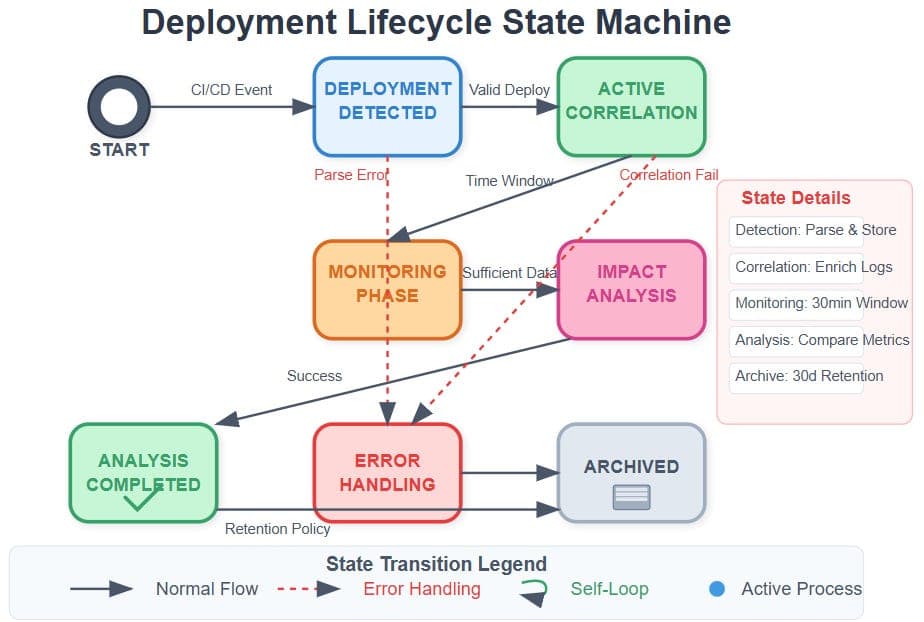
Design a system correlating CI/CD deployments with observability metrics
Tests event-driven correlation and temporal join patterns across distributed data. Strong answers outline: async deploy event ingestion, time-windowed metric joins with version tags, and handling clock skew.
What statistical methods automate canary-baseline comparison and handle noise?
Tests statistical rigor in automated canary analysis. Strong answers use non-parametric tests, multi-metric aggregation with effect-size gates, MAD-based outlier rejection, and smoothing windows.

How do you unify real-time CI/CD health across hundreds of microservices?
Canonical event schema over an event bus; domain-level SLI views; federated ownership with golden paths.

Describe a robust strategy for GitOps database schema migrations
Tests imperative-to-declarative schema reconciliation. Strong answers version idempotent pre-sync jobs and colocate schema state in Git. They use dedicated operators, not infra tools, for live execution.
How would you use GitOps to manage Kubernetes cluster lifecycles?
This tests cluster lifecycle GitOps, not just app delivery. A strong answer uses Flux plus Cluster API on a hub cluster, stores cluster definitions in Git, and rolls upgrades via MachineDeployments.
How do you architect self-service GitOps with central policy enforcement?
What it tests: balancing self-service GitOps with hard guardrails. A strong answer covers namespace-scoped controllers, OPA/Kyverno deny policies, and a centralized policy repo. Red flag: proposing manual ticket reviews instead of automated admission gates.
Design a secure multi-tenant CI/CD runner on Kubernetes
Apply namespaces, NetworkPolicies, Pod Security Standards; cap resources with ResourceQuotas and LimitRanges; schedule to dedicated or sandboxed nodes.
How would you architect deployment capabilities for multiple disparate environments?
This tests platform design for secure multi-environment orchestration. A strong answer proposes a declarative control plane, environment-local agents with short-lived credentials, and templating for consistency.
How would you modify CI/CD to generate and sign SLSA provenance?
Tests SLSA Build Track L1-L3 architecture. Outline: emit in-toto provenance with builder ID and resolved deps from ephemeral runners; sign via DSSE with Sigstore; publish attestations to registry. Red flag: confusing SBOMs or image signatures with provenance.
We are hiring for this. Every open role lists the topics its interview covers, so you can prepare for the real thing rather than guessing.
See open roles