Easy everything in CI/CD & Automation, page 2
Why avoid committing secrets to Git, and secure local alternatives?
This tests basic secret hygiene and environment isolation. A strong answer notes Git history is immutable and distributed, so secrets persist in forks forever, and proposes environment variables or gitignored dotenv files.
How do you manage environment-specific connection strings and why is hardcoding bad?
Tests config separation and secrets hygiene. Outline: inject via environment variables or a secret store, keep per-environment configs credential-free, and prefer managed identities.
Describe the Terraform workflow from code to live
This tests Terraform workflows beyond local commands. A strong answer covers: version-controlled code, terraform plan for speculative validation, then terraform apply via remote runs with policies. Red flag: only local apply without reviews or remote state.
Explain the difference between declarative and imperative IaC.
Contrast Terraform with Bash or Ansible; note drift detection, idempotency, and state trade-offs.
How should you manage sensitive data in a committed pipeline file?
Tests that committed pipeline YAML must never store secrets. Answer: fetch at runtime via native secrets manager integrations; if needed, use masked, hidden, protected CI/CD variables; use typed CI/CD inputs for parameters.
Declarative vs scripted pipeline syntax: when to choose each?
This tests Jenkins Pipeline trade-off judgment. Contrast Declarative's opinionated blocks and guardrails with Scripted's raw Groovy flexibility; prefer Declarative for new projects unless complex flow control is needed.
What is Pipeline as Code and its benefits over GUI configuration?
Tests whether you treat delivery pipelines as versioned code. Strong answers define PaC as pipeline definitions in source control, citing branch automation, peer review, audit trails, and single source of truth.
SNAPSHOT and RELEASE versions: differences and appropriate use
SNAPSHOTs are mutable; RELEASEs are immutable and tagged. Use SNAPSHOTs on feature branches and RELEASEs for main.
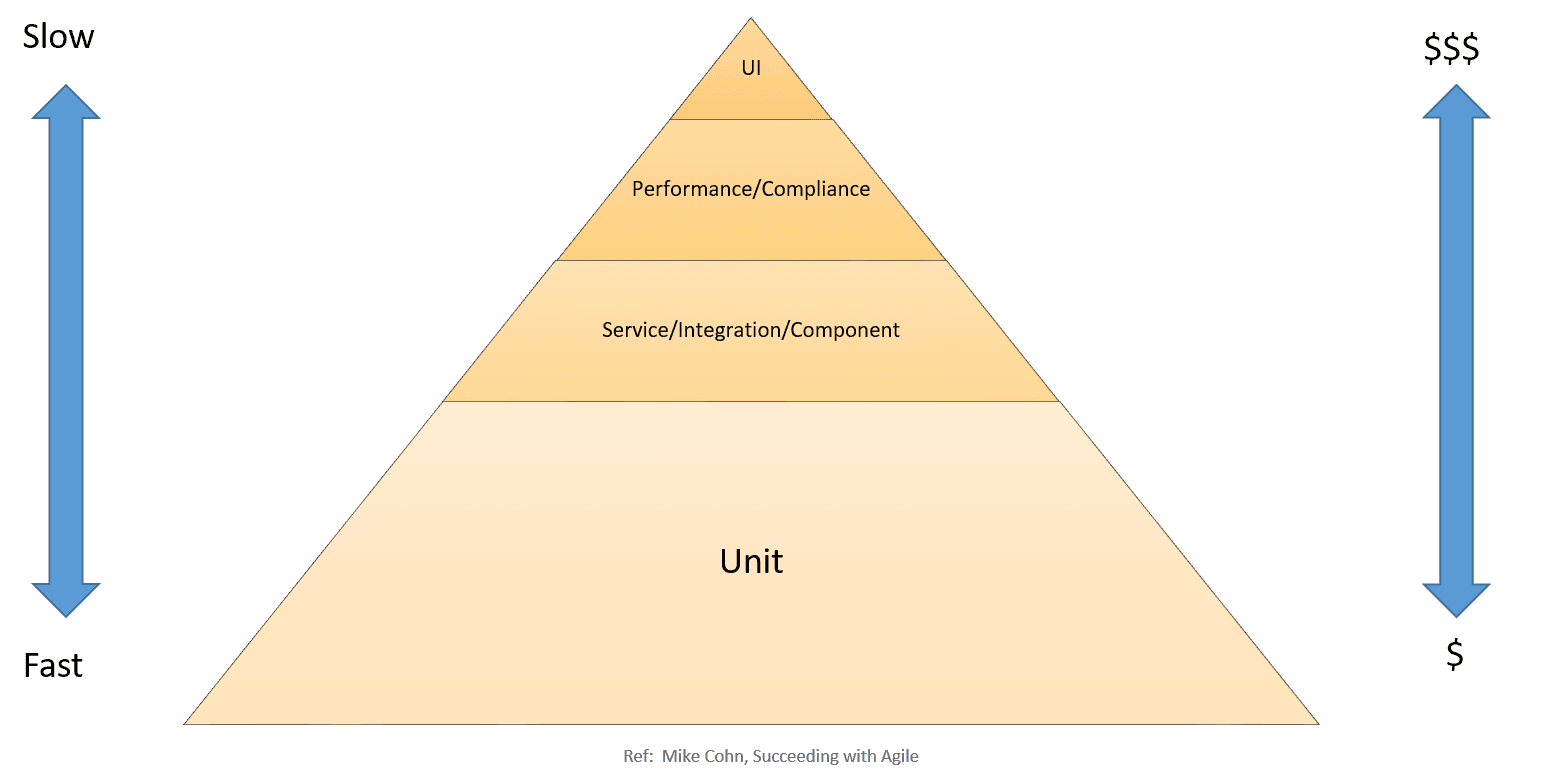
Difference between unit and integration tests and CI pipeline placement
Unit tests isolate code and run fast in the build stage; integration tests verify real wiring later. Target 70 percent unit tests.
What is a CI/CD quality gate? Give a simple example.
Thresholds blocking merges; a minimal new-code gate with 0 critical issues & 70% new-code coverage.
How do build tools differ from compilers or interpreters?
This tests whether you see compilation as only one step in a repeatable pipeline. A strong answer covers dependency resolution, transitive libraries, task automation, and artifact packaging.
Describe using a pre-push Git hook for checks and its CI limitations.
It tests client-side automation versus server-side policy. An executable .git/hooks/pre-push script runs tests and exits non-zero to block, noting hooks are not cloned, skipped via --no-verify, and local-only. A red flag is treating them as policy gate.
Difference between git merge and git rebase before a pull request
Rebase rewrites SHAs, duplicating CI builds; merge keeps identity and triggers one build.
Describe the typical CI pipeline sequence from push to deploy
This tests stage ordering and failure handling. A strong answer lists build, test, and deploy stages; notes intra-stage parallelism and inter-stage sequencing; and mentions early termination on failure.
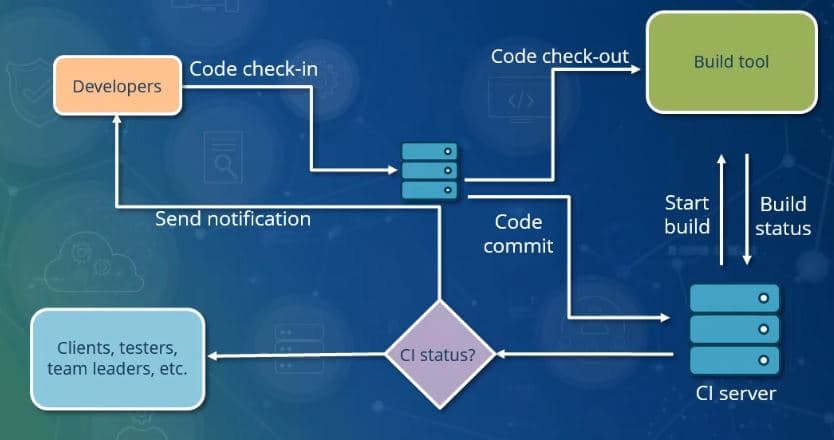
What is CI, and what is its single most important goal?
Frequent merges to a shared branch with automated build and test; top goal is a workable integrated codebase.
APM: Turning System Metrics into Business Meaning
APM turns system metrics into business meaning by tracking software performance and availability. It matters most when slowdowns threaten service levels. The footgun is gathering data without translating IT metrics into what the business actually cares about.
Internal Developer Platform: Your Org's 'Easy Button'
An Internal Developer Platform (IDP) is your company's internal 'PaaS,' offering a self-service 'easy button' for common developer tasks. It lets teams ship faster by abstracting away infrastructure complexity.
Platform Engineering: Paving the Road for Developers
Platform engineering builds a paved road for developers, offering a standardized, self-service path to ship code. It's used to reduce developer cognitive load and enforce standards. The footgun is building a platform so rigid that nobody wants to use it.
Kustomize: Template-Free Kubernetes Configs
Kustomize manages environment-specific Kubernetes configs by layering patches on a base YAML, avoiding complex templating. Use it to tweak deployments for dev, staging, or prod. The footgun: the kubectl version can lag, causing unexpected behavior.
Bug Tracking Systems: The Central Log for Software Defects
A bug tracker is the central log for a project's known defects. It’s used in software development to keep track of reported bugs, coordinate fixes, and manage the lifecycle of an issue. The footgun is undervaluing the quality of bug reports.
We are hiring for this. Every open role lists the topics its interview covers, so you can prepare for the real thing rather than guessing.
See open roles